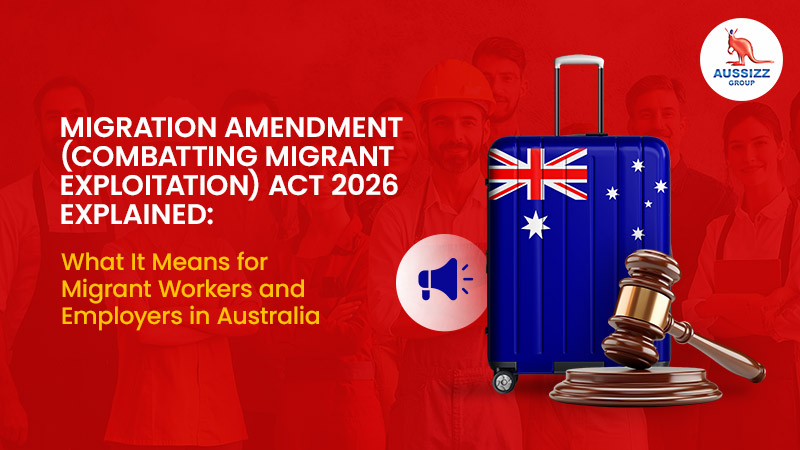
Migration Amendment (Combatting Migrant Exploitation) Act 2026 Explained: What It Means for Migrant Workers and Employers in Australia
Australia now has an official law called the Migration Amendment (Combatting Migrant Exploitation) Act 2026. The Act was assented to on 8 April 2026, and its main purpose is to amend the Migration Act 1958. The text of the Act also shows that it starts on a day fixed by Proclamation, or automatically after 6 months if no earlier commencement is proclaimed.
That is important because a lot of people hear the name of the Act and assume it creates a huge new standalone code covering every exploitation issue from scratch. The Act itself is actually much shorter and more targeted than that.
Based on the official text, its key amendment is the insertion of section 140GD, which allows the Secretary to publish prescribed information about approved work sponsors on the Department’s website, subject to regulations. That may include the sponsor’s name, ABN, postcode, number of nominations, and the kinds of occupations covered by those nominations. The Act also says regulations must not prescribe a personal identifier.
So the biggest practical message of the 2026 Act is not “everything changed overnight.” The more accurate message is this:
That matters because migrant worker protection in Australia is no longer only about hidden enforcement. It is also about visibility, accountability, and making it easier to identify who is participating in the sponsored work system.
What the 2026 Act Actually does?
The official Act is short, and that helps make its effect easier to understand. The most important part is in Schedule 1, where the Migration Act 1958 is amended to insert new section 140GD. That section says the Secretary may publish information about an approved work sponsor on the Department’s website, if that information is prescribed by regulations. The Act specifically lists examples of what those regulations may cover, including:
the kind of approved work sponsor
the sponsor’s name
the sponsor’s ABN
the postcode linked to that ABN
the number of nominations the sponsor has made
the kinds of occupations covered by those nominations.
That means the Act is mainly about public disclosure powers around approved work sponsors. It is not a broad rewrite of all migration-law exploitation offences by itself. It is better understood as a targeted amendment that supports transparency within the sponsored migration system.
Why Sponsor Transparency Matters in Migrant Exploitation Cases?
At first glance, publishing sponsor information may sound administrative. But in practice, it can matter a lot.
Australia’s Department of Home Affairs says migrant worker protection laws are designed to reduce temporary migrant worker exploitation, increase employer compliance, and improve workplace justice outcomes. Home Affairs also says the laws cover all migrant workers, including people with work rights, people with expired visas, and even people working in breach of visa conditions. It lists examples of exploitation such as underpayment, pressure to work more hours than visa conditions allow, and pressure to accept poor living conditions.
Once you put that broader policy context next to the 2026 Act, the logic becomes clearer. If the Department can publish prescribed information about approved work sponsors, that can help support oversight, accountability, and better visibility around who is actively using the sponsored migration framework. That is especially relevant in sectors where sponsored work relationships create strong power imbalances between employers and migrant workers. This is an inference from the Act’s publication power and the Department’s stated anti-exploitation goals.
This Act Sits Inside a Bigger Migrant Worker Protection System?
To understand the 2026 Act properly, it helps to separate two things:
The first is the Act itself, which is narrowly framed around publication of information about approved work sponsors. The second is the broader anti-exploitation framework already being enforced by Home Affairs and the Australian Border Force.
Home Affairs says that from 1 July 2024, stronger migrant worker protection laws began operating to tackle exploitation. It says those laws created three new work-related offences that make it illegal for employers, sponsors, and labour-hire intermediaries to:
coerce or pressure a temporary visa holder to breach a work-related visa condition
coerce or pressure a non-citizen without a valid visa to accept a work-related arrangement
use a worker’s temporary visa status to exploit them in the workplace, including in relation to current visa conditions and support for future visa applications.
So the 2026 Act should not be read in isolation. It fits into a system that already includes stronger offences, tougher penalties, and sponsor-focused enforcement. The 2026 Act adds a fresh transparency mechanism inside that system.
What This Means for Approved Work Sponsors?
For approved work sponsors, the message is simple: sponsorship is now even more visible than before.
The official Act says the Secretary may publish prescribed information about approved work sponsors, including their name, ABN, postcode, nomination numbers, and occupation types covered by those nominations.
That means sponsors should treat compliance as more than a back-office issue. If your business is sponsoring overseas workers, your sponsorship footprint may become easier for regulators and the public to understand, depending on how the regulations are made and applied.
This does not mean every sponsor is being accused of wrongdoing. It means the government now has a clearer statutory basis to publish certain sponsor information, and that sits alongside a compliance environment where anti-exploitation enforcement is already active. Home Affairs says dishonest employers should not be allowed to undercut businesses doing the right thing, and current enforcement messaging shows this remains a live policy focus in 2026.
What This Means for Migrant Workers?
For migrant workers, the 2026 Act matters most as part of a larger pattern: Australia is trying to make the sponsored work system more accountable.
If you are a sponsored worker, student, graduate, temporary skilled worker, or any other migrant worker, the most important thing to know is that Home Affairs says all migrant workers are protected, regardless of visa status. That includes people on valid visas, people with expired visas, and people working in breach of visa conditions. Home Affairs also says exploitative behaviour can include underpayment, pressure to work beyond visa conditions, threats around immigration status, and pressure to accept poor living conditions.
The 2026 Act does not directly rewrite those protections. But by allowing publication of approved sponsor information, it supports a system where sponsorship participation is less hidden. In practical terms, that makes the sponsored migration space more transparent than before. That can be important in industries where migrant workers often feel they have little bargaining power.
The Law is Narrow, But the Practical Effect Can still be Important
One of the biggest mistakes in writing about migration law is overstating what a new Act does.
This Act, based on its text, does not create a complete new definition of exploitation, a whole new sponsor ban system, or a full list of penalties inside its own pages. What it clearly does is amend the Migration Act so the Secretary may publish prescribed information about approved work sponsors on the Department’s website.
That may sound narrow, but narrow legal changes can still matter a lot when they affect visibility and compliance.
In migration systems, transparency often changes behaviour. When sponsors know certain information about their sponsorship activity may be publishable, that can strengthen accountability. When workers know the sponsored employment framework is under closer public and regulatory scrutiny, that can also change how they understand their rights. This is a practical inference from the publication power created by the Act and the broader anti-exploitation policy framework already in operation.
What Employers should do Now?
If you are an employer using sponsored migration pathways, 2026 is not the time to treat compliance casually.
Home Affairs says employers and others in the labour chain must not pressure migrant workers to breach visa conditions or use migration status to exploit them. It also says serious or repeated breaches can lead to fines or jail, and some employers can be stopped from hiring more migrant workers for a period.
The safest response to the 2026 Act is not panic. It is preparation.
Make sure nomination and sponsorship data is accurate
ABN and entity details
Ensure business identity details are clean and current
Occupation records
Check nominated occupations are correct and defensible
Payroll and work conditions
Confirm workers are being paid and treated lawfully
Visa-condition awareness
Avoid any pressure on workers to break visa conditions
That kind of review is no longer just good governance. It is now part of sensible migration-risk management.
What workers should take away from this law
Workers do not need to become lawyers to benefit from this law. The key message is simpler than that.
If you are working in Australia on a visa, your employer cannot lawfully use your migration status as a tool to pressure or exploit you. Home Affairs says that clearly. The 2026 Act adds to the broader environment by giving the Department a formal power to publish prescribed information about approved work sponsors.
That means the system is moving further toward accountability, not less.
Why This Matters for Migration Planning in 2026?
Migration is not only about getting a visa granted. It is also about how people are treated after they arrive and start working.
That is why this Act matters for students moving into work, graduates looking at sponsorship, skilled migrants relying on employer nomination, and businesses trying to sponsor legally and ethically. The law is part of a wider signal from the Australian government that sponsored migration should be visible, lawful, and less vulnerable to abuse.
Aussizz Group has helped 200,000+ applicants to their Australian Dreams, and this is exactly why updated migration advice matters. A short Act can still have meaningful consequences when it changes how sponsorship information can be published and understood.
If you want to understand how the Migration Amendment (Combatting Migrant Exploitation) Act 2026 may affect your role as a migrant worker, sponsor, student, or employer, book a consultation with Aussizz Group and get guidance based on the official law and the current 2026 migration framework.
FAQs
Q1. What is the Migration Amendment (Combatting Migrant Exploitation) Act 2026?
It is an official Australian Act, No. 39 of 2026, that amends the Migration Act 1958. The text shows it was assented to on 8 April 2026.
Q2. When does the Act start?
The Act says it starts on a day fixed by Proclamation, or automatically after 6 months from Royal Assent if no earlier day is proclaimed.
Q3. What is the main change in the Act?
The main amendment shown in the Act inserts section 140GD into the Migration Act 1958, allowing the Secretary to publish prescribed information about approved work sponsors on the Department’s website.
Q4. What sponsor information can be published under the Act?
The Act says regulations may prescribe the sponsor’s name, ABN, postcode, nomination numbers, and the kinds of occupations covered by nominations, among other information.
Q5. Does the Act allow publication of personal identifiers?
No. The Act says regulations must not prescribe information that is a personal identifier.
Q6. Does this Act create all of Australia’s migrant worker protection rules?
No. The Act itself is narrower and focuses on sponsor-information publication. It sits alongside broader migrant worker protection laws already described by Home Affairs, including work-related exploitation offences operating since 1 July 2024.
Q7. Do migrant worker protections apply only to sponsored workers?
No. Home Affairs says the protections apply to all migrant workers, including students, backpackers, PALM workers, people with expired visas, and people working in breach of visa conditions.
Q8. What kinds of conduct count as migrant worker exploitation?
Home Affairs gives examples such as underpayment, pressure to work beyond visa limits, and pressure to accept poor living conditions.
Q9. Why is this Act important for employers?
Because it increases transparency around approved work sponsors and fits into a stronger 2026 compliance environment where exploitative conduct can trigger serious consequences.
Q10. Why is this Act important for migrant workers?
Because it supports a more transparent sponsorship system and sits within broader protections that say employers cannot misuse migration status to exploit workers.

 AUS
Australia
AUS
Australia
 IND
India
IND
India
 UAE
UAE
UAE
UAE
 CA
Canada
CA
Canada
 SL
Srilanka
SL
Srilanka
 HK
Hong Kong
HK
Hong Kong