
 AUS
Australia
AUS
Australia
 IND
India
IND
India
 UAE
UAE
UAE
UAE
 CA
Canada
CA
Canada
 SL
Srilanka
SL
Srilanka
Disclaimer: The insights shared are based on expert analysis by Aussizz Group. Actual invitation round outcomes may vary from these projections.
A lot of skilled migration applicants are asking the same question right now: if my occupation still has no realistic chance in subclass 189 this financial year, what should I do next?
That question matters because the Skilled Independent visa (subclass 189) is still one of the most attractive PR pathways. It is permanent, it does not tie you to a state, and it does not require an employer sponsor. But it is also one of the most competitive.
Home Affairs says the 2025–26 Migration Program has a Skilled Independent planning level of 16,900 places, and its latest SkillSelect page shows that 10,000 subclass 189 invitations were issued in the 13 November 2025 round. Home Affairs also explains that an occupation ceiling means there may be an upper limit on how many EOIs with a specific occupation can be invited from an occupation group.
That is why this topic creates so much anxiety. If an occupation ceiling is effectively exhausted, having more points does not suddenly reopen subclass 189 for that occupation in the same program year. The practical takeaway is not that these occupations are “finished” for migration. It is that subclass 189 may be the wrong pathway for them right now, even if subclass 190, subclass 491, or employer sponsorship still remain open.
Subclass 189 is Not Only About Points. It is Also About Occupation Ceilings
This is the part many applicants miss.
A lot of people still think subclass 189 is a simple points race. They assume that if they keep improving English, partner points, or work experience, they will eventually be invited. But Home Affairs’ invitation-round guidance makes it clear that there is another layer in the system: occupation ceilings. In simple terms, that means there can be an upper limit on how many EOIs from a particular occupation group are invited. So a high score may help only if your occupation is still moving. If it is not moving, even very strong points may not rescue the 189 pathway in that program year.
That is why 189 planning in 2026 has become more occupation-sensitive than many applicants expected. The question is no longer only “How many points do I have?” The better question is “Is my occupation still realistically alive in 189 this year?”
The Occupations People are Most Worried About Right Now
The occupations having no realistic 189 chance for the rest of the financial year are:
- Chef
- Motor Vehicle Mechanic / Motor Mechanic
- Accountant occupations
- External Auditor
- IT professionals
- Civil Engineer
- Mechanical Engineer
It is important to say this carefully: Home Affairs does not publish a simple live webpage saying “these occupations will not get another invite this year.” So the safest way to frame this is that these are the occupations currently framed as highest-risk or effectively closed for further 189 invitations.
The official part we can say with confidence is that occupation ceilings exist and that another 189 round is still possible because not all 16,900 program places were used in the November 2025 round. But whether that next round includes a specific occupation depends on whether there is still room under that occupation’s effective ceiling and how the Department chooses to run the round.
Occupations currently seen as high-risk for more subclass 189 invitations
| Occupation group | Why applicants are worried | Practical 2026 takeaway |
| Chef | No realistic 189 chance for the rest of the year | Look harder at WA, 190, 491 or employer sponsorship |
| Motor mechanics | Similar concern around exhausted 189 opportunity | State nomination and employer routes matter more |
| Accountants | Heavy competition and ceiling pressure | 190, 491 and state-targeted strategy become more important |
| External Auditors | Same issue as other accounting profiles | 189 may be weak; state and employer pathways matter |
| IT professionals | Crowded field and weak 189 momentum | Compare 190, 491 and sponsorship instead |
| Civil Engineers | Unexpectedly weak for 189 | Employer or state strategies may be more realistic |
| Mechanical Engineers | Unexpectedly weak for 189 | Sponsorship and state nomination deserve more attention |
The important thing is not panic. The important thing is pivoting early.
If Your Occupation has No Realistic 189 Shot, That Does Not Mean PR is Over
This is the biggest mindset shift applicants need.
A lot of people treat subclass 189 as the “real” PR pathway and everything else as backup. That is outdated thinking. Home Affairs’ 2025–26 planning levels show much bigger space in other parts of the Skill stream.
The program includes 44,000 places for Employer Sponsored, 33,000 for State/Territory Nominated, and 33,000 for Skilled Regional, compared with 16,900 for Skilled Independent. That tells you something very important: Australia’s migration system is now giving far more room to sponsored, nominated, and regional pathways than to 189 alone.
So if your occupation is flat for 189, the smarter question is not “Why is this unfair?” It is “Which of the bigger pathways still wants my profile?”
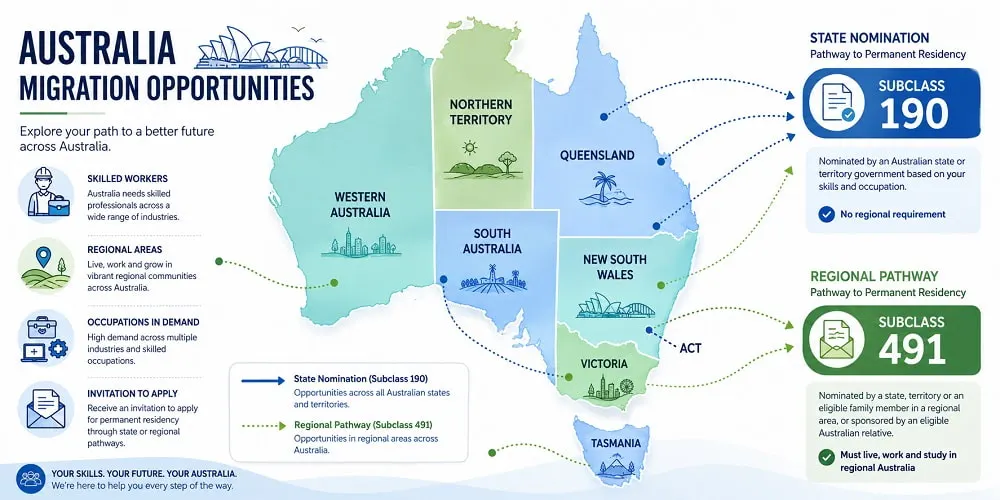
State Nomination is Where Many “Blocked” 189 Occupations Still Stay Alive
Some occupations may look weak for 189 but still have movement in 190 or 491, especially through state systems with their own occupation lists and invitation logic. That is particularly relevant for occupations like chefs, accountants, IT profiles and some engineering roles, which often struggle in 189 due to competition or ceiling pressure but still remain visible in state-nominated systems.
What to do if 189 is weak but your occupation still appears in state pathways
| Pathway | Why it matters now |
| Subclass 190 | Direct PR through state nomination if your profile fits the state |
| Subclass 491 | Regional provisional route that can later lead to PR |
| State occupation lists | Different states want different occupations and different profile types |
| Employer sponsorship | Often becomes stronger when 189 is not moving |
This is where profile-based migration strategy becomes much more valuable than just chasing invitation rumours.
Western Australia is a Good Example of Why “No 189” Does Not Mean “No Migration”
Occupations like accounting, IT, and chef can still receive invites in WA, and that part is directionally supported by Western Australia’s invitation data.
WA’s State Nominated Migration Program is active in 2025–26, and Migration WA says invitation rounds began in December 2025. It also publishes detailed “last invited by occupation” data. In the March 2026 priority occupations round, WA’s published data shows Chef (351311) invited at 85 points, and Civil Engineer (233211) invited at 80 points.
In earlier published WA rounds, occupations like Accountant (General), Analyst Programmer, ICT Business Analyst, Developer Programmer, Software Engineer, Mechanical Engineer, Motor Mechanic, and related roles also appear in the state invitation data.
That is one of the clearest reasons not to overreact to a weak 189 position. A ceiling problem in one pathway does not automatically erase the occupation from all migration options.
WA examples showing movement outside subclass 189
| Occupation | WA invitation evidence | What it means |
| Chef | Invited in WA March 2026 at 85 points | Chef may be weak for 189 but still alive in WA nomination |
| Civil Engineer | Invited in WA March 2026 at 80 points | Engineering can still move through state pathways |
| Accountant (General) | Appears in WA invitation data | Accounting is not dead, but may need a state route |
| ICT Business Analyst / Developer Programmer / Software Engineer | Appears in WA invitation data | IT may still have a path outside 189 |
| Motor Mechanic | Appears in WA invitation data | Trade and technical occupations can still move through states |
This is why applicants need to separate “no 189” from “no pathway.” They are not the same thing.
Why Employer Sponsorship May Now be the Strongest Option for Some Occupations?
Employer Sponsored has a much larger planning allocation than Skilled Independent in 2025–26. If your occupation is no longer realistically moving in 189, but employers still want the role, employer sponsorship can become more practical than waiting for another invitation round that may never include your occupation. This is especially relevant for engineering, trades, hospitality, and other occupations where real labour demand can matter more than SkillSelect competition.
That does not mean sponsorship is easy. It means that for many applicants, it is now more strategic than hoping a blocked 189 occupation suddenly reopens.
Another 189 Round May Still Happen but Not for Everyone
Because Home Affairs shows a 16,900 planning level for Skilled Independent and the November 2025 round issued 10,000 invitations, applicants are right to expect that another 189 round is still possible this financial year. But “possible” is not the same as “good for my occupation.” A later round may still happen while some occupations remain effectively shut out by ceiling pressure.
That is the key message your blog should communicate clearly:
A future 189 round can still happen, but if your occupation is already effectively capped out, more rounds may not help you.
The Smarter Strategy in 2026 is to Stop Treating 189 as the Only Real Goal
If your occupation still has room in 189, great. But if it does not, the answer is not waiting passively.
The smarter move is:
- check your state nomination options,
- compare 190 and 491,
- see whether your occupation still has movement in places like WA,
- and assess whether employer sponsorship is the stronger route now.

Aussizz Group has helped 200,000+ applicants to their Australian Dreams, and this is exactly where practical migration strategy matters. A lot of people waste months staring at subclass 189 when their occupation has already become a weak bet for the rest of the year.
If you want to know whether your occupation still has a realistic 189 chance or whether your stronger route is 190, 491 or employer sponsorship — book a consultation with Aussizz Group and build the plan around the real data, not just the visa number.
FAQs
Q1. What does an occupation ceiling mean for subclass 189?
Home Affairs says an occupation ceiling means there may be an upper limit on how many EOIs with a specific occupation can be invited from an occupation group.
Q2. Can there still be another subclass 189 round this financial year?
Possibly yes. Home Affairs shows a Skilled Independent planning level of 16,900 for 2025–26, and 10,000 invitations were issued in the 13 November 2025 round. That suggests another round is still possible, but not necessarily for every occupation.
Q3. If my occupation has no realistic 189 chance this year, is PR over?
No. You may still have realistic options through subclass 190, subclass 491, or employer sponsorship, depending on your occupation and profile.
Q4. Which occupations are people most worried about for no further 189 invites?
The occupations flagged as highest-risk are chef, motor mechanics, accountants, external auditors, IT professionals, civil engineers, and mechanical engineers.
Q5. Can chefs still get invited through state nomination?
Yes. WA’s March 2026 state invitation data shows Chef (351311) invited at 85 points, which means chef may still move through state nomination even if 189 is weak.
Q6. Can IT and accounting still move through Western Australia?
Yes. Published WA invitation data includes occupations such as Accountant (General), Analyst Programmer, ICT Business Analyst, Developer Programmer, and Software Engineer.
Q7. Can engineers still get invited outside 189?
Yes. WA’s published invitation data includes Civil Engineer and Mechanical Engineer, showing that engineering can still move through state pathways even if 189 looks weak.
Q8. Is employer sponsorship stronger than subclass 189 now?
For some occupations, yes. The 2025–26 Migration Program includes 44,000 Employer Sponsored places compared with 16,900 Skilled Independent places, which shows much more room in employer-backed migration than in 189 alone.
Q9. Do more points help if an occupation ceiling is already exhausted?
Not in a practical sense for that pathway. If the ceiling is effectively used up, higher points do not reopen 189 for that occupation in the same program year. That conclusion follows from Home Affairs’ occupation-ceiling definition.
Q10. What should applicants do if their 189 pathway looks blocked?
The smartest next step is to compare 190, 491, and employer-sponsored options based on your exact occupation, state fit, and work situation, instead of waiting only for another 189 round.
PR Strategy breaks down into five major decision factors: occupation, sponsorship, state, partner, and points.
In reality, Australian PR is not one single route. The right pathway changes depending on whether your occupation is on a skilled list, whether you have employer support, whether you are open to regional Australia, whether your partner can contribute points, and whether your score is strong enough for a direct invitation. Home Affairs says SkillSelect is the system skilled workers use to express interest in applying for a skilled visa, and you must usually be invited before you can apply for points-tested visas.
The Best PR Route Starts with Your Occupation, not Your Preferred Visa
Some occupations sit clearly inside the skilled migration system. Others do not. That difference changes everything. If your occupation is on a relevant skilled occupation framework and you can get the right skills assessment, you may be able to move through points-tested visas like 189, 190 or 491, or sometimes through employer sponsorship. If your occupation is not in the right place, the strategy may need to shift completely. Home Affairs’ skilled migration system is built around occupation-based eligibility, not just personal intention.
This is why applicants in occupations like registered nurse, secondary school teacher, social worker, electrician, carpenter, engineer, chef, or some ICT roles often have more structured PR routes than people in occupations that are less clearly supported across skilled pathways.
But occupation alone is not enough. Even when a job is on a list, that does not mean the person automatically has a strong PR chance. State nomination, employer demand, skills assessment, and points still matter.
A simple way to read occupation fit
| Occupation situation | What it usually means |
| Occupation clearly linked to skilled migration | Points-tested or employer pathways may be possible |
| Occupation available only in some states or streams | State selection becomes critical |
| Occupation weakly aligned or missing from main pathways | Strategy may need employer, partner or alternate planning |
| Occupation in high demand | PR can still be competitive, but options are broader |
The biggest mistake people make is seeing one occupation on one list and assuming the rest will be easy. In 2026, it rarely works like that.
Sponsorship Changes the PR Game because It Reduces Reliance on Invitation Rounds
Home Affairs says the Employer Nomination Scheme subclass 186 lets skilled workers nominated by an employer live and work in Australia permanently. That makes employer sponsorship one of the clearest PR routes for people who already have strong job support.
Without an employer, many people rely on points-tested migration. That often means 189, 190 or 491, plus a valid skills assessment, English results, and a competitive profile in SkillSelect. Home Affairs says the subclass 491 is points-tested and requires 65 points or more, and the subclass 190 is also a points-tested skilled pathway linked to state nomination.
So the practical difference is huge.
- If you have employer backing, your pathway may depend more on nomination, salary, occupation, and employer compliance.
- If you do not have employer backing, your pathway depends much more on points, lists, rankings, and state selection.
Employer vs no employer
| Situation | Stronger pathway tendency |
| Genuine employer support in the right occupation | 186 or another employer-based route may become the main strategy |
| No employer support | 189, 190 and 491 become more important |
| Weak points but strong employer | Sponsorship can sometimes be more practical than waiting for invitation rounds |
| Good points but no sponsor | Skilled migration may still work without employer support |
This is why sponsorship is one of the biggest dividing lines in PR planning.
State Choice Matters because PR Chances are not Equal Across Australia
A lot of people still compare states only by popularity. That is the wrong method. In 2026, your PR chances depend on how a state is selecting, not just whether that state is well known.
Home Affairs says subclass 190 is for nominated skilled workers to live and work in Australia as permanent residents, while subclass 491 is a regional skilled visa for people nominated by a state or territory government or sponsored by an eligible family member. Home Affairs also explains that regional migration remains a major part of Australia’s skilled migration framework, and subclass 191 is the permanent regional visa for people who later meet the rules after holding an eligible regional visa.
This is why state choice is no longer just about “which city do I like?” It is about whether you are open to regional living, whether a state wants your occupation, and whether the regional path may actually be more realistic than a big-city pathway.
There is a strong contrast between regional areas with big cities, and that is a practical way to think about it. Big-city pathways may feel more attractive, but they are often more competitive. Regional pathways may feel more restrictive at first, but they can create stronger long-term PR options.
State and regional logic in 2026
| Preference | What it usually means |
| Wants major city only | More competition, fewer easy advantages |
| Open to regional Australia | 491 and later 191 may become realistic |
| Occupation in regional demand | Regional PR chances may improve |
| Wants direct permanent route | 190 may be the target, but not always the most realistic one |
This is why state choice should never be emotional only. It should be strategic.
Your Partner can Change Your Points and, in Some Cases, Your Visa Direction
Home Affairs’ points table for skilled migration includes partner-related points categories, and those points can influence the strength of an EOI profile. The exact number depends on the partner’s situation, such as whether they are eligible for partner skills points or whether the applicant has a spouse or de facto partner who is an Australian citizen or permanent resident.
That means a partner can affect PR in two very different ways.
The first is through the points system, where a skilled or English-capable partner may help strengthen a points-tested visa strategy.
The second is through an entirely different family-migration route where the partner is an Australian citizen, Australian permanent resident, or eligible New Zealand citizen and the applicant may instead look at a partner visa, such as subclass 820 onshore.
Home Affairs says the subclass 820 visa lets the spouse or de facto partner of an Australian citizen, Australian permanent resident or eligible New Zealand citizen live in Australia.
A partner may help your skilled migration points, or the relationship may create a separate family-migration route. But the effect depends on who the partner is and what their own immigration position is.
Partner factor in PR strategy
| Partner situation | Likely impact |
| Skilled partner with relevant profile | Can strengthen a points-tested case |
| Partner with English but not skilled points eligibility | May still help, depending on the point category |
| Australian citizen or PR partner | Family pathway may become more relevant than skilled migration |
| Single applicant | Must rely more heavily on own points, work history and state fit |
This is why partner details should never be treated as a side note in PR planning.
Points still Matter, but the Way They Matter Depends on the Pathway
Home Affairs says the subclass 491 is a points-tested visa requiring 65 points or more, and the points table remains a key part of the skilled migration process. But this is where many applicants get confused: having the minimum points does not mean having a strong invitation chance.
In some occupations, higher points combined with strong demand can still support a pathway like 189 Skilled Independent, which Home Affairs describes as a visa that lets invited workers with skills Australia needs live and work permanently anywhere in Australia.
In other cases, lower or mid-range points may still work when combined with the right occupation, state nomination, or regional strategy. Points only work when combined with the right occupation and pathway fit.
What points really mean in 2026?
| Points situation | Better interpretation |
| High points + strong occupation | 189 or strong 190 chances may be worth assessing |
| Average points + state fit | 190 may be more realistic than 189 |
| Lower points + regional openness | 491 may become the practical route |
| Weak points + strong employer | Employer sponsorship may matter more than points |
This is the biggest reason people get stuck: they think points alone decide everything. They do not.
The Real PR Strategy is Profile-based, not Visa-number-based
- occupation decides whether you are even in the skilled migration conversation
- sponsorship decides whether employer-backed PR is realistic
- state decides whether your nomination chances improve or narrow
- partner can strengthen your points or create a different pathway
- points decide how competitive your profile is inside skilled migration
This is much more realistic than the usual online advice that says, “Just apply for 189,” or, “Just move to a state with easy PR.”
In 2026, PR strategy works best when it is built in the right order:
first occupation, then sponsorship, then state fit, then partner factor, then points, and only after that the visa subclass.
Aussizz Group has helped 200,000+ applicants to their Australian Dreams, and this is exactly why profile-based planning matters more than copy-paste migration advice. If you want to know whether your stronger 2026 route is 189, 190, 491, 186, 191, or a partner-based pathway, book a consultation with Aussizz Group and build the strategy around your actual profile instead of guesswork.
FAQs
Q1. What is the best PR pathway in Australia in 2026?
There is no single best pathway. The right route depends on your occupation, employer support, state fit, partner situation, and points.
Q2. Does occupation matter more than points for PR?
Occupation is usually the starting filter. Points matter a lot, but only after the occupation is suitable for the pathway.
Q3. Is employer sponsorship easier than skilled migration?
Not always easier, but very different. A genuine employer can open permanent sponsorship pathways like subclass 186, which can reduce reliance on invitation rounds.
Q4. Is subclass 491 a PR visa?
No. Subclass 491 is a regional provisional visa. It can lead to permanent residence later, including through subclass 191 if the rules are met.
Q5. Is subclass 190 permanent?
Yes. Home Affairs says subclass 190 lets nominated skilled workers live and work in Australia as permanent residents.
Q6. Can a partner help with PR points?
Yes, in some cases. Home Affairs’ points table includes partner-related categories that can affect a skilled migration score.
Q7. Can having an Australian partner change the visa route completely?
Yes. If the partner is an Australian citizen, permanent resident, or eligible New Zealand citizen, a partner visa route may become more relevant than skilled migration.
Q8. Is 65 points enough for PR?
It may be enough to meet the basic requirement for some points-tested visas like 491, but it does not guarantee an invitation. Competitiveness still depends on the full profile.
Q9. Is regional Australia better for PR chances?
For many applicants, yes. Regional pathways can be more practical because they open visas like 491 and later 191, even if they are not immediate permanent residency.
Q10. Should I choose my PR pathway by visa number first?
Usually no. The better approach is to assess occupation, sponsorship, state fit, partner situation, and points first, and then choose the visa pathway that matches.
For years, ICT was seen as one of the safest routes into Australian PR. If you were a software engineer, developer programmer, systems analyst, ICT business analyst, or another tech professional, the general assumption was simple: get your skills assessed, lodge your EOI, and PR should eventually follow.
ICT is still part of Australia’s skilled migration system. NSW still names ICT as a key industry sector for subclass 190 and 491. ACS still assesses ICT, data science, and cyber security occupations for migration purposes. And several states still nominate technology-related profiles. But the pathway has become harder because IT applicants are now stuck in one of the most crowded, most filtered, and most competitive parts of the PR market.
That is the real issue. IT is not “gone.” It is just overcrowded and more heavily filtered than many applicants realise.
The Biggest Problem for IT Applicants is Not Eligibility. It is Overcrowding.
A lot of IT applicants are still technically eligible for skilled migration. They can get an ACS assessment, claim points, and enter SkillSelect. But eligibility is not the same as being competitive.
Home Affairs explains that SkillSelect is the system used for many skilled migration pathways, and applicants must submit an EOI and then wait to be invited. That means being in the pool is only the beginning. When too many applicants with similar occupations, similar qualifications, and similar points enter the same pool, the field becomes much harder.
This is exactly what has happened in ICT. It is one of the most common backgrounds among international graduates and offshore skilled migrants. So even when a state still wants ICT workers, it is often choosing only the strongest profiles inside an already crowded tech group. The result is that many decent ICT applicants are not weak — they are simply lost in a bigger crowd.
NSW Still Wants ICT, But Only Strong ICT Profiles are Likely to Stand Out
NSW is one of the clearest examples of this trend.
The state still says ICT is one of its key industry sectors for subclass 190 and 491. On paper, that sounds positive. But NSW also says nomination is exceptionally competitive, that subclass 190 uses a selection-based invitation process, and that the state invites the highest-ranking EOIs within ANZSCO unit groups on the NSW Skills List. It also stresses that applicants should not wait only for a NSW invitation.
So NSW has not shut the door on ICT. It has simply made the practical bar much higher.
For an IT applicant, this means NSW is not a state that rewards being “good enough.” It rewards being stronger than most of the other IT applicants in the same ranking group. If your profile is average by ICT standards — average English, average work experience, average points — NSW may still feel very hard, even though ICT is officially a priority sector.
Victoria is Not Anti-ICT, But It is Clearly Rewarding Stronger, Better-Structured Profiles
Victoria often looks appealing to tech professionals because it has traditionally attracted a large number of skilled migrants, especially in Melbourne. But the 2025–26 program signals show heavy competition.
Victoria’s program had 3,400 places in 2025–26, made up of 2,700 for subclass 190 and 700 for subclass 491. But Victoria also announced that it had received significantly more interest than available places and closed to new ROIs in late April 2026. That tells you demand pressure is intense.
That matters a lot for ICT applicants. In a state with high ROI pressure, broad sector relevance is not enough. Victoria’s system uses both a SkillSelect EOI and a Registration of Interest, which gives the state an extra filter to choose stronger or more strategically useful profiles. So even if IT remains present in the migration mix, the state is not nominating applicants simply because they are in tech. It is effectively selecting among a very crowded field.
In practice, that means Victoria tends to feel harder for ICT applicants who do not have an additional strength — such as stronger English, stronger onshore employment credibility, better work history, or a more complete and competitive profile overall.
Queensland is Clearer Than Victoria or NSW, But That Clarity Often Works Against Generic IT Profiles
Queensland is easier to read than many states because it is very explicit.
Queensland says applicants must fit one of its defined pathways, and if their nominated occupation is not on the relevant onshore or offshore occupation list, they are not eligible for nomination in 2025–26. Queensland also notes that not all occupations on its lists are eligible for subclass 190.
That makes Queensland more structured, but also more unforgiving. A lot of IT applicants prefer states like Queensland because the rules feel clearer. But clear rules also mean there is less room for vague hope. If your exact ICT occupation is not on the right list, or if your pathway position does not fit, Queensland simply does not work.
So Queensland is not harder because it is random. It is harder because it is precise. And for many generic IT profiles, precision is a problem.
South Australia is Still Inviting ICT, But It is Pushing ICT More Toward Subclass 491 Than 190
South Australia gives one of the clearest data signals for ICT in 2026.
Its official migration updates show that in the March 2026 invitation round, ICT Professionals received 0 subclass 190 invitations and 42 subclass 491 invitations for that month. The cumulative 2025–26 data on that same update shows 7 subclass 190 invitations and 164 subclass 491 invitations for ICT Professionals. South Australia also says that for 2025–26 it is prioritising sectors including building and construction, defence, education, engineering, health, and manufacturing, while high-ranking candidates in non-priority sectors may still be considered.
This is one of the most useful reality checks for IT applicants.
South Australia is not saying “no” to ICT. But the published data strongly suggests that ICT is being channelled much more toward 491 than 190. In other words, if an IT applicant is still thinking only in terms of direct state-nominated PR, South Australia may feel disappointing. But if they are open to a regional provisional route, the state may still offer opportunity.
That is a major reason IT applicants feel PR has become harder: the route is increasingly looking more regional, more indirect, and less immediate than many expected.
Western Australia is Still Open to Skilled Migration, But ICT is Not Where Its Strongest Signals are Right Now
Western Australia remains active in state nomination. WA confirms that the 2025–26 State Nominated Migration Program is running and that ordinary invitation rounds began in December 2025. It also publishes invitation-round data and ranks EOIs with strong weight on whether applicants are residing in WA, and then by priority industry sectors in relevant streams.
The important detail for ICT applicants is this: in WA’s published December 2025 invitation-round ranking explanation, the priority industry sectors highlighted include building and construction, healthcare and social assistance, hospitality and tourism, and education and training depending on the stream. ICT is not the standout sector in those visible priority notes.
That does not mean ICT is excluded from WA. It means ICT is not showing up as one of WA’s clearest current advantage sectors in the way healthcare, trades, hospitality, or education are. For IT applicants, that makes WA harder in a different way: the state is active, but the strongest visible preference signals are often pointing elsewhere.
ACS is Still a Central Bottleneck for ICT Applicants
Another reason PR feels harder for tech professionals is that the pathway begins with one of the stricter assessment systems.
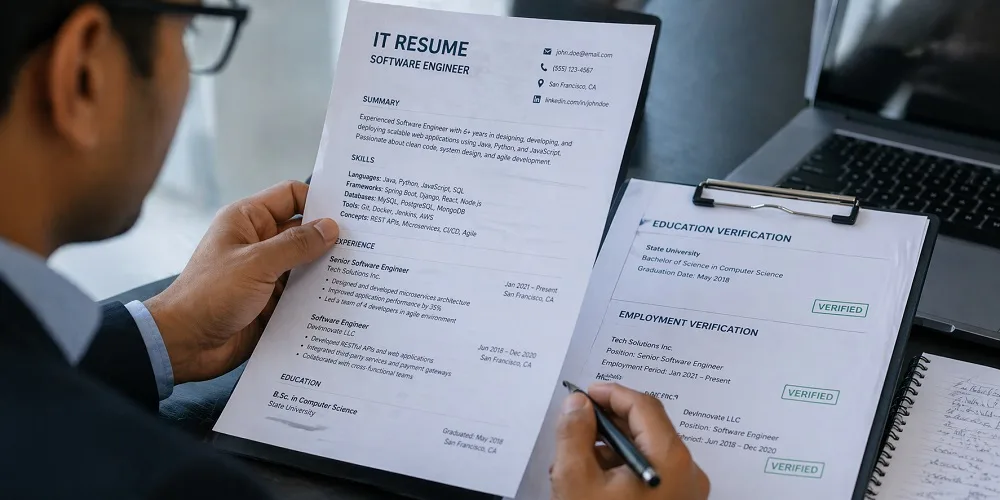
ACS says its Migration Skills Assessment validates ICT qualifications and work experience to determine skilled migration eligibility. It also explains that relevant ICT work experience must be professional ICT work of at least 20 hours per week, and depending on the qualification pathway, several years of relevant experience may be required.
So IT applicants are not only competing in crowded state nomination pools. They also have to clear a fairly technical skills-assessment stage where qualification relevance, occupation match, and work evidence matter a lot.
Why ACS makes ICT migration feel harder?
| ACS factor | Why it matters |
| Qualification relevance | An IT degree alone is not enough if it does not align well |
| Occupation match | The nominated code must fit the actual job profile |
| Professional ICT work | Not all adjacent tech work counts as qualifying ICT experience |
| Experience thresholds | Some pathways require significant relevant experience |
| Evidence quality | Weak reference letters or vague duties can hurt the case |
This means some ICT applicants are already struggling before nomination even begins. A person may think they are PR-ready, but if their ACS occupation choice is weak or their work evidence is not strong enough, the state stage becomes meaningless.
Healthcare, Teaching, and Regional Needs are Getting Stronger Visible Priority Than ICT
The broader migration environment also matters.
Home Affairs’ skilled visa processing priorities place regional employer-sponsored applications first, then healthcare and teaching occupations, then accredited sponsor cases, before other applications. ICT is not singled out in that higher-priority grouping.
Processing priority is not exactly the same as state invitation priority, but it still shapes the environment. When other sectors are being pushed more strongly through state systems, employer sponsorship, and processing queues, ICT can feel slower and more crowded by comparison.
This is one of the key reasons tech applicants feel the system is harder in 2026: not because ICT vanished, but because other sectors are currently being favoured more visibly.
So What should IT Applicants do Differently Now?
The first step is to stop treating “ICT” as a migration advantage by itself.
The second is to become much more precise. Not “I work in IT,” but “Which exact ACS occupation best fits my profile, and which state or employer pathway actually wants that occupation right now?”
The third is to stop relying only on subclass 189 thinking. For many ICT applicants, the stronger practical options may now be:
- Subclass 190 in a state where the profile is genuinely competitive
- Subclass 491 where regional pathways are more realistic
- Employer sponsorship if there is genuine job support
- or a longer improvement plan before lodging anything serious.
A smarter 2026 strategy for ICT applicants
| Situation | Better move |
| Good ICT background but average points | Compare 190, 491, and employer options — not just 189 |
| Weak ACS alignment | Fix occupation choice and evidence first |
| No strong state fit | Compare NSW, Victoria, Queensland, SA, and WA by actual pathway rules |
| Open to regional Australia | SA 491, NSW 491, and other regional routes may be stronger |
| Strong employer relationship | Assess 186 or other sponsorship pathways sooner |
| Generic “IT = easy PR” mindset | Replace it with exact-code, exact-pathway planning |
The Real Reason IT Applicants are Struggling More for PR
It comes down to one hard truth: ICT is still recognised, but it is no longer a naturally advantaged migration field just because it is ICT.
NSW still wants ICT, but only very competitive ICT. Victoria still attracts ICT, but filters heavily. Queensland is very literal about occupation-list fit. South Australia is still inviting ICT, but largely through subclass 491 rather than 190. Western Australia is active, but its strongest visible priority signals are often in other sectors. Add ACS technical assessment pressure and stronger visible priority for healthcare, teaching, and regional needs, and the result becomes obvious.

That is why PR feels harder for IT applicants in 2026.
Aussizz Group has helped 200,000+ applicants to their Australian Dreams, and this is exactly why generic ICT migration advice is no longer enough. If you are an ICT Business Analyst, Developer Programmer, Software Engineer, Systems Analyst, Data Analyst, Data Scientist, or another technology professional, book a consultation with Aussizz Group and get a state-by-state strategy built around your exact occupation, ACS position, points, and realistic nomination pathway.
FAQs
Q1. Why are IT applicants struggling more for PR in Australia right now?
Because ICT is still active in migration, but it is heavily overcrowded, and states are selecting more narrowly while other sectors like healthcare, teaching, and regional needs are getting stronger visible priority.
Q2. Is ICT still on skilled migration pathways in Australia?
Yes. ICT remains part of Australia’s skilled migration framework, ACS still assesses ICT-related occupations, and NSW still names ICT as a key sector.
Q3. Is NSW good for IT applicants in 2026?
It can be, but NSW says nomination is exceptionally competitive and invites the highest-ranking EOIs in relevant ANZSCO unit groups. That makes it strong for top ICT profiles, not average ones.
Q4. Is Victoria easier than NSW for ICT PR?
Not automatically. Victoria may be more readable for some onshore profiles, but it also had very heavy demand and closed to new ROIs in April 2026 after receiving far more interest than available places.
Q5. Is Queensland good for ICT migration?
Only when the exact ICT occupation is on the relevant onshore or offshore list and the applicant fits Queensland’s pathway rules. Queensland is clearer, but also stricter.
Q6. Is South Australia still inviting ICT applicants?
Yes, but its March 2026 data suggests ICT is being invited much more heavily through subclass 491 than subclass 190.
Q7. Is Western Australia strong for ICT applicants?
WA is active in nomination, but its visible priority-ranking signals in published invitation data are stronger for sectors like building and construction, healthcare, hospitality, and education than for ICT.
Q8. Does ACS make PR harder for IT applicants?
It can, because ACS looks closely at qualification relevance, occupation match, and professional ICT work experience, so not every tech background fits cleanly.
Q9. Are healthcare and teaching getting more priority than ICT?
In processing priority terms, yes. Home Affairs places healthcare and teaching occupations ahead of many other skilled applications.
Q10. What is the best strategy for IT applicants in 2026?
Use a profile-based plan: choose the exact ACS occupation carefully, compare states by real nomination patterns, and look beyond 189 to 190, 491, and employer-sponsored options where relevant.
Everything international students and health practitioners need to know about updated AHPRA English test requirements, score changes, and registration pathways in Australia.
Introduction
If you are planning to build a career in Australia’s healthcare sector, meeting English language requirements is not just a visa formality—it is a critical step for professional registration.
From 23 April 2026, the Australian Health Practitioner Regulation Agency (AHPRA) and National Boards have introduced important updates to the English language test score requirements for registration.
Whether you are an international student planning to study nursing, physiotherapy, pharmacy, or other healthcare courses, or a qualified professional aiming to register in Australia, understanding these changes is essential to avoid delays in your career pathway.
Table of Contents
Why Did AHPRA Update English Test Scores in 2026?
From 23 April 2026, the Australian Health Practitioner Regulation Agency and National Boards updated the minimum English test scores to reflect the latest score concordance research published by English test providers.
This update applies to applicants using the test pathway under the English Language Skills (ELS) registration standard, which is used across multiple healthcare professions regulated by AHPRA.
In August 2025, the Australian Department of Home Affairs also revised its English language requirements for migration purposes based on the same research. To maintain consistency, AHPRA aligned its registration requirements with these updated standards.
What This Means for You
- The required level of English proficiency has NOT changed
- Only the score alignment across different tests has been updated
- The update ensures fair comparison between IELTS, PTE, OET, TOEFL, and Cambridge tests
- It applies across multiple professions regulated by National Boards
💡 Simple Explanation
The difficulty level remains the same, only the scoring system has been adjusted to ensure all English tests measure the same level of proficiency fairly.
Key Date & Transition Rules (22 vs 23 April 2026)
One of the most important factors in understanding the updated English requirements is when you took your test. According to the Australian Health Practitioner Regulation Agency transition policy, the score requirements are determined based on your test date, not your application date.
Which Scores Apply to You?
| Test Scenario | Which Scores Apply |
| Test taken on or before 22 April 2026 | You must meet the old minimum scores (Table 1) |
| Test taken on or after 23 April 2026 | You must meet the new minimum scores (Table 2) |
| Two tests (both before 22 April 2026) | Old scores apply to both (Table 1) |
| Two tests (both after 23 April 2026) | New scores apply to both (Table 2) |
| One test before & one after 23 April 2026 | First test = old scores, second test = new scores (Table 1 for first test, Table 2 for second test) |
Important Points to Remember
- The test date is what matters, not when you apply for registration
- Each test sitting must meet the correct score requirement based on its date
- You can use a maximum of two test sittings within a 12-month period
- Test results from different providers cannot be combined (e.g., IELTS + PTE is not allowed)
- If using two test attempts, both must individually meet the required minimum criteria
Key Tip
Before booking your English test, always check which score requirement applies to your timeline and refer to Table 1 or Table 2 accordingly.
English Test Score Changes (Table 1 & Table 2)
Understanding the updated English language requirements becomes easier when you compare the minimum scores side by side. You must refer to Table 1 or Table 2 depending on your test date.
Table 1: Minimum Scores for Tests Taken on or Before 22 April 2026
| Test | Overall Score | Listening | Reading | Writing | Speaking |
| IELTS Academic | 7.0 | 7.0 | 7.0 | 6.5 | 7.0 |
| OET | N/A | B | B | C+ | B |
| PTE Academic | 66 | 66 | 66 | 56 | 66 |
| TOEFL iBT | 94 | 24 | 24 | 24 | 23 |
| Cambridge C1 Advanced | 185 | 185 | 185 | 176 | 185 |
| Cambridge C2 Proficiency | 185 | 185 | 185 | 176 | 185 |
Table 2: Minimum Scores for Tests Taken on or After 23 April 2026
| Test | Overall Score | Listening | Reading | Writing | Speaking |
| IELTS Academic | 7.0 | 7.0 | 7.0 | 6.5 | 7.0 |
| OET | N/A | 350 | 360 | 350 | 360 |
| PTE Academic | 63 | 58 | 59 | 60 | 76 |
| TOEFL iBT | 91 | 22 | 22 | 23 | 24 |
| Cambridge C1 Advanced | 178 | 175 | 179 | 180 | 194 |
| Cambridge C2 Proficiency | 185 | 185 | 185 | 176 | 185 |
Key Observations
- IELTS Academic remains unchanged across all components
- PTE Academic overall score has reduced, but speaking requirement has increased significantly
- TOEFL iBT overall score has slightly reduced, with adjustments across sections
- Cambridge C1 Advanced scores have been updated, while C2 Proficiency remains unchanged
- OET scores are now expressed in numeric format (350–360) for AHPRA purposes, while the test itself continues to use letter grades
Combining Scores from Two Test Sittings
If you plan to combine two test sittings, you must follow specific rules set by AHPRA.
General Rules for Two Test Sittings
| Requirement | Rule |
| Number of attempts | Maximum 2 test sittings only |
| Validity period | Both tests must be taken within a 12-month period |
| Test provider | Both tests must be from the same provider (e.g., IELTS + IELTS) |
| Test components | All four components must be completed in each sitting |
| Combined scores | You can combine scores to meet required section scores |
| Mixed sitting rule | Each test must meet the requirement based on its test date (Table 1 / Table 2) |
Two Test Sittings Criteria
| Test | Tests Taken on or Before 22 April 2026 | Tests Taken on or After 23 April 2026 |
| IELTS Academic | Overall 7.0 in each sitting; Across both sittings: L7, R7, S7, W6.5; No band below 6.5 | Same requirement applies |
| PTE Academic | Overall 66 in each sitting; Across both sittings: L66, R66, S66, W56; No section below 56 | Overall 63 in each sitting; Across both sittings: L58, R59, W60, S76; No section below L53, R54, W60, S66 |
| OET | Across both sittings: B in L, R, S and C+ in W; No grade below C+ | Across both sittings: L350, R360, W350, S360; No score below L320, R340, W350, S350 |
| TOEFL iBT | Total 94 in each sitting; Across both sittings: L24, R24, W24, S23; No section below L20, R19, W24, S20 | Total 91 in each sitting; Across both sittings: L22, R22, W23, S24; No section below L19, R19, W23, S22 |
| Cambridge C1 Advanced | Overall 185 in each sitting; Across both sittings: L185, R185, W176, S185; No component below 176 | Overall 178 in each sitting; Across both sittings: L175, R179, W180, S194; No component below L168, R168, W180, S187 |
| Cambridge C2 Proficiency | Overall 185 in each sitting; Across both sittings: L185, R185, W176, S185; No component below 176 | Same requirement applies |
Practical Examples (Single & Multiple Test Sittings)
When combining two test sittings, each test must meet the minimum threshold requirements individually. Only then can scores be combined to meet the overall criteria.
| Scenario | Test Date(s) | Test Type | Score Achieved | Requirement Applied | Outcome |
| Single sitting | 5 Jan 2026 | PTE | Overall: 63, L58 R59 W60 S76 | Old rules | Not accepted |
| Single sitting | 10 May 2026 | PTE | Overall: 63, L58 R59 W60 S76 | New rules | Accepted |
| Single sitting | 5 June 2026 | IELTS | Overall: 7.0, L7 R7 W6.5 S7 | New rules | Accepted |
| Single sitting | 20 March 2026 | TOEFL | Total: 91, L22 R22 W23 S24 | Old rules | Not accepted |
| Single sitting | 12 May 2026 | TOEFL | Total: 91, L22 R22 W23 S24 | New rules | Accepted |
| Two sittings | 10 Jan 2026 + 18 March 2026 | IELTS | Test 1: Overall 7 (L6.5 R7 W6.5 S7) Test 2: Overall 7 (L7 R6.5 W6.5 S7) | Old rules | Accepted |
| Two sittings | 2 May 2026 + 20 July 2026 | PTE | Test 1: Overall 63 (L58 R59 W60 S70) Test 2: Overall 67 (L60 R60 W60 S76) | New rules | Accepted |
| Mixed sittings | 25 March 2026 + 15 May 2026 | PTE | Test 1: Overall 66 (L66 R66 W56 S60) Test 2: Overall 63 (L58 R59 W60 S76) | First test meets old score requirements, second test meets new score requirements | Accepted |
| Two sittings (section mismatch) | 20 March 2026 + 10 May 2026 | PTE | Test 1: Overall 66 (L66 R66 W56 S60) Test 2: Overall 63 (L58 R59 W55 S76) | Second test fails new rule (Writing < 60) | Not accepted |
The examples above demonstrate how score combinations work in real scenarios. Always ensure that no section score falls below the minimum threshold, as this will make the entire test sitting invalid for combination.
Key Takeaway
Whether you take one test or combine two sittings, you must meet the minimum required score in each section, and the applicable rules depend on your test dates.
What This Means for Students & Health Professionals?
Understanding the updated English language requirements is not just about scores — it directly impacts your study plans, registration timeline, and career pathway in Australia.
Here’s how these changes affect you:
1. Plan Your Test Based on the Right Score Criteria
Your required score depends entirely on when you take your test.
- If you take the test before 23 April 2026, you must meet Table 1 (old scores)
- If you take it on or after 23 April 2026, you must meet Table 2 (new scores)
Booking your test at the right time can significantly impact your results and preparation strategy.
2. Choosing the Right English Test Matters More Than Before
With updated score alignment:
- PTE Academic now has a lower overall score, but a much higher speaking requirement
- IELTS Academic remains stable and predictable
- OET is still preferred for healthcare professionals due to its profession-specific format
- You should choose your test based on your strengths and career goals, not just availability.
3. Be Careful When Planning Multiple Test Attempts
While combining two test sittings is allowed:
- Both tests must be within 12 months
- Each test must meet minimum threshold requirements
- One low score can make the entire attempt invalid
Poor planning can lead to extra costs, delays, and rejected applications.
4. Your English Test Impacts Registration, Not Just Admission
Many students focus only on university entry requirements, but for healthcare professions:
- English requirements must also meet registration standards
- These are often higher and stricter than university requirements
Not meeting AHPRA standards can delay your professional registration even after graduation.
5. No Change in Difficulty — Only Score Alignment
It’s important to understand:
- The level of English required has not increased
- Only the score equivalence between tests has been updated
This ensures fairness across IELTS, PTE, OET, TOEFL, and Cambridge tests.
6. Small Mistakes Can Lead to Big Delays
Common issues students face:
- Taking the test under the wrong score criteria
- Assuming overall score is enough
- Not checking section-wise minimum requirements
- Mixing tests from different providers
These mistakes can delay your registration, job opportunities, or visa pathway.
Final Advice
Always plan your English test strategy based on your career goals, test strengths, and AHPRA requirements, not just convenience.
Conclusion
The 2026 updates to AHPRA English language requirements are not about increasing difficulty, but about ensuring fair and consistent score comparison across all accepted English tests.
Understanding these changes is essential for anyone planning to study or work in Australia’s healthcare sector. From choosing the right test to planning your attempts and meeting registration standards, every decision can impact your timeline and career outcomes.
Whether you are an international student aiming for courses like nursing, physiotherapy, or pharmacy, or a qualified professional looking to register in Australia, staying informed and planning ahead is the key to success.
Need Help with Your AHPRA or Study Plan?
At Aussizz, we provide end-to-end support to help you:
- Choose the right English test based on your profile
- Understand AHPRA and registration requirements
- Plan your test attempts strategically
- Avoid common mistakes that can delay your career
Book a consultation with our experts today and get personalised guidance for your AHPRA registration and study pathway.
Frequently Asked Questions (FAQs)
Q1. What English test scores do I need for AHPRA registration?
The score you need depends on which test you take and when you took it.
- If your test was taken on or before 22 April 2026, you must meet the old score requirements (Table 1)
- If your test was taken on or after 23 April 2026, you must meet the new score requirements (Table 2)
Always check your test date, as this determines which criteria applies.
Q2. Which English language tests are accepted by AHPRA?
AHPRA accepts the following English tests:
- IELTS Academic
- PTE Academic
- OET (Occupational English Test)
- TOEFL iBT
- Cambridge English (C1 Advanced or C2 Proficiency)
All tests must be taken at an approved test centre. At-home or online versions are not accepted.
Q3. Can I combine scores from two test sittings?
Yes, you can combine scores from a maximum of two test sittings, provided:
- Both tests are taken within a 12-month period
- Both tests are from the same provider
- You complete all four components in each sitting
- Each test meets the minimum threshold requirements
- Combined scores meet the required criteria
Q4. Can I combine scores from different tests (e.g., IELTS and PTE)?
No. You cannot combine scores from different test providers.
- IELTS + IELTS → Allowed
- IELTS + PTE → Not allowed
Q5. What if I take one test before 23 April 2026 and another after?
In this situation:
- Your first test must meet the old score requirements (Table 1)
- Your second test must meet the new score requirements (Table 2)
Each test is assessed based on its test date, not your application date.
Q6. How long are English test results valid?
English test results are generally valid for 2 years from the test date.
However, results may still be accepted beyond 2 years if you:
- Have been continuously working in English, or
- Have been continuously studying in English
Specific conditions apply in such cases.
Q7. Can I retake only one section of the test?
- IELTS One Skill Retake is accepted (within 60 days)
- Other tests (PTE, OET, TOEFL) do not allow single-section retakes for AHPRA purposes
The retake is not considered a separate sitting but must still meet all criteria.
Q8. Are at-home or online English tests accepted?
No. AHPRA does not accept at-home or remotely proctored tests.
You must take your test at an approved test centre.
Q9. Do English language requirements differ by profession?
No. The same English language requirements apply across most healthcare professions regulated by AHPRA.
Q10. Do I need to take the English test again after registration?
No. Once you meet the English language requirement and are registered:
- You do not need to retake the test
- However, you must continue to maintain your English proficiency
AHPRA may reassess your English skills if any concerns arise.
Source: AHPRA Registration Standard — English Language Skills (effective March 2025); Accepted English Language Tests (updated April 2026); Transition Arrangements Policy (April 2026). Always check the official AHPRA website for the most current requirements before lodging your application.
Introduction:
If you are planning to build a career that creates a real impact in people’s lives, social work in Australia offers one of the most meaningful and structured pathways for international students.
With increasing demand across healthcare, community services, and government sectors, social work has become a popular choice for students seeking both career stability and long-term growth opportunities.
However, one important reality many students are unaware of is this:
not every “social work-related” course leads to becoming a qualified social worker in Australia.
In Australia, social work is a professionally recognised field, and only graduates from programs accredited by the Australian Association of Social Workers (AASW) are eligible for professional recognition and broader career opportunities.
Choosing the wrong course can limit your career options, delay your progress, and impact your long-term plans.
That’s why understanding the right course, eligibility requirements, study pathways, and future outcomes is essential before making a decision.
At Aussizz Group, we guide international students in selecting the right courses aligned with their academic background, student visa requirements, and long-term career goals.
Table of Contents
What is Social Work and Why Study It in Australia?
Social work is a profession focused on improving the wellbeing of individuals, families, and communities. Social workers support people facing challenges such as mental health issues, family breakdown, disability, domestic violence, and social inequality.
It is a career that combines practical skills, communication, and empathy—making it both professionally rewarding and personally meaningful.
Why Study Social Work in Australia?
Australia offers a structured and recognised pathway for social work education, making it a preferred destination for international students.
- Globally recognised qualifications
- High demand across healthcare, government, and community sectors
- Clear career pathway through accredited programs
- Long-term career growth and migration opportunities
Social work in Australia is not just a course—it is a profession with clear pathways and strong career outcomes.
Accreditation and Regulations: Understanding AASW
The Australian Association of Social Workers (AASW) is the official body that assesses and recognises social work qualifications in Australia.
To work as a qualified social worker, your degree must be AASW-accredited.
Why AASW Accreditation is Important
- Confirms your qualification is recognised for professional practice
- Required for roles in government, healthcare, and community sectors
- Mandatory for migration skills assessment
- Supports long-term career progression
Important to Know:
Not all social work-related degrees are AASW-accredited.
Programs such as Community Services, Human Services, or Welfare Studies may lead to support roles but do not qualify you as a professional social worker in Australia.
Students should always verify accreditation before applying.
You can check the official list of accredited programs here: https://www.aasw.asn.au/education-employment/higher-education-providers/accredited-courses/
Social Work Courses in Australia: Study Pathways and Entry Requirements
To become a qualified social worker in Australia, students must complete an AASW-accredited Bachelor or Master of Social Work through the correct academic pathway.
Study Pathway Overview
| Pathway Type | Study Route | Outcome |
| Bachelor Pathway | Senior secondary education or equivalent, or a recognised pathway qualification (such as a Diploma or Foundation program) → Bachelor of Social Work | Eligible for AASW recognition |
| Direct Entry (Master) | Relevant bachelor’s degree → Master of Social Work (Qualifying) | Eligible for AASW recognition |
| Pathway Entry (Master) | Additional academic study → Master of Social Work (Qualifying) | Eligible for AASW recognition |
Understanding the Pathways
There are two main pathways to become a qualified social worker:
1. Bachelor of Social Work Pathway
This pathway is suitable for students starting after completing senior secondary education (or equivalent).
- Duration: Typically, 4 Years
- Includes academic study and mandatory field placement
Students can enter the program through:
- Direct entry after completing senior secondary education (or equivalent)
- Diploma or Foundation pathways
In some cases, relevant diploma holders may receive credit transfer into the second year, depending on the institute.
2. Master of Social Work (Qualifying) Pathway
This pathway is designed for students who already hold a bachelor’s degree.
A. Direct Entry
Students may be eligible if they have:
- A recognised bachelor’s degree (AQF Level 7)
- A background in social and behavioural sciences
B. Pathway Options
Students who do not meet direct entry requirements can still become eligible through pathway programs such as:
- Graduate Certificate in Human Services or Social Sciences
- Bridging or pre-requisite units
How Pathway Requirements Vary by Institution?
- Some universities accept diverse academic backgrounds through pathway programs
- Others require prior relevant subjects (e.g., 4 units in social sciences)
The exact pathway depends on the student’s background and the institution’s requirements. After successfully completing the required pathway, students can progress into the Master of Social Work (Qualifying) program.
English Language Requirement
Students must meet English language proficiency standards, typically IELTS 7.0 (no band less than 7.0) or an equivalent score in other recognised English language tests.
Exact requirements may vary by institution, so students should always check the specific course criteria before applying.
Entry Requirements Overview
| Study Level | Academic Requirement | English Requirement |
| Bachelor | Senior secondary education or equivalent, or a recognised pathway qualification | IELTS 7.0 |
| Master | Bachelor’s degree (eligibility depends on academic background) | IELTS 7.0 |
For pathway programs, English requirements may vary by institution.
Understanding Field Placement Requirements
Field placement is a mandatory component of all AASW-accredited programs and is required for graduation.
What is Field Placement?
Field placement involves supervised, practical experience in real-world social work settings. Students are typically placed in organisations such as:
- Hospitals
- Community health centres
- Child protection agencies
- NGOs and government departments
- Aged care and disability services
Placement Requirements
- A minimum of 1,000 hours of supervised field placement is required
- Usually completed across two or more placement periods
- Integrated as part of the course structure
Important for International Students
- Field placement is generally unpaid
- Must be completed within Australia for accredited programs
- Does not count toward the 48-hour fortnightly work limit on a student visa
- Requires financial and time planning, as students may not be able to work during placement periods
Key Takeaway
Field placement is essential for developing practical skills and industry readiness. Students should plan ahead to manage both time commitments and financial requirements during placement periods.
How to Become an AASW Member After Graduation?
Becoming a recognised social worker in Australia does not involve a government licensing process. Instead, professional recognition is achieved through membership with the Australian Association of Social Workers (AASW).
Eligibility Requirements
To be eligible for AASW membership after graduation, students must:
- Complete an AASW-accredited Bachelor or Master of Social Work
- Successfully complete all required field placement hours (minimum 1,000 hours)
- Meet English language proficiency requirements
- Submit an application and pay the applicable membership fee
Cost of Studying Social Work in Australia & Scholarship Options
Understanding the cost of studying social work in Australia is an important part of planning your education journey.
Tuition Fees for Social Work Courses
The tuition fee varies depending on the institutes and course level.
| Course Level | Average Annual Tuition Fee |
| Bachelor of Social Work | AUD 25,000 – AUD 35,000 |
| Master of Social Work (Qualifying) | AUD 30,000 – AUD 45,000 |
Living Expenses and Other Costs
In addition to tuition fees, students must budget for:
- Living expenses: Approximately AUD 29,710 per year (as per current guidelines)
- Overseas Student Health Cover (OSHC): Mandatory for student visa holders
- Personal and study-related expenses
Since a Bachelor of Social Work most commonly takes 4 years, students must plan their finances for the entire duration — not just the first year.
At Aussizz Group, we assist students in understanding the overall cost, preparing financial documentation, and selecting the right OSHC plan — ensuring their visa application is well-prepared and compliant.
Scholarship Options
Several scholarship options are available for international students pursuing social work in Australia. While they are competitive, they can provide meaningful financial support.
Commonly available options include:
- Australia Awards Scholarships
- Destination Australia Scholarships (for regional study)
- University-specific merit and equity scholarships
- Research Training Program (RTP) scholarships (for research students)
Important Considerations
- Scholarships are highly competitive
- Most provide partial funding only
- Students should not rely solely on scholarships as their primary source of funding
Planning your finances in advance is essential to ensure a smooth study experience and a strong student visa application.
At Aussizz Group, we help students identify suitable scholarship opportunities based on their academic profile and guide them through the application process.
Career Opportunities After Studying Social Work in Australia
One of the most common questions students ask is: What career opportunities are available after studying social work in Australia?
The answer depends on your qualification level and whether your degree is AASW-accredited.
| Qualification Level | Career Opportunities |
| Diploma / Certificate | Support worker, community aide, welfare assistant |
| Bachelor of Social Work (AASW) | Social worker in child protection, aged care, mental health, disability, community services |
| Master of Social Work (AASW) | Senior social worker, team leader, policy advisor, specialist roles |
Salary Expectations
Qualified social workers in Australia can expect an average salary ranging from:
- AUD 70,000 to AUD 100,000+ per year, depending on experience, sector, and location
Migration Pathway
Social work is recognised as a skilled occupation in Australia:
- Occupation: Social Worker (ANZSCO 272511)
- Listed on the Medium and Long-term Strategic Skills List (MLTSSL) (subject to change)
This provides eligibility for various skilled migration pathways, including:
- Subclass 189 (Skilled Independent Visa)
- Subclass 190 (State Nomination)
- Subclass 491 (Regional Visa)
Students should always check the latest occupation lists and visa requirements, as migration policies may change.
Key Insight
Completing an AASW-accredited qualification not only improves your career opportunities but also strengthens your eligibility for skills assessment and potential migration pathways in Australia.
Student Visa and Genuine Student (GS) Considerations
To study social work in Australia, international students need to apply for a Student Visa (Subclass 500).
One of the most important aspects of the visa application is the Genuine Student (GS) requirement, which assesses whether your intention to study in Australia is genuine and well-supported.
Key GS Considerations
Students are expected to clearly explain:
- Why they have chosen social work as a field of study?
- How the course aligns with their previous academic or professional background?
- How the qualification will support their future career plans
A well-structured and logical study plan is essential, as visa officers assess whether the course choice is appropriate, realistic, and consistent with the student’s profile.
Financial Requirements
Students must demonstrate sufficient funds to cover:
- Tuition fees
- Living expenses
- Overseas Student Health Cover (OSHC)
- Travel and other related costs
Financial capacity must be clearly documented and aligned with visa requirements.
Important Consideration
Students should not rely on part-time work to fund their education. The primary purpose of the student visa is study, and applicants must show that they can financially support themselves throughout the course duration.
At Aussizz Group, we assist students in preparing strong GS statements, organising financial documents, and ensuring that their entire application is clear, consistent, and aligned with visa requirements.
Final Advice: Plan Smart, Choose Right
Studying social work in Australia can lead to a rewarding career with meaningful impact. However, success depends on making informed decisions from the very beginning.
Choosing the right pathway, selecting an AASW-accredited course, and ensuring your study plan aligns with your academic background are all critical steps.
A wrong decision—such as selecting a non-accredited course or an unsuitable pathway—can result in delays, additional costs, or limited career opportunities.
Planning your finances, understanding field placement requirements, and preparing a clear study plan are equally important for both your academic journey and student visa outcome.
If you are considering studying social work in Australia, connect with Aussizz Group today for personalised guidance and take the first step toward building your future with purpose and confidence.
Frequently Asked Questions (FAQs)
1. What is the difference between social work and community services in Australia?
Social work refers to AASW-accredited qualifications (Bachelor or Master of Social Work), which lead to professional roles. Community services courses typically lead to support-level roles and do not qualify you as a registered social worker.
2. Do I need an AASW-accredited degree to work as a social worker in Australia?
Yes. To be recognised as a qualified social worker in Australia, you must complete an AASW-accredited program.
3. Can international students work as social workers in Australia after graduation?
Yes. Students who complete an AASW-accredited qualification and meet all requirements can work as social workers in Australia, subject to visa conditions.
4. Is social work in demand in Australia?
Yes. Social work is in demand across sectors such as mental health, aged care, child protection, and community services.
5. Does studying social work lead to PR in Australia?
Social work may support migration pathways, as it is listed on Australia’s skilled occupation list. However, PR outcomes depend on factors such as qualification, experience, and current migration policies.
6. Can I study community services first and later move into social work?
Yes. However, you will still need to complete an AASW-accredited Bachelor or Master of Social Work to become a qualified social worker.
7. Is field placement paid in social work courses?
No. Field placement is generally unpaid, but it is a mandatory component required for graduation and professional recognition.
Right now, the three states are behaving very differently. NSW is highly selective and invitation driven. Victoria looks broad on paper but is clearly under heavy pressure, with many more ROIs than places and a strong preference for well-built profiles. Queensland looks more pathway-based, occupation-list driven, and clearer for applicants who already match its onshore or offshore settings. That means PR chances are not “better” in the same way across all three states. They are better only if your profile fits the way that state is selecting.
That is also the pattern reflected in the Aussizz Group trend blogs you shared. The recent Victoria analysis across December 2025, January 2026 and March 2026 repeatedly points to Victoria favouring onshore, economically active applicants with balanced points and employment credibility, not simply the highest total score. Queensland point more toward occupation-list fit, pathway fit, and practical workforce alignment. NSW nomination is exceptionally competitive, you cannot apply directly for subclass 190, and the highest-ranking EOIs inside the relevant ANZSCO groups are invited.
The 2026 State Comparison Starts With How Each State is Selecting
The three states are not running the same game.
Victoria’s 2025–26 program has 3,400 places, made up of 2,700 for subclass 190 and 700 for subclass 491, but Victoria also announced on 13 April 2026 that the program would close to new ROIs on 28 April 2026 because it had received far more interest than available places. That tells you two things: Victoria is active, but demand pressure is intense.
Queensland’s 2025–26 program has 2,600 places, including 1,850 for subclass 190 and 750 for subclass 491, and its system is very explicitly built around separate pathways like onshore workers, offshore workers, graduates, building and construction workers, and regional small business owners. Queensland also makes it clear that if your occupation is not on its onshore or offshore list, you should not submit an ROI.
NSW does not present itself mainly as a place-count story. It presents itself as a selection-based invitation process. NSW says subclass 190 nomination is exceptionally competitive, that you cannot apply directly, and that the state invites the highest-ranking EOIs inside the relevant ANZSCO unit groups on the NSW Skills List. For subclass 491, NSW uses three specific pathways, and it also warns applicants not to rely only on NSW nomination.
State snapshot: what the three systems feel like right now
| State | What stands out in 2026 | What that means for applicants |
| NSW | Highly selective, invitation-driven, strongly skills-list based | Good for strong EOIs, harder for average profiles |
| Victoria | Large allocation but very heavy demand and ROI pressure | Good for strong onshore profiles, but very competitive |
| Queensland | Clear pathway structure and occupation-list filtering | Better for applicants who already fit QLD’s listed pathways |
That is why “better PR chances” is really a profile-matching question, not a popularity question.
Victoria Looks Strongest for Well-built Onshore Profiles, But Not for Casual Applicants
The recent trend show a very consistent pattern. December 2025 outcomes were concentrated around 80–85 points for many invited profiles, with a strong presence of RNs, teachers and related occupations. January 2026 and March 2026 analyses both say Victoria appears to be prioritising onshore, economically active candidates with strong points composition, Superior English and experience, and credible employment signals rather than just chasing the highest total points.
Victoria requires applicants to first submit an EOI and then a Registration of Interest (ROI). For onshore applicants, Victoria says you must be living in Victoria, and it will not select ROIs from onshore applicants living in other Australian states or territories, except limited border cases. It also expects a valid skills assessment, at least 65 points, and at least Competent English. Victoria further requires strong supporting evidence if earnings are claimed in the ROI.
So where are Victoria PR chances better right now? They look better for applicants who are already in Victoria, working or strongly employable, and able to present a clean, balanced file. They look worse for applicants who are offshore without obvious profile strength, for onshore applicants living in another state, or for people hoping that a minimal 65-point profile alone will do the job. The official closure update in April 2026 reinforces how intense the competition has become.
Queensland Looks Stronger if Your Occupation and Pathway Match Cleanly
Queensland is easier to read than many applicants expect. It is not open in a vague way. It is open in a filtered way.
Queensland’s 2025–26 program has 2,600 places, and its nomination system is split into defined pathways. The state also says clearly that if your nominated occupation is not on the relevant Queensland onshore or offshore skilled occupation list, you are not eligible for Queensland nomination in 2025–26 and should not submit an ROI. It also notes that not all occupations are eligible for subclass 190, even if they appear on a list.
That gives Queensland a practical advantage for many applicants: it reduces ambiguity. If your occupation appears on the correct list and you fit the right pathway, your chances may be easier to judge than in NSW. Queensland’s onshore pathway page says it is for skilled workers currently living and working in Queensland, while the offshore page says candidates may be considered based on occupation list fit, employment position, and commitment to living and working in Queensland or regional Queensland after grant.
The Queensland occupation lists also show broad opportunity across engineering, teachers, many health occupations, scientists, surveyors, and some hospitality-related roles, but the state is very literal about list matching.
So where are Queensland PR chances better right now? They look better for applicants who already match the state’s structure: onshore workers in Queensland, offshore candidates in occupations Queensland wants, and people comfortable following a pathway-based process instead of relying on general invitation hope. They look weaker for people whose occupation is not clearly listed.
NSW Looks Strongest for Elite EOI Profiles, But Weakest for Applicants Who Need Hand-Holding from The System
NSW remains one of the most attractive states because of reputation, job market size and broad sector demand, but its official wording is some of the toughest.
NSW says subclass 190 nomination is a selection-based invitation process and that it is exceptionally competitive. You cannot directly apply. Your occupation must sit within an ANZSCO unit group on the NSW Skills List, and NSW invites the highest-ranking EOIs in those groups. It specifically tells applicants to consider all other migration pathways and not wait only for a NSW invitation.
For subclass 491, NSW offers three pathways: regional employer work, invitation by Investment NSW, and recent regional NSW graduates. But even there, the official 491 page says NSW nomination is exceptionally competitive.
This gives NSW a very particular profile in 2026. It can be excellent for applicants with high-value occupations, strong English, strong work experience, and an EOI that ranks well inside a target unit group. But it can be frustrating for applicants who are only “basically eligible.” NSW is not a state that rewards vague hope. It rewards strong ranking.
So Where are PR Chances Actually Better Right Now?
The answer depends on who you are.
If you are a well-established onshore applicant in Victoria, especially with employment credibility and a balanced points profile, Victoria may feel more realistic than NSW because the state has shown repeated willingness to pick strong, practical profiles, even if demand is intense.
If you are a clear pathway fit for Queensland, with your occupation on the right list and the right onshore or offshore position, Queensland may currently offer the clearest logic. It is less about guessing and more about whether you fit the rules.
If you are a top-ranking EOI applicant in an occupation NSW actively needs, NSW can still be one of the strongest options. But it is probably the worst choice for people who need the system to be forgiving. NSW is not forgiving right now. It is selective.
Practical state fit in 2026
| Profile type | State that may suit better right now | Why |
| Strong onshore profile already in Victoria | Victoria | Victoria appears to favour onshore, economically active candidates |
| Occupation clearly listed and pathway-aligned | Queensland | Queensland’s filters are clearer and more structured |
| Very strong EOI in a high-demand ANZSCO group | NSW | NSW rewards the highest-ranking EOIs |
| Average profile hoping to “see what happens” | Usually not NSW | NSW is too competitive for passive strategies |
| Applicant wanting broader clarity before lodging | Queensland or Victoria | Both are easier to read than NSW right now |

The Biggest Misconception is That Bigger Place Numbers Automatically Mean Better Chances
That is not how this works.
Victoria has 3,400 places, Queensland has 2,600 places, and NSW’s public focus is more selection-based than raw place-count marketing. But larger allocation does not automatically mean easier invitation. Victoria’s April 2026 closure update is the best proof of that: even with a large allocation, the state said it had received many more ROIs than available places.
So applicants should stop treating allocation numbers as invitation guarantees. What matters more is the relationship between your profile and the state’s actual decision style.
A Smarter PR Comparison in 2026 is Not State vs State. It is Profile vs State.
That is the real takeaway.
NSW is stronger for high-ranking skilled profiles.
Victoria is stronger for credible onshore profiles with balanced points and employment signals.
Queensland is stronger for clear occupation-list and pathway matches.
Aussizz Group has helped 200,000+ applicants to their Australian Dreams, and this is exactly why state comparison needs to be done strategically, not emotionally. A lot of people lose time because they ask which state is popular instead of which state is actually likely to value their profile.
If you want to know whether your better 2026 option is NSW subclass 190, Victoria 190/491, or Queensland state nomination, book a consultation with Aussizz Group and get your points, occupation, work history and state fit assessed properly before you commit.
FAQs
Q1. Which state has better PR chances right now: NSW, Victoria or Queensland?
There is no universal winner. NSW is strongest for top-ranking EOIs, Victoria looks stronger for onshore and economically active profiles, and Queensland looks stronger for applicants who clearly fit its occupation lists and pathway settings.
Q2. Is Victoria easier than NSW for PR in 2026?
For many onshore applicants, it may be more readable than NSW, but not necessarily easier. Victoria has a large allocation, yet it also announced it received many more ROIs than available places and closed new ROIs in April 2026.
Q3. Is Queensland easier than Victoria for 190 and 491?
Queensland can feel easier to assess because it clearly uses onshore and offshore occupation lists and pathway-based filters. But your occupation must be on the right list, and not all occupations on the list are eligible for subclass 190.
Q4. Why is NSW considered so competitive?
NSW says subclass 190 nomination is exceptionally competitive, you cannot apply directly, and the highest-ranking EOIs within relevant ANZSCO unit groups are invited.
Q5. Does Victoria prefer onshore applicants?
The recent Aussizz Victoria trend blogs say invited profiles in December 2025, January 2026 and March 2026 were strongly weighted toward onshore, economically active candidates. Victoria’s official rules also say onshore applicants must be living in Victoria to be considered.
Q6. Does Queensland only invite occupations on its own lists?
Yes. Queensland says if your occupation is not on the relevant onshore or offshore list, you are not eligible for Queensland nomination in 2025–26.
Q7. Does NSW subclass 491 use pathways?
Yes. NSW says subclass 491 has three pathways: regional employer work, invitation by Investment NSW, and recent regional NSW graduates.
Q8. Which state is better for offshore applicants right now?
Queensland may currently be easier to assess for offshore applicants because it has a dedicated offshore occupation list and pathway guidance. NSW remains possible but highly competitive, while Victoria is open to overseas applicants but recent trend analysis suggests stronger pull toward practical, strong profiles.
Q9. Do bigger state allocations mean better invitation chances?
Not automatically. Victoria has a large allocation but still reported far more ROI demand than available places. What matters more is how your profile fits the state’s actual selection approach.
Q10. What is the smartest way to compare NSW, Victoria and Queensland for PR?
Compare your occupation, location, English, work history, state fit, and actual pathway eligibility against each state’s current selection style instead of following one-size-fits-all advice.
Planning for Australian PR can feel confusing because there is no single pathway that works for everyone.
Some people should focus on subclass 189 Skilled Independent. Some have a better chance through subclass 190 state nomination. Others may need to look at subclass 491 regional, subclass 186 employer sponsorship, or a step-by-step pathway after study or temporary work.
The biggest mistake is choosing a PR pathway because it worked for someone else. Australian permanent residency depends on your occupation, points, English score, skills assessment, work experience, location, employer support, age, study history and current visa status. Home Affairs uses SkillSelect for skilled workers to submit an Expression of Interest, and applicants need to be invited before applying for many skilled visas.
Australian Immigration System being such dynamic in nature, every individual should focus on a particular pathway after introspecting their profile thoroughly.
Step 1: Start With Your Occupation, Not The Visa Subclass
Your occupation decides whether you can get a skills assessment, which skilled visa options may be available, whether a state may nominate you, and whether an employer-sponsored pathway is realistic. Home Affairs maintains skilled occupation information across visa programs, and different visas can have different occupation requirements.
Why occupation comes first
| Profile factor | Why it matters for PR |
| Occupation | Decides which visa options may open |
| Skills assessment | Usually needed before skilled visa EOI |
| Work experience | Affects points, employability and sponsorship |
| State demand | Can influence 190 or 491 chances |
| Employer demand | Can support 186 or regional sponsorship |
For example, a nurse, teacher, engineer, IT professional, chef, accountant and trade worker may all have different PR routes. The visa name may be the same, but the strategy is not.
Step 2: Check Whether Your Points are Competitive, Not Just Eligible
For points-tested visas like subclass 189, 190 and 491, applicants often focus on the minimum points requirement. But eligibility and competitiveness are different.
Home Affairs’ points-tested skilled visa process uses SkillSelect, and applicants must submit an EOI before they can be invited. The minimum score may allow you to enter the pool, but it does not guarantee an invitation.
Points-tested PR options at a glance
| Visa | Type | Main advantage | Main challenge |
| Subclass 189 | Skilled Independent | Permanent visa, no state or employer dependency | Very competitive |
| Subclass 190 | State Nominated | Permanent visa with state nomination | Must fit state criteria |
| Subclass 491 | Regional provisional | Can open regional pathways | Not PR immediately |
Subclass 189 allows invited skilled workers to live and work permanently anywhere in Australia. Subclass 190 lets nominated skilled workers live and work in a particular state as permanent residents. Subclass 491 is temporary and for skilled workers who want to live and work in regional Australia.
Step 3: Decide Whether 189, 190 or 491 is Realistic for Your Profile
A high-points applicant with a strong occupation may aim for 189. But many applicants have a better practical chance through state nomination or regional pathways.
State and territory nomination allocations for 2025–26 were set at 20,350, and Home Affairs says allocation numbers consider workforce needs, on-hand applications and migration program planning levels. This shows why state strategy matters: each state has its own needs and limits.
Which skilled pathway may suit you?
| Your situation | Pathway to consider |
| Very strong points and occupation in national demand | 189 |
| Good points and occupation needed by a state | 190 |
| Open to regional Australia | 491 |
| Already working regionally | 491 or employer regional options |
| Lower points but strong employer support | Employer sponsorship |
The key is not chasing every visa. The key is choosing the pathway where your profile has the strongest chance.

Step 4: Do Not Ignore Employer Sponsorship if You have Job Support
Employer sponsorship can be a strong PR strategy for applicants who have a genuine employer willing to nominate them.
The Employer Nomination Scheme visa subclass 186 Direct Entry stream lets skilled workers nominated by an employer live and work in Australia permanently. The Temporary Residence Transition stream also allows nominated skilled workers to live and work in Australia permanently through their current employer pathway.
This is important because employer sponsorship is not the same as waiting for a points invitation. If your employer genuinely needs your role and the position meets the requirements, subclass 186 may become a practical PR pathway.
When employer sponsorship may be stronger than points-tested PR?
| Profile | Why employer sponsorship may help |
| You have modest points | Employer nomination may be more practical |
| You already work in your occupation | Real employment supports the pathway |
| Your employer wants to retain you | Sponsorship may align with business need |
| Your occupation is employer-demand driven | Work demand may matter more than EOI ranking |
Employer sponsorship still needs proper checking. The role, salary, employer, occupation and visa stream must all make sense.
Step 5: Consider Regional Pathways if PR is not Immediate
Some applicants reject regional pathways because they are not always PR from day one. That can be a mistake.
Subclass 491 allows skilled workers to stay in Australia for 5 years and live, work and study in a designated regional area. The subclass 191 visa is for people who have lived, worked and studied in a designated regional area on a previous eligible visa.
Regional pathways can be especially useful for applicants who are willing to build a long-term strategy rather than chase only immediate PR.
Step 6: Build Your Improvement Plan Before Lodging Anything
A good PR strategy does not only ask, “What can I apply for today?” It also asks, “What can I improve in the next 3, 6 or 12 months?”
For many applicants, the answer may be: Improve English, complete a skills assessment, gain more skilled work experience, move to a stronger state pathway, consider regional work, or explore employer sponsorship.
Common profile weaknesses and practical fixes
| Weakness | Possible fix |
| Low points | Improve English, gain experience, review partner points |
| No skills assessment | Start assessment process early |
| Occupation not moving in 189 | Explore 190, 491 or employer routes |
| No state fit | Review states where occupation is in demand |
| No employer support | Build work experience and target sponsor-ready roles |
| Regional option ignored | Compare 491/494/191 long-term pathway |
This step is where many people finally get clarity. PR planning becomes less confusing when you stop guessing and start mapping actions.
Step 7: Avoid Choosing a Pathway Based Only on Social Media Results
Invitation screenshots can be useful, but they are not a strategy.
Two people with the same occupation can have different outcomes because of different points, English, work experience, state selection, residency, employer support and timing. Home Affairs’ SkillSelect system is based on submitting an EOI and being invited; being in the system does not automatically mean you will receive an invitation.
So instead of asking, “Someone got invited at 85 points; will I?” ask:
Do I have the same occupation, same state fit, same English level, same experience, same documents and same timing?
Usually, the answer is no.
Step 8: Choose a Primary Pathway and a Backup Pathway
A strong PR strategy usually has one main pathway and one or two backup options.
For example:
- 189 as the main path, 190 as backup
- 190 as the main path, 491 as backup
- 491 as the main path, employer sponsorship as backup
- 186 as the main path, skilled EOI as backup
- Student-to-skilled pathway first, then 485, state or employer pathway later
This avoids the biggest mistake: waiting too long for one pathway while other options become weaker.

The Right PR Strategy Depends on Your Exact Profile
There is no universal best PR pathway in Australia.
A strong strategy depends on: Your occupation, age, English, points, work experience, study background, skills assessment, state connection, regional flexibility, employer support and current visa status.
Aussizz Group has helped 200,000+ applicants to their Australian Dreams, and this is exactly where profile-based advice matters. PR becomes less confusing when every step is linked to your real situation, not someone else’s outcome.
FAQs
Q1. What is the best PR pathway for Australia in 2026?
There is no single best pathway. The right option depends on your occupation, points, English, work experience, state fit, employer support and current visa status.
Q2. Is subclass 189 better than subclass 190?
Subclass 189 gives more flexibility because it is independent, but subclass 190 may be more realistic if your occupation fits a state’s needs.
Q3. Is subclass 491 a PR visa?
No. Subclass 491 is a temporary regional visa. It can support a later PR pathway, including subclass 191 if requirements are met.
Q4. Do I need a skills assessment for PR in Australia?
For many skilled visa pathways, yes. Home Affairs says you need to get a skills assessment in your nominated occupation before submitting an EOI.
Q5. Can employer sponsorship lead to PR?
Yes. Subclass 186 lets skilled workers nominated by an employer live and work in Australia permanently.
Q6. Is 65 points enough for Australian PR?
It may be enough to meet basic eligibility for some points-tested pathways, but it does not guarantee an invitation. Competitiveness depends on your occupation, visa type and invitation demand.
Q7. Should I apply for 190 or 491?
If you want permanent residency directly and your profile is strong for a state, 190 may be suitable. If you are open to regional Australia or need a more practical pathway, 491 may be worth considering.
Q8. Can I keep multiple PR options active?
In many cases, yes. Applicants often keep SkillSelect options active while also exploring state nomination, regional work or employer sponsorship, depending on their profile.
Q9. How do I know which state is best for my PR pathway?
You need to compare your occupation, points, work history, state criteria, nomination trends and whether you meet location or residency requirements.
Q10. What is the first step in planning Australian PR?
Start by checking your occupation, skills assessment pathway, points, English score and realistic visa options before choosing a subclass.
Book a Consultation with Aussizz Group to sort the perfect PR Pathway for yourself
If you want to understand whether 189, 190, 491, 186, 494 or another pathway makes sense for your profile, book a consultation with Aussizz Group and get a step-by-step PR strategy built around your actual chances.
What You Should Know Before You Arrive?
Introduction
Getting your Student Visa (Subclass 500) is only the beginning.
There is a moment — usually somewhere between landing in Melbourne or Sydney and unlocking a small apartment that costs more than expected — when the excitement of moving to Australia shifts into something more real.
You made it here. Now what? Most advice about studying in Australia focuses on admission, visa approval, and English requirements. What it often misses is how to actually live here well — financially, legally, and personally — once you arrive.
This guide is designed for international students who want honest, practical insights to make their first year in Australia smoother, more stable, and more meaningful.
Table of Contents
- Understanding Your Responsibilities as an International Student
- The Visa Conditions Most Students Misunderstand
- The Cost of Living: What the Numbers Actually Mean
- Working in Australia: Reality vs Expectations
- Academic Culture: The Adjustment Most Students Underestimate
- Thinking Ahead: Post-Study Pathways
- First Week in Australia: What You Should Set Up Immediately
- Adjusting to Life in Australia: Small Things That Matter
- Key Things to Do and Avoid
- How Aussizz Group Supports You?
- Final Thoughts
- FAQs
Understanding Your Responsibilities as an International Student
Studying in Australia comes with opportunities—but also responsibilities.
As an international student, you are expected to:
- Follow your student visa conditions
- Maintain course attendance and academic progress
- Respect Australian laws and workplace regulations
- Manage your finances independently
Understanding these responsibilities early can help you avoid unnecessary stress and make better decisions throughout your journey.
The Visa Conditions Most Students Misunderstand
Your Subclass 500 visa includes conditions that are simple on paper but often misunderstood in practice.
Attendance Requirements
Most universities require at least 80% attendance across all scheduled classes, including lectures, tutorials, and labs.
This is not optional. Falling below this level may result in your institution reporting you, which can affect your visa status.
Work Rights and Limits
International students on a Student Visa (Subclass 500) are generally allowed to work up to 48 hours per fortnight during their study period, with unlimited work rights during official course breaks.
Work Rights Overview
| Condition | Rule |
| During study period | 48 hours per fortnight |
| During scheduled breaks | Unlimited work |
| Work type | Must be legal and documented |
A “fortnight” is a fixed 14-day period — it does not reset based on your work schedule. This is a common area where students make mistakes.
In some cases, students enrolled in higher degree by research programs (such as Master of Research or PhD) may have no work hour limits, allowing them to work full-time while their course is in session. However, this applies only to specific course types, and students should always check their individual visa conditions before relying on this flexibility.
Important
If your enrolment changes — such as deferring a semester, reducing your study load, or changing your course — you must understand how it affects your visa. Some changes can breach visa conditions if not handled correctly.
The Cost of Living: What the Numbers Actually Mean
You will often see that the cost of living in Australia is estimated at around AUD 24,000–30,000 per year.
While this is broadly accurate, the reality depends heavily on your location and lifestyle.
Real Cost Snapshot
- Sydney / Melbourne → AUD 200–350 per week (shared accommodation)
- Brisbane / Adelaide → AUD 160–250 per week
- Regional areas → Lower cost + potential benefits
One of the biggest challenges students face is not overspending — it is arriving without a financial buffer.
👉 A practical recommendation: Have at least 3 months of living expenses readily accessible when you arrive.
Working in Australia: Reality vs Expectations
Part-time work is helpful, but it should not be your primary financial strategy.
Students commonly find jobs in:
- Hospitality
- Retail
- Warehousing
These roles can support your weekly expenses, but relying entirely on them can lead to stress and affect your academic performance.
Know Your Rights
Australia has strong workplace protections.
As an international student, you are entitled to:
- Minimum wage
- Penalty rates
- Safe working conditions
Underpayment is illegal—even for student visa holders.
Avoid:
- Cash-in-hand jobs without proper records
- Employers who do not provide payslips

Academic Culture: The Adjustment Most Students Underestimate
One of the biggest adjustments is not the difficulty of study—but the style of learning.
Australian education focuses on:
- Critical thinking
- Independent research
- Analytical writing
You are expected to form your own opinions and support them with evidence—not just memorise information.
👉 Make use of support services:
- Writing centres
- Academic workshops
- Tutor guidance
Thinking Ahead: Post-Study Pathways
Many students think about their future too late. In reality, your decisions during your studies directly impact your options after graduation.
Key Considerations
- Your course must meet eligibility for the post-study work visa (Subclass 485)
- Academic performance and attendance matter
- Your field of study can influence PR opportunities
PR Pathway Insight
If your long-term goal is permanent residency:
- Course selection matters
- Study location (regional vs metro) matters
- Skills assessments depend on your qualification
👉 These decisions are best made early—not in your final semester
First Week in Australia: What You Should Set Up Immediately
When you first arrive in Australia, there are a few essential things you should organise as soon as possible:
- Open an Australian bank account
- Get a local SIM card
- Arrange your accommodation (temporary or long-term)
- Apply for a Tax File Number (TFN) if you plan to work
- Understand your local public transport system
Setting up these basics early will help you settle faster and avoid unnecessary stress in your first few weeks.
Adjusting to Life in Australia: Small Things That Matter
While visa rules and academics are important, everyday lifestyle adjustments also play a big role in how smoothly you settle in Australia.
Some simple things to keep in mind:
- Australians value personal space, politeness, and queuing culture
- Public transport etiquette (like letting passengers exit first) is expected
- Sun protection is important due to strong UV exposure
- Casual communication styles, humour, and slang may take time to adjust to
These small details can make your transition smoother and help you feel more confident in your new environment.
Key Things to Do and Avoid
✅ Do:
- Understand your visa conditions
- Maintain attendance and academic progress
- Plan your finances realistically
- Work within legal limits
- Think long-term from the beginning
❌ Avoid:
- Ignoring visa rules
- Relying fully on part-time income
- Choosing courses without planning
- Delaying help when facing challenges
How Aussizz Group Supports You?
Moving to Australia is not just about getting a visa—it’s about making the right decisions at every stage.
At Aussizz Group, we support students with:
- Course selection and university applications
- Student visa (Subclass 500) guidance
- OSHC and financial documentation
- Post-study work visa (Subclass 485) and PR pathway planning
Our goal is to ensure you are not just prepared to arrive—but prepared to succeed.

Final Thoughts
Studying in Australia is a life-changing experience—but only if you approach it with the right preparation and mindset.
The difference between struggling and succeeding often comes down to:
- Awareness
- Planning
- Early decision-making
👉 If you want honest, practical guidance—not just paperwork—connect with Aussizz Group today and take control of your journey in Australia.
Frequently Asked Questions (FAQs)
1. How many hours can international students work in Australia?
International students on a Student Visa (Subclass 500) can generally work up to 48 hours per fortnight during their studies and unlimited hours during official course breaks.
2. Can research students work full-time in Australia?
Students enrolled in higher degree by research programs (such as Master of Research or PhD) may have different or unlimited work rights, depending on their visa conditions.
3. What are the most important student visa conditions in Australia?
Key conditions include maintaining enrolment, meeting attendance and academic progress requirements, and following work hour limits under the Subclass 500 visa.
4. What is OSHC and is it mandatory for international students?
OSHC (Overseas Student Health Cover) is mandatory for international students and helps cover basic medical expenses during your stay in Australia.
5. What happens if I breach my student visa conditions?
Breaching visa conditions can lead to warnings, visa cancellation, or future visa complications. It is important to stay compliant at all times.
6. Is it easy to find part-time jobs in Australia for students?
Part-time jobs are available in sectors like hospitality, retail, and warehousing. However, students should not rely entirely on part-time income for living expenses.
7. Can I change my course after arriving in Australia?
Yes, but certain conditions apply, especially within the first six months. Course changes may also impact your visa and future opportunities.
8. When should I plan for a post-study work visa (Subclass 485)?
Students should ideally plan for their post-study work visa (Subclass 485) from the beginning of their course to ensure eligibility.
9. What is the average cost of living in Australia for international students?
The estimated cost of living is approximately AUD 29,710 per year, depending on location and lifestyle.
10. Is studying in Australia worth it for international students?
Yes, Australia offers globally recognised education, strong career opportunities, and pathways to post-study work and migration—but success depends on proper planning.
Australia now has an official law called the Migration Amendment (Combatting Migrant Exploitation) Act 2026. The Act was assented to on 8 April 2026, and its main purpose is to amend the Migration Act 1958. The text of the Act also shows that it starts on a day fixed by Proclamation, or automatically after 6 months if no earlier commencement is proclaimed.
That is important because a lot of people hear the name of the Act and assume it creates a huge new standalone code covering every exploitation issue from scratch. The Act itself is actually much shorter and more targeted than that.
Based on the official text, its key amendment is the insertion of section 140GD, which allows the Secretary to publish prescribed information about approved work sponsors on the Department’s website, subject to regulations. That may include the sponsor’s name, ABN, postcode, number of nominations, and the kinds of occupations covered by those nominations. The Act also says regulations must not prescribe a personal identifier.
So the biggest practical message of the 2026 Act is not “everything changed overnight.” The more accurate message is this:
Australia has added another transparency tool to its migrant worker protection framework, especially around approved work sponsors.
That matters because migrant worker protection in Australia is no longer only about hidden enforcement. It is also about visibility, accountability, and making it easier to identify who is participating in the sponsored work system.
What the 2026 Act Actually does?
The official Act is short, and that helps make its effect easier to understand. The most important part is in Schedule 1, where the Migration Act 1958 is amended to insert new section 140GD. That section says the Secretary may publish information about an approved work sponsor on the Department’s website, if that information is prescribed by regulations. The Act specifically lists examples of what those regulations may cover, including:
- the kind of approved work sponsor
- the sponsor’s name
- the sponsor’s ABN
- the postcode linked to that ABN
- the number of nominations the sponsor has made
- the kinds of occupations covered by those nominations.
That means the Act is mainly about public disclosure powers around approved work sponsors. It is not a broad rewrite of all migration-law exploitation offences by itself. It is better understood as a targeted amendment that supports transparency within the sponsored migration system.
Why Sponsor Transparency Matters in Migrant Exploitation Cases?
At first glance, publishing sponsor information may sound administrative. But in practice, it can matter a lot.
Australia’s Department of Home Affairs says migrant worker protection laws are designed to reduce temporary migrant worker exploitation, increase employer compliance, and improve workplace justice outcomes. Home Affairs also says the laws cover all migrant workers, including people with work rights, people with expired visas, and even people working in breach of visa conditions. It lists examples of exploitation such as underpayment, pressure to work more hours than visa conditions allow, and pressure to accept poor living conditions.
Once you put that broader policy context next to the 2026 Act, the logic becomes clearer. If the Department can publish prescribed information about approved work sponsors, that can help support oversight, accountability, and better visibility around who is actively using the sponsored migration framework. That is especially relevant in sectors where sponsored work relationships create strong power imbalances between employers and migrant workers. This is an inference from the Act’s publication power and the Department’s stated anti-exploitation goals.
This Act Sits Inside a Bigger Migrant Worker Protection System?
To understand the 2026 Act properly, it helps to separate two things:
The first is the Act itself, which is narrowly framed around publication of information about approved work sponsors. The second is the broader anti-exploitation framework already being enforced by Home Affairs and the Australian Border Force.
Home Affairs says that from 1 July 2024, stronger migrant worker protection laws began operating to tackle exploitation. It says those laws created three new work-related offences that make it illegal for employers, sponsors, and labour-hire intermediaries to:
- coerce or pressure a temporary visa holder to breach a work-related visa condition
- coerce or pressure a non-citizen without a valid visa to accept a work-related arrangement
- use a worker’s temporary visa status to exploit them in the workplace, including in relation to current visa conditions and support for future visa applications.
So the 2026 Act should not be read in isolation. It fits into a system that already includes stronger offences, tougher penalties, and sponsor-focused enforcement. The 2026 Act adds a fresh transparency mechanism inside that system.

What This Means for Approved Work Sponsors?
For approved work sponsors, the message is simple: sponsorship is now even more visible than before.
The official Act says the Secretary may publish prescribed information about approved work sponsors, including their name, ABN, postcode, nomination numbers, and occupation types covered by those nominations.
That means sponsors should treat compliance as more than a back-office issue. If your business is sponsoring overseas workers, your sponsorship footprint may become easier for regulators and the public to understand, depending on how the regulations are made and applied.
This does not mean every sponsor is being accused of wrongdoing. It means the government now has a clearer statutory basis to publish certain sponsor information, and that sits alongside a compliance environment where anti-exploitation enforcement is already active. Home Affairs says dishonest employers should not be allowed to undercut businesses doing the right thing, and current enforcement messaging shows this remains a live policy focus in 2026.
What This Means for Migrant Workers?
For migrant workers, the 2026 Act matters most as part of a larger pattern: Australia is trying to make the sponsored work system more accountable.
If you are a sponsored worker, student, graduate, temporary skilled worker, or any other migrant worker, the most important thing to know is that Home Affairs says all migrant workers are protected, regardless of visa status. That includes people on valid visas, people with expired visas, and people working in breach of visa conditions. Home Affairs also says exploitative behaviour can include underpayment, pressure to work beyond visa conditions, threats around immigration status, and pressure to accept poor living conditions.
The 2026 Act does not directly rewrite those protections. But by allowing publication of approved sponsor information, it supports a system where sponsorship participation is less hidden. In practical terms, that makes the sponsored migration space more transparent than before. That can be important in industries where migrant workers often feel they have little bargaining power.
The Law is Narrow, But the Practical Effect Can still be Important
One of the biggest mistakes in writing about migration law is overstating what a new Act does.
This Act, based on its text, does not create a complete new definition of exploitation, a whole new sponsor ban system, or a full list of penalties inside its own pages. What it clearly does is amend the Migration Act so the Secretary may publish prescribed information about approved work sponsors on the Department’s website.
That may sound narrow, but narrow legal changes can still matter a lot when they affect visibility and compliance.
In migration systems, transparency often changes behaviour. When sponsors know certain information about their sponsorship activity may be publishable, that can strengthen accountability. When workers know the sponsored employment framework is under closer public and regulatory scrutiny, that can also change how they understand their rights. This is a practical inference from the publication power created by the Act and the broader anti-exploitation policy framework already in operation.
What Employers should do Now?
If you are an employer using sponsored migration pathways, 2026 is not the time to treat compliance casually.
Home Affairs says employers and others in the labour chain must not pressure migrant workers to breach visa conditions or use migration status to exploit them. It also says serious or repeated breaches can lead to fines or jail, and some employers can be stopped from hiring more migrant workers for a period.
The safest response to the 2026 Act is not panic. It is preparation.
A practical employer checklist after the 2026 Act
| Area | What employers should review |
| Sponsorship records | Make sure nomination and sponsorship data is accurate |
| ABN and entity details | Ensure business identity details are clean and current |
| Occupation records | Check nominated occupations are correct and defensible |
| Payroll and work conditions | Confirm workers are being paid and treated lawfully |
| Visa-condition awareness | Avoid any pressure on workers to break visa conditions |
That kind of review is no longer just good governance. It is now part of sensible migration-risk management.
What workers should take away from this law
Workers do not need to become lawyers to benefit from this law. The key message is simpler than that.
If you are working in Australia on a visa, your employer cannot lawfully use your migration status as a tool to pressure or exploit you. Home Affairs says that clearly. The 2026 Act adds to the broader environment by giving the Department a formal power to publish prescribed information about approved work sponsors.
That means the system is moving further toward accountability, not less.

Why This Matters for Migration Planning in 2026?
Migration is not only about getting a visa granted. It is also about how people are treated after they arrive and start working.
That is why this Act matters for students moving into work, graduates looking at sponsorship, skilled migrants relying on employer nomination, and businesses trying to sponsor legally and ethically. The law is part of a wider signal from the Australian government that sponsored migration should be visible, lawful, and less vulnerable to abuse.
Aussizz Group has helped 200,000+ applicants to their Australian Dreams, and this is exactly why updated migration advice matters. A short Act can still have meaningful consequences when it changes how sponsorship information can be published and understood.
If you want to understand how the Migration Amendment (Combatting Migrant Exploitation) Act 2026 may affect your role as a migrant worker, sponsor, student, or employer, book a consultation with Aussizz Group and get guidance based on the official law and the current 2026 migration framework.
FAQs
Q1. What is the Migration Amendment (Combatting Migrant Exploitation) Act 2026?
It is an official Australian Act, No. 39 of 2026, that amends the Migration Act 1958. The text shows it was assented to on 8 April 2026.
Q2. When does the Act start?
The Act says it starts on a day fixed by Proclamation, or automatically after 6 months from Royal Assent if no earlier day is proclaimed.
Q3. What is the main change in the Act?
The main amendment shown in the Act inserts section 140GD into the Migration Act 1958, allowing the Secretary to publish prescribed information about approved work sponsors on the Department’s website.
Q4. What sponsor information can be published under the Act?
The Act says regulations may prescribe the sponsor’s name, ABN, postcode, nomination numbers, and the kinds of occupations covered by nominations, among other information.
Q5. Does the Act allow publication of personal identifiers?
No. The Act says regulations must not prescribe information that is a personal identifier.
Q6. Does this Act create all of Australia’s migrant worker protection rules?
No. The Act itself is narrower and focuses on sponsor-information publication. It sits alongside broader migrant worker protection laws already described by Home Affairs, including work-related exploitation offences operating since 1 July 2024.
Q7. Do migrant worker protections apply only to sponsored workers?
No. Home Affairs says the protections apply to all migrant workers, including students, backpackers, PALM workers, people with expired visas, and people working in breach of visa conditions.
Q8. What kinds of conduct count as migrant worker exploitation?
Home Affairs gives examples such as underpayment, pressure to work beyond visa limits, and pressure to accept poor living conditions.
Q9. Why is this Act important for employers?
Because it increases transparency around approved work sponsors and fits into a stronger 2026 compliance environment where exploitative conduct can trigger serious consequences.
Q10. Why is this Act important for migrant workers?
Because it supports a more transparent sponsorship system and sits within broader protections that say employers cannot misuse migration status to exploit workers.
If you are planning to apply for an Australia Partner Visa in 2026, the biggest mistake is thinking you can submit a basic file first and fix the rest later.
That approach is getting riskier. Home Affairs says visa applications can take longer if they include incorrect information or missing documents, and an application may even be refused for that reason. It also tells applicants to make sure their application is decision-ready and to attach the right documents through ImmiAccount.
That is why partner visa preparation in 2026 is not only about proving you are in a genuine relationship. It is also about proving it clearly, consistently, and with the right evidence from the beginning. Whether you are applying for subclass 820/801 in Australia or subclass 309/100 offshore, the file needs to be strong enough to stand on its own. Home Affairs’ current partner visa pages and FAQs continue to direct applicants to provide the required evidence through ImmiAccount and follow the correct document process.
Why a Decision-ready Partner Visa Application Matters More in 2026?
A partner visa is not a formality. It is a relationship-based visa, which means the Department needs enough information to assess whether the relationship is genuine and continuing, whether the sponsorship is valid, and whether the identity and background documents are complete.
Its new public guidance says incomplete or incorrect applications can be delayed and may be refused, and that applicants should make the file decision-ready. That means the quality of the initial lodgement matters much more than many couples expect.
In simple terms, a partner visa application now needs to do three things well from the start. It needs to show the relationship clearly. It needs to show the sponsor and applicant details correctly. And it needs to present documents in a way that makes the case easy to assess. When one of those three areas is weak, the whole application can become slower, messier, and more stressful.
Strong Current Relationship Evidence is Still the Heart of the Application
A lot of people think relationship evidence means photos, chats, and maybe a joint bank statement. That is part of it, but it is rarely enough by itself.
Partner visa applications are usually assessed through the overall shape of the relationship: how the couple lives, manages finances, presents socially, and shows commitment over time. Home Affairs’ partner visa FAQs and Form 888 guidance make it clear that evidence from the couple and from people who know the relationship is important.
What stronger partner visa evidence usually looks like?
| Evidence area | What it helps show |
| Joint financial records | Shared responsibilities and practical interdependence |
| Living arrangement evidence | That the relationship operates in real life, not only online |
| Social evidence | That family and friends recognise the relationship |
| Commitment evidence | Long-term intention and consistency |
| Updated statements | That the relationship is current, not only historical |
The biggest issue is often not “no evidence.” It is old evidence or thin evidence. A couple may have plenty from when they started dating, but not enough from recent months. Or they may have many screenshots but not enough evidence showing how they actually live and plan life together. A stronger file shows the relationship as it exists now, not just how it began.
Correctly Organised Immiaccount Documents Can Reduce Avoidable Delays
Home Affairs says the application form tells you what documents to attach and whether they should be attached before or after submission. It also says you should not email documents and should instead upload them properly through ImmiAccount.
That matters more than many applicants realise. A messy file can create the impression that the case itself is unclear, even when the relationship is genuine.
Common partner visa document mistakes
| Mistake | Why it hurts the application |
| Random file names | Makes the file harder to follow |
| Duplicate uploads | Creates clutter instead of clarity |
| Missing sponsor documents | Weakens a key part of the application |
| Police check | Makes the file look stale |
| Important updates not added | Leaves the case incomplete |
This is why “more documents” is not always the same as “better documents.” A strong file is structured. It separates identity documents, relationship evidence, sponsor evidence, police checks, statements, and updates clearly. That helps the decision-maker understand the case faster and reduces the chance that something important gets overlooked. This is a practical inference from Home Affairs’ document-upload guidance and its emphasis on complete applications.

Sponsor and Applicant Details Need to Match Across the File
Another major reason partner visa applications become difficult is inconsistency.
Home Affairs’ partner visa FAQs cover changes in relationship status, sponsor obligations, police checks, permanent stage processing, and other updates. That tells applicants something important: the Department is looking at the sponsor side and the applicant side together. If dates, addresses, relationship timelines, or identity details do not match properly, the case can become harder to trust.
Details that should stay fully consistent
| Detail | Why consistency matters |
| Relationship dates | Contradictions weaken credibility |
| Addresses | These support the shared-history story |
| Sponsor information | Essential for sponsorship validity |
| Previous relationship details | Must be disclosed accurately |
| Police check | Important for background checks |
A lot of partner visa stress comes from small contradictions, not dramatic problems. One form may say the couple moved in together in one month, while a statement says another. One document may use an old address while another uses a new one without explanation. Those details can be fixed before lodgement much more easily than after questions begin.
Onshore and Offshore Partner Visas Follow the Same Principle: Your Case Must Be Complete
Applicants often ask whether the rules are different for subclass 820/801 and subclass 309/100. The visa pathways are different, but one practical truth is the same: your case needs to be complete and credible.
Home Affairs says the subclass 820 visa lets the spouse or de facto partner of an Australian citizen, Australian permanent resident or eligible New Zealand citizen live in Australia temporarily, and the subclass 309 visa does the same for applicants applying from outside Australia. The permanent stages, 801 and 100, are later assessed through the next stage of the same process.
That means the temporary-stage application still matters enormously. A weak start can affect the whole journey.
Processing Times are Not Fixed, So a Stronger Lodgement is One of the Few Things You Can Control
Home Affairs’ current processing pages say processing times change monthly and are indicative only. The visa processing guide currently shows Partner (Provisional/Temporary) at around 17 months, while also noting that the Department is working through both new and older cases and focusing on reducing older and complex partner visa processing.
This is important because many couples focus on “how long will it take?” when the more useful question is “how strong is my file?” Processing time is not something the applicant can control directly. Lodgement quality is.
A strong application will not guarantee a grant by a certain date. But a weak application can absolutely create extra delay, extra stress, and sometimes refusal risk.
Relationship Changes and Life Updates Must Be Handled Properly During Processing
Partner visa processing does not happen in a vacuum. People move house, change passport details, get married after applying, separate temporarily, travel, or have children.
Home Affairs says applicants must tell the Department about changes in their situation, including new passport details, address changes, and other personal updates, through ImmiAccount. It also provides a dedicated partner processing enquiry form only for people whose partner visa application is already being processed.
This means a strong partner visa strategy is not only about the day of lodgement. It is also about keeping the file accurate while it is being processed. Even a well-prepared application can become weaker if important updates are ignored.
The Most Common Partner Visa Mistake is Treating the Application Like a Checklist Instead of a Story
A partner visa is evidence-based, but it is also a narrative. The documents should tell a coherent story about who you are, how the relationship developed, how you live, and why the relationship is genuine and continuing.
The problem with many weak files is not that they have zero evidence. It is that the evidence does not come together. The statements are vague. The timeline is confusing. The social and financial evidence do not line up. The sponsor documents are incomplete. Or the uploads are too messy to read clearly. Home Affairs’ repeated emphasis on correct and complete applications points directly to this problem.
A Stronger Partner Visa Approach in 2026 is Simple: Get It Right the First Time
The best partner visa strategy in 2026 is not clever. It is careful.
Make sure the relationship evidence is current. Make sure the sponsor and applicant details match. Make sure the ImmiAccount uploads are organised. Make sure you are not leaving key explanations for later. And make sure any changes after lodgement are updated properly through the correct channel.
Aussizz Group has helped 200,000+ applicants to their Australian Dreams, and this is exactly where good preparation makes a visible difference. If you are planning to apply for an Australian Partner Visa and want to avoid the most common evidence, document, and lodgement mistakes, book a consultation with Aussizz Group and get your application reviewed before you submit.

FAQs
Q1. What does a decision-ready partner visa application mean?
It means the application is complete, accurate, and supported by the right documents at lodgement. Home Affairs says missing or incorrect information can delay an application and may even lead to refusal.
Q2. What evidence is important for a partner visa in Australia?
The application usually needs evidence showing the relationship is genuine and continuing, including financial, living, social, and commitment-related material, plus supporting statements such as Form 888 where relevant.
Q3. Can a partner visa be delayed because of missing documents?
Yes. Home Affairs says incorrect information or missing documents can delay processing and may even result in refusal.
Q4. Should I upload partner visa documents by email?
No. Home Affairs says documents should be attached through ImmiAccount in most cases.
Q5. What is the difference between subclass 820 and subclass 309?
Subclass 820 is the temporary onshore partner visa, while subclass 309 is the temporary offshore partner visa. Both can later lead to the permanent partner stage, subclass 801 or subclass 100.
Q6. How long does a partner visa take in 2026?
Processing times change monthly. Home Affairs’ current guide shows Partner (Provisional/Temporary) at around 17 months as an indicative timeframe, not a guarantee.
Q7. Can I update my partner visa application after lodging?
Yes. Home Affairs says changes in your situation should be updated through ImmiAccount.
Q8. What happens if my relationship details do not match across forms and evidence?
Inconsistencies can weaken the credibility of the application and make assessment more difficult. This is a practical inference from Home Affairs’ evidence and completeness requirements.
Q9. Is the permanent partner visa stage automatic after two years?
No. Home Affairs says when you become eligible for the permanent stage, you must complete the Stage 2 permanent partner visa assessment process through ImmiAccount if requested or required.
Q10. What is the safest way to prepare a partner visa in 2026?
The safest way is to lodge a complete, well-organised, evidence-backed application from the start and keep it updated properly during processing.