Which Occupations may not Get a Subclass 189 Invitation This Financial Year?
Disclaimer: The insights shared are based on expert analysis by Aussizz Group. Actual invitation round outcomes may vary from these projections.
A lot of skilled migration applicants are asking the same question right now: if my occupation still has no realistic chance in subclass 189 this financial year, what should I do next?
That question matters because the Skilled Independent visa (subclass 189) is still one of the most attractive PR pathways. It is permanent, it does not tie you to a state, and it does not require an employer sponsor. But it is also one of the most competitive.
Home Affairs says the 2025–26 Migration Program has a Skilled Independent planning level of 16,900 places, and its latest SkillSelect page shows that 10,000 subclass 189 invitations were issued in the 13 November 2025 round. Home Affairs also explains that an occupation ceiling means there may be an upper limit on how many EOIs with a specific occupation can be invited from an occupation group.
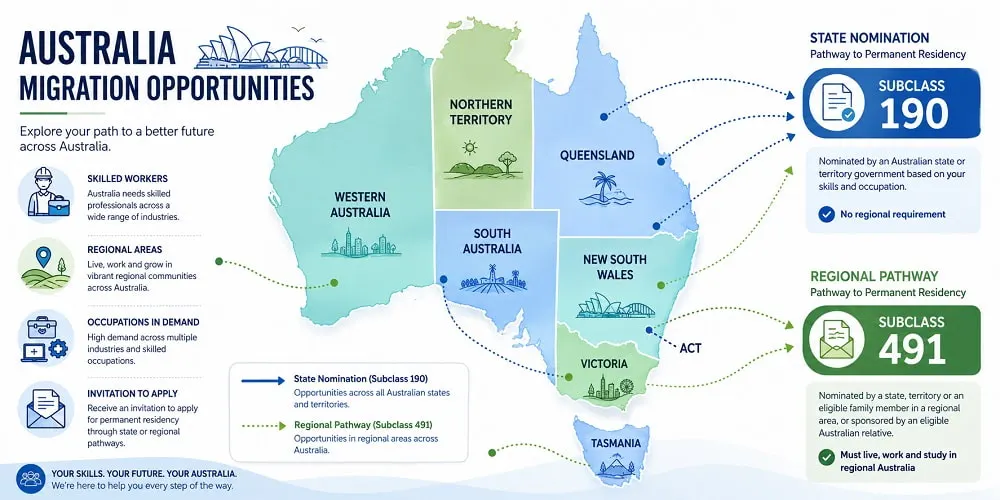
That is why this topic creates so much anxiety. If an occupation ceiling is effectively exhausted, having more points does not suddenly reopen subclass 189 for that occupation in the same program year. The practical takeaway is not that these occupations are “finished” for migration. It is that subclass 189 may be the wrong pathway for them right now, even if subclass 190, subclass 491, or employer sponsorship still remain open.
Subclass 189 is Not Only About Points. It is Also About Occupation Ceilings
This is the part many applicants miss.
A lot of people still think subclass 189 is a simple points race. They assume that if they keep improving English, partner points, or work experience, they will eventually be invited. But Home Affairs’ invitation-round guidance makes it clear that there is another layer in the system: occupation ceilings. In simple terms, that means there can be an upper limit on how many EOIs from a particular occupation group are invited. So a high score may help only if your occupation is still moving. If it is not moving, even very strong points may not rescue the 189 pathway in that program year.
That is why 189 planning in 2026 has become more occupation-sensitive than many applicants expected. The question is no longer only “How many points do I have?” The better question is “Is my occupation still realistically alive in 189 this year?”
The Occupations People are Most Worried About Right Now
The occupations having no realistic 189 chance for the rest of the financial year are:
Chef
Motor Vehicle Mechanic / Motor Mechanic
Accountant occupations
External Auditor
IT professionals
Civil Engineer
Mechanical Engineer
It is important to say this carefully: Home Affairs does not publish a simple live webpage saying “these occupations will not get another invite this year.” So the safest way to frame this is that these are the occupations currently framed as highest-risk or effectively closed for further 189 invitations.
The official part we can say with confidence is that occupation ceilings exist and that another 189 round is still possible because not all 16,900 program places were used in the November 2025 round. But whether that next round includes a specific occupation depends on whether there is still room under that occupation’s effective ceiling and how the Department chooses to run the round.
Occupations currently seen as high-risk for more subclass 189 invitations
Occupation group
Why applicants are worried
Practical 2026 takeaway
Chef
No realistic 189 chance for the rest of the year
Look harder at WA, 190, 491 or employer sponsorship
Motor mechanics
Similar concern around exhausted 189 opportunity
State nomination and employer routes matter more
Accountants
Heavy competition and ceiling pressure
190, 491 and state-targeted strategy become more important
External Auditors
Same issue as other accounting profiles
189 may be weak; state and employer pathways matter
IT professionals
Crowded field and weak 189 momentum
Compare 190, 491 and sponsorship instead
Civil Engineers
Unexpectedly weak for 189
Employer or state strategies may be more realistic
Mechanical Engineers
Unexpectedly weak for 189
Sponsorship and state nomination deserve more attention
The important thing is not panic. The important thing is pivoting early.
If Your Occupation has No Realistic 189 Shot, That Does Not Mean PR is Over
This is the biggest mindset shift applicants need.
A lot of people treat subclass 189 as the “real” PR pathway and everything else as backup. That is outdated thinking. Home Affairs’ 2025–26 planning levels show much bigger space in other parts of the Skill stream.
The program includes 44,000 places for Employer Sponsored, 33,000 for State/Territory Nominated, and 33,000 for Skilled Regional, compared with 16,900 for Skilled Independent. That tells you something very important: Australia’s migration system is now giving far more room to sponsored, nominated, and regional pathways than to 189 alone.
So if your occupation is flat for 189, the smarter question is not “Why is this unfair?” It is “Which of the bigger pathways still wants my profile?”
State Nomination is Where Many “Blocked” 189 Occupations Still Stay Alive
Some occupations may look weak for 189 but still have movement in 190 or 491, especially through state systems with their own occupation lists and invitation logic. That is particularly relevant for occupations like chefs, accountants, IT profiles and some engineering roles, which often struggle in 189 due to competition or ceiling pressure but still remain visible in state-nominated systems.
What to do if 189 is weak but your occupation still appears in state pathways
Pathway
Why it matters now
Subclass 190
Direct PR through state nomination if your profile fits the state
Subclass 491
Regional provisional route that can later lead to PR
Different states want different occupations and different profile types
Employer sponsorship
Often becomes stronger when 189 is not moving
This is where profile-based migration strategy becomes much more valuable than just chasing invitation rumours.
Western Australia is a Good Example of Why “No 189” Does Not Mean “No Migration”
Occupations like accounting, IT, and chef can still receive invites in WA, and that part is directionally supported by Western Australia’s invitation data.
WA’s State Nominated Migration Program is active in 2025–26, and Migration WA says invitation rounds began in December 2025. It also publishes detailed “last invited by occupation” data. In the March 2026 priority occupations round, WA’s published data shows Chef (351311) invited at 85 points, and Civil Engineer (233211) invited at 80 points.
In earlier published WA rounds, occupations like Accountant (General), Analyst Programmer, ICT Business Analyst, Developer Programmer, Software Engineer, Mechanical Engineer, Motor Mechanic, and related roles also appear in the state invitation data.
That is one of the clearest reasons not to overreact to a weak 189 position. A ceiling problem in one pathway does not automatically erase the occupation from all migration options.
WA examples showing movement outside subclass 189
Occupation
WA invitation evidence
What it means
Chef
Invited in WA March 2026 at 85 points
Chef may be weak for 189 but still alive in WA nomination
Civil Engineer
Invited in WA March 2026 at 80 points
Engineering can still move through state pathways
Accountant (General)
Appears in WA invitation data
Accounting is not dead, but may need a state route
ICT Business Analyst / Developer Programmer / Software Engineer
Appears in WA invitation data
IT may still have a path outside 189
Motor Mechanic
Appears in WA invitation data
Trade and technical occupations can still move through states
This is why applicants need to separate “no 189” from “no pathway.” They are not the same thing.
Why Employer Sponsorship May Now be the Strongest Option for Some Occupations?
Employer Sponsored has a much larger planning allocation than Skilled Independent in 2025–26. If your occupation is no longer realistically moving in 189, but employers still want the role, employer sponsorship can become more practical than waiting for another invitation round that may never include your occupation. This is especially relevant for engineering, trades, hospitality, and other occupations where real labour demand can matter more than SkillSelect competition.
That does not mean sponsorship is easy. It means that for many applicants, it is now more strategic than hoping a blocked 189 occupation suddenly reopens.
Another 189 Round May Still Happen but Not for Everyone
Because Home Affairs shows a 16,900 planning level for Skilled Independent and the November 2025 round issued 10,000 invitations, applicants are right to expect that another 189 round is still possible this financial year. But “possible” is not the same as “good for my occupation.” A later round may still happen while some occupations remain effectively shut out by ceiling pressure.
That is the key message your blog should communicate clearly:
A future 189 round can still happen, but if your occupation is already effectively capped out, more rounds may not help you.
The Smarter Strategy in 2026 is to Stop Treating 189 as the Only Real Goal
If your occupation still has room in 189, great. But if it does not, the answer is not waiting passively.
The smarter move is:
check your state nomination options,
compare 190 and 491,
see whether your occupation still has movement in places like WA,
and assess whether employer sponsorship is the stronger route now.
Aussizz Group has helped 200,000+ applicants to their Australian Dreams, and this is exactly where practical migration strategy matters. A lot of people waste months staring at subclass 189 when their occupation has already become a weak bet for the rest of the year.
If you want to know whether your occupation still has a realistic 189 chance or whether your stronger route is 190, 491 or employer sponsorship — book a consultation with Aussizz Group and build the plan around the real data, not just the visa number.
FAQs
Q1. What does an occupation ceiling mean for subclass 189?
Home Affairs says an occupation ceiling means there may be an upper limit on how many EOIs with a specific occupation can be invited from an occupation group.
Q2. Can there still be another subclass 189 round this financial year?
Possibly yes. Home Affairs shows a Skilled Independent planning level of 16,900 for 2025–26, and 10,000 invitations were issued in the 13 November 2025 round. That suggests another round is still possible, but not necessarily for every occupation.
Q3. If my occupation has no realistic 189 chance this year, is PR over?
No. You may still have realistic options through subclass 190, subclass 491, or employer sponsorship, depending on your occupation and profile.
Q4. Which occupations are people most worried about for no further 189 invites?
The occupations flagged as highest-risk are chef, motor mechanics, accountants, external auditors, IT professionals, civil engineers, and mechanical engineers.
Q5. Can chefs still get invited through state nomination?
Yes. WA’s March 2026 state invitation data shows Chef (351311) invited at 85 points, which means chef may still move through state nomination even if 189 is weak.
Q6. Can IT and accounting still move through Western Australia?
Yes. Published WA invitation data includes occupations such as Accountant (General), Analyst Programmer, ICT Business Analyst, Developer Programmer, and Software Engineer.
Q7. Can engineers still get invited outside 189?
Yes. WA’s published invitation data includes Civil Engineer and Mechanical Engineer, showing that engineering can still move through state pathways even if 189 looks weak.
Q8. Is employer sponsorship stronger than subclass 189 now?
For some occupations, yes. The 2025–26 Migration Program includes 44,000 Employer Sponsored places compared with 16,900 Skilled Independent places, which shows much more room in employer-backed migration than in 189 alone.
Q9. Do more points help if an occupation ceiling is already exhausted?
Not in a practical sense for that pathway. If the ceiling is effectively used up, higher points do not reopen 189 for that occupation in the same program year. That conclusion follows from Home Affairs’ occupation-ceiling definition.
Q10. What should applicants do if their 189 pathway looks blocked?
The smartest next step is to compare 190, 491, and employer-sponsored options based on your exact occupation, state fit, and work situation, instead of waiting only for another 189 round.

 AUS
Australia
AUS
Australia
 IND
India
IND
India
 UAE
UAE
UAE
UAE
 CA
Canada
CA
Canada
 SL
Srilanka
SL
Srilanka
 HK
Hong Kong
HK
Hong Kong