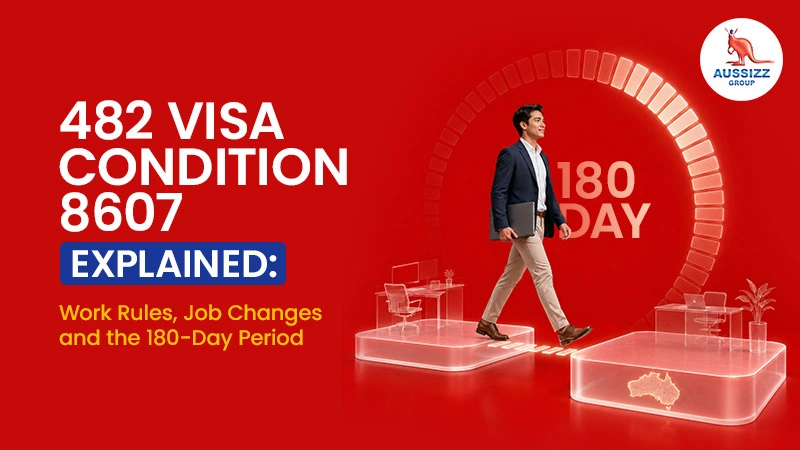
482 Visa Condition 8607 Explained: Work Rules, Job Changes and the 180-Day Period
If you hold a Temporary Skill Shortage visa subclass 482 or the newer Skills in Demand visa subclass 482, your work rights are not the same as a normal open work visa. Your visa is linked to your sponsoring employer, your nominated occupation and the conditions attached to your visa.
One of the most important conditions is Condition 8607. This condition controls what work you can do, who you can work for, what happens if your employment ends, and what steps are needed if you want to change employer or occupation.
Many 482 visa holders only read this condition after something goes wrong, such as job loss, resignation, workplace conflict, salary issues or a new employer offer. That can be risky. A breach of visa conditions can affect your current visa and future visa options.
The good news is that since 1 July 2024, 482 visa holders have more time and flexibility if their employment with their sponsor ends. Instead of being under immediate pressure, eligible workers may stop working or work outside their sponsorship conditions for up to 180 days at one time and up to 365 days in total during the visa period. However, this flexibility does not mean you can freely change occupation without the correct process.
Aussizz Group has helped 200,000+ applicants to their Australian Dreams, and the key message for 482 visa holders is simple: understand Condition 8607 before changing jobs, changing duties or stopping work.
Condition 8607 Requires You to Work in Your Nominated Occupation
The first rule is that you must work only in the occupation nominated in your most recently granted subclass 482 visa. This applies to both the older Temporary Skill Shortage visa and the newer Skills in Demand visa.
The Migration Regulations state that a subclass 482 visa holder subject to Condition 8607 must work only in the nominated occupation identified in the nomination for the most recent subclass 482 visa granted to them. For the Skills in Demand visa, the same condition applies to the nominated occupation under the most recent subclass 482 grant.
For example, if your most recent 482 visa was granted for the occupation of Chef, you should not start working as a Restaurant Manager unless the correct nomination and visa process has been completed. If your visa was granted as a Software Engineer, you should be careful before moving into a mostly helpdesk, sales or project coordination role if the duties no longer match the nominated occupation.
Changing to a Different Occupation Requires a New Nomination and New Visa Grant
Changing employer and changing occupation are not the same thing. A 482 holder may be able to move to a new sponsor if the correct nomination process is completed. But if the new role is in a different occupation, you generally need a new nomination and a new 482 visa granted before working in that new occupation.
This is where many visa holders make mistakes. A promotion may sound positive, but if it changes the occupation, it can create a visa problem. For example, moving from a hands-on technical role into a management role may not always remain the same nominated occupation. Similarly, moving from one hospitality role to another may still require careful occupation matching.
Before accepting a new title or role, check whether the actual duties still fit the approved occupation.
You Must Usually Work for Your Sponsor or Associated Entity
Condition 8607 also requires the visa holder to work only for the person who nominated them or an associated entity of that person, unless an exemption applies. The official Skills in Demand visa page also explains that visa holders must generally work only for their sponsor or associated entity unless exempt.
This rule is important for applicants who receive a casual side job, freelance project, weekend work or second employer opportunity. A 482 visa is not an open work visa. Even if the work is in the same occupation, working for the wrong employer can be a problem unless the rules allow it.
The 180-Day Rule Applies When Employment Ends
From 1 July 2024, Condition 8607 was changed to give sponsored workers more mobility when their employment ends. The amendment allows affected subclass 482 visa holders to stop working in accordance with their sponsorship conditions or work outside those conditions for up to 180 consecutive days at one time and up to 365 days in total during the visa period. The legislative explanation states this change supports worker mobility by giving holders time to find a new sponsor, apply for another visa or depart Australia.
Rule after employment ends
Current limit
Maximum single period
Up to 180 consecutive days
Maximum total during visa period
Up to 365 days
Applies from
1 July 2024
Purpose
Find new sponsor, apply for another visa or depart Australia
Still important
Do not exceed the allowed time
This is a major improvement compared with the older 60-day pressure many sponsored workers used to face. It gives workers more breathing space if they are made redundant, resign, are dismissed or otherwise stop working for the sponsor.
However, the period is not unlimited. If you go beyond the allowed time, you may breach your visa condition.
The 365-Day Total Limit is Just as Important as the 180-Day Limit
Many people remember the 180-day rule but forget the 365-day total cap. Condition 8607 allows up to 180 days in a single period, but the total time outside the approved work arrangement cannot exceed 365 days across the whole visa period.
Example
What to watch
One job loss for 120 days
Within 180 days, but counts toward 365 total
Later job loss for 100 days
New total becomes 220 days
Multiple gaps across visa period
All relevant days may add up
One gap over 180 days
Can breach the single-period limit
Total gaps over 365 days
Can breach the total visa-period limit
This means visa holders should track every day carefully. Do not assume the clock resets completely after getting a new sponsor. The 180-day period and 365-day total limit work together.
The 180-Day Period Does Not Mean You Can Permanently Work Anywhere
The 180-day flexibility is designed to help a sponsored worker deal with employment ending. It is not a new open work visa. It gives time to arrange the next lawful step.
The safest approach is to start planning immediately after employment ends. Even though 180 days sounds like a long time, employer sponsorship paperwork can take time. Labour market testing, nomination preparation, salary evidence, occupation matching and visa strategy may all need to be reviewed.
Your Employment End Date Should Be Clear and Documented
When employment ends, the date matters. It affects the 180-day count and the total 365-day count. Visa holders should keep documents that show when their employment ended.
Employers also have sponsor obligations when a sponsored worker’s employment ends. Sponsored visa holders should not rely only on verbal conversations. Written evidence helps avoid confusion later.
New Sponsor Planning Should Start Before You Leave the Old Job Where Possible
Sometimes employment ends suddenly. In other cases, the visa holder is planning to resign or move to a better employer. If the change is planned, migration steps should be reviewed before leaving the old job.
A new job offer is not enough by itself. The new employer must complete the correct sponsorship or nomination steps before the visa holder starts working under the new approved arrangement.
Side Jobs, Freelance Work and Second Employment Can Create Risk
Because a 482 visa is linked to a sponsor and nominated occupation, side work should be treated carefully. Many visa holders ask whether they can drive rideshare, do freelance work, accept weekend shifts or work casually for another business.
The answer depends on the visa conditions, role, payment, employer, occupation and whether an exemption applies. Visa holders should not assume unpaid or casual work is automatically safe.
Sponsors and Workers Should Both Understand Compliance
Condition 8607 is not only important for the visa holder. Sponsors also need to understand the consequences of employment changes, role changes and salary changes. A sponsor must ensure the worker is employed in the approved role and that sponsorship obligations are met.
Sponsor responsibility area
Why it matters
Role consistency
Worker should perform nominated occupation
Salary and conditions
Must remain consistent with approved arrangements
Notification duties
Certain changes may need to be reported
Workplace records
Should support compliance if checked
Business restructure
May affect the approved sponsor relationship
New location or entity
Should be reviewed before change
A well-managed sponsorship reduces risk for both the employer and the worker. Poor communication can create avoidable visa issues.
Future PR Planning Can Be Affected by 482 Work Changes
This is why a 482 work issue should not be treated only as a short-term problem. The decision you make after job loss or a new job offer can affect your PR strategy.
Common Mistakes 482 Visa Holders Make Under Condition 8607
Most Condition 8607 problems happen because visa holders act first and check rules later.
Common mistake
Better approach
Starting work for a new employer too early
Wait until the correct nomination process is in place
Changing occupation without a new visa
Check whether a new 482 visa grant is required
Ignoring the 365-day total limit
Track all periods outside approved employment
Assuming 180 days means open work rights forever
Use the period to organise the next visa step
Doing side jobs casually
Check whether work is allowed
Not keeping termination documents
Keep written proof of employment end date
Waiting too long after job loss
Start sponsor search and visa advice early
Not checking PR impact
Review long-term pathway before changing roles
A simple mistake can become expensive if it leads to breach, cancellation risk or future visa problems.
Final Advice for 482 Visa Holders
Condition 8607 is one of the most important rules for Temporary Skill Shortage and Skills in Demand subclass 482 visa holders. It requires you to work in the occupation nominated in your most recently granted 482 visa and usually only for your sponsor or their associated entity unless an exemption applies.
If your employment ends, the current rules give you more flexibility than before. From 1 July 2024, you may stop working or work outside your sponsorship conditions for up to 180 consecutive days at a time, and up to 365 days in total during your visa period. This gives you time to find a new sponsor, apply for another visa or depart Australia.
However, the rule does not mean you can freely change occupation. If you want to move into a different occupation, you generally need a new nomination and a new 482 visa granted before starting that new occupation.
Aussizz Group can help 482 visa holders review Condition 8607, employment end dates, new sponsor options, occupation changes, nomination requirements and future PR planning.
Aussizz Group has helped 200,000+ applicants to their Australian Dreams, and timely advice can help you avoid work-condition mistakes that may affect your visa journey.
FAQs
Q1. What is Condition 8607 on a 482 visa?
Condition 8607 is a work condition that applies to many subclass 482 visa holders. It generally requires the visa holder to work only in the nominated occupation and usually only for the sponsor or associated entity unless an exemption applies.
Q2. Can I change employer on a 482 visa?
You may be able to change employer, but the new employer usually needs to complete the correct nomination process before you start working for them under the sponsored arrangement.
Q3. Can I change occupation on a 482 visa?
Changing to a different occupation generally requires a new nomination and a new 482 visa grant before you start working in the new occupation.
Q4. What happens if my 482 employment ends?
From 1 July 2024, you may stop working or work outside your sponsorship conditions for up to 180 consecutive days at one time and up to 365 days in total during the visa period.
Q5. Does the 180-day rule mean I can work anywhere?
No. The 180-day period gives temporary flexibility after employment ends, but it does not permanently turn your 482 visa into an open work visa.
Q6. What is the 365-day total limit for 482 visa holders?
The 365-day total limit means that across your whole visa period, the total number of days you are not working in accordance with Condition 8607 must not exceed 365 days.
Q7. Can I do a second job on a 482 visa?
Second jobs, side jobs and freelance work can create visa risk because a 482 visa is linked to the sponsor and nominated occupation. You should check your visa conditions before accepting extra work.
Q8. Can I work for an associated entity of my sponsor?
Condition 8607 may allow work for an associated entity of the sponsor in certain circumstances. The business structure and approved nomination should be checked carefully.
Q9. Does Condition 8607 apply to Skills in Demand subclass 482 visa holders?
Yes. Condition 8607 applies to subclass 482 Skills in Demand visa holders and includes the requirement to work in the nominated occupation from the most recent subclass 482 grant.
Q10. Can Aussizz Group help if I lost my 482 sponsor?
Yes. Aussizz Group can help review your remaining time under Condition 8607, new sponsor options, nomination requirements, visa alternatives and PR pathway strategy.

 AUS
Australia
AUS
Australia
 IND
India
IND
India
 UAE
UAE
UAE
UAE
 CA
Canada
CA
Canada
 SL
Srilanka
SL
Srilanka
 HK
Hong Kong
HK
Hong Kong