
 AUS
Australia
AUS
Australia
 IND
India
IND
India
 UAE
UAE
UAE
UAE
 CA
Canada
CA
Canada
 SL
Srilanka
SL
Srilanka
What is the MATES Program?
The MATES program, officially the Mobility Arrangement for Talented Early-professionals Scheme under the Subclass 403 visa – is a joint initiative between the governments of Australia and India, designed to allow eligible Indian graduates and early-career professionals to live and work in Australia for up to two years.
Key features:
- Up to 3,000 places annually for primary applicants.
- No employer sponsorship required.
- Applicants can bring dependents (spouse / children) who can also work in Australia; dependents are not counted towards the 3,000 cap.
- Targeted fields of study/skills: renewable energy, mining, engineering, ICT, AI, FinTech, AgriTech.
- Age and qualification restrictions: e.g., up to age 30; recent graduate (within 2 years) etc.
What’s New & Key Updates for 2025?
First Intake & Timelines
- First ballot registrations were announced to open 9 December 2024 and close 7 January 2025 for program year 2024-25 and successful applicants should have received their visa for 2024-25 program year.
- For the program year 2025-26, registrations are slated to open 1 November 2025 and close 14 December 2025.
- Once selected in the ballot, applicants will be invited to apply for the visa.
Eligibility & Fields
- Age: Be aged 18 to 30 years (Inclusive) at the beginning of the ballot registration open period.
- Recent graduate: Bachelor’s degree (or higher) in one of the eligible target fields, within 2 years of ballot registration open period from an eligible educational institution.
- English proficiency: e.g., IELTS overall 6.0 with minimum 5.0 in each band (or equivalent) for some sources.
Benefits & Conditions
- Duration: Stay in Australia for up to 24 months (2 years) after first entry.
- Multiple entries allowed.
- No job offer required. You can work in Australia, potentially in any field (though subject to visa conditions) while you gain experience.
- Opportunity to bring family members (spouse / dependent children).
Why This Pathway is Significant for Indian Graduates & Professionals?
- Australia has launched this pilot with the aim to bring in talent to sectors of high demand while deepening bilateral India-Australia cooperation.
- For recent graduates and early-career professionals, MATES offers a work mobility opportunity without needing employer sponsorship—a rare option.
- Gaining 12-24 months of Australian work experience can strengthen your career profile and potentially feed into future migration pathways (skilled visas, etc.).
- For organisations like Aussizz Group (which has guided around 180,000 applicants through various Australian visas), there is expertise available to help you maximise this opportunity.
How to Apply: Step-by-Step Guide?
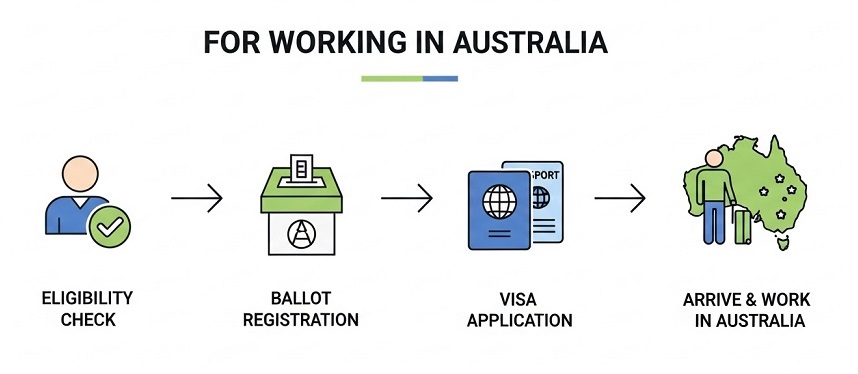
Step 1 – Check Your Eligibility & Prepare Documents
- Confirm age, recent graduation status (within 2 years), target field degree, English proficiency, Indian passport, no previous participation in MATES.
- Prepare documents: academic transcripts, English test results, passport, identity/character/medical checks as required.
Step 2 – Register for the Ballot
- Submit your ballot registration at the announced start date (e.g., 1st Nov 2025 to 14th December 2025 for 2025-26). The registration fee is AUD $25.
- Wait for selection. If selected, you receive an invitation to apply for the visa.
Step 3 – Submit Visa Application
- Once invited, apply for the Subclass 403 MATES stream visa as per instructions on the Department of Home Affairs website. Provide all supporting documents and pay the visa application fee.
- Ensure you meet the visa conditions (making first entry within 12 months, staying within allowed period, etc.).
Step 4 – Plan Your Stay & Work in Australia
- Once granted, you can live, work and (depending on visa conditions) study in Australia for up to 24 months.
- Use the time to build professional networks, gain experience, understand the Australian labour market and explore pathways (if applicable) to longer-term visas.
- Consider consulting with Aussizz Group to map out next steps beyond the MATES visa.
How MATES Compares With Other Australian Work & Migration Options?
MATES vs Standard Temporary Work Visas
| Feature | MATES Stream (403) | Typical Employer-Sponsored Work Visa (e.g., Subclass 482) |
| Sponsorship required | No employer sponsorship needed for MATES. | Employer sponsorship required. |
| Target group | Recent Indian graduates / early career professionals in targeted fields. | Wider pools of skilled workers, many age and experience thresholds. |
| Annual cap | 3,000 places per year for MATES. | Varies by visa subclass and labour agreement. |
| Duration | Up to 2 years stay. | Can vary 2–4 years based on subclass. |
| Pathway to PR | Not automatic; participants need to explore other visa pathways afterwards. | Some employer-sponsored visas provide direct pathways to PR under certain conditions. |
MATES vs Skilled Migration Visas
- Skilled visas (e.g., Subclass 189, Subclass 190) are designed for long-term/permanent migration, require skilled assessment, points-test, nomination.
- MATES is a mobility program, primarily for gaining experience and temporary stay in Australia, especially for Indian graduates in high-demand fields.
- If your goal is permanent residency, you may use MATES period to gain experience and then transition into a skilled migration stream or employer-sponsored option.
Key Questions Addressed
Q1. What is the MATES Program and who can apply?
The MATES programme is the Mobility Arrangement for Talented Early-Professionals (under Subclass 403) offered by Australia for Indian nationals. It allows eligible Indian graduates and early-career professionals (18 to 30 years(Inclusive), recent graduates from specified fields) to live and work in Australia for up to two years, under a ballot-based allocation of up to 3,000 places annually.
Q2. How does the ballot and application process for MATES work?
Applicants must first register a pre-application ballot when the registration window opens. A fee of AUD $25 is payable for registration. If selected in the ballot, the applicant receives an invitation and must then lodge the full visa application for the Subclass 403 MATES stream within the timeframe and meet all visa criteria.
Q3. What benefits does the MATES visa provide and are there any restrictions?
Benefits include the opportunity to live and work in Australia for up to 24 months, bring family members (spouse or children) who can also have full work rights, and enter Australia multiple times during the visa period. Restrictions include the age, qualification and field-of-study eligibility, the annual cap of 3,000 applicants, and it being a temporary visa without an automatic pathway to permanent residency.
Q4. Can the time spent on the MATES visa count towards Australian Permanent Residency (PR)?
While the MATES visa itself does not guarantee PR, the time working and living in Australia under the visa can enhance your profile and experience. If you meet the eligibility criteria for a skilled migration or employer-sponsored visa in the future, your Australian experience may strengthen your application—but you’ll still need to meet all requirements of the subsequent visa.
Q5. What role can Aussizz Group play in my MATES visa journey?
With a strong track record of guiding over 180,000 applicants to their Australian visas, Aussizz Group can assist you with eligibility assessment, documentation preparation, ballot registration timing, visa application strategy, and planning next-stage pathways (such as skilled migration) so you maximise your MATES opportunity and beyond.
Take the Next Step Now
The MATES programme is a ground-breaking mobility pathway between India and Australia for 2025, offering Indian graduates and early-care professionals an exceptional chance to live and work in Australia for up to two years-without employer sponsorship. By preparing early, leveraging your eligibility in targeted fields such as engineering, AI, FinTech or renewable energy.
Seize the opportunity by booking a consultation with Aussizz Group and make your Australian dream come true.
Introduction
If you’re someone who loves hands-on work, creativity, and building a stable career, then studying a trade course in Australia is one of the smartest paths you can take.
From carpentry and fabrication to horticulture and automotive repair, trade programs are designed for students who want to turn their skills into real, employable opportunities. These qualifications are highly practical, industry-driven, and form a key part of Australia’s Skills Priority List – offering strong job outcomes and Permanent Residency (PR) pathways.
At Aussizz Group, our expert education counsellors and registered migration agents help you choose the right trade course, secure your visa, and map out your long-term PR strategy.
Why Choose a Trade Course in Australia?
Trade courses combine technical expertise with practical, job-ready training. They’re ideal for students who prefer real-world skills over purely theoretical learning.
Top Benefits:
- High demand across construction, manufacturing, automotive, and horticulture industries.
- PR eligibility through the Skilled Occupation List (SOL) and MLTSSL.
- Hands-on learning through workshops, site experience, and apprenticeships.
- Strong earning potential with consistent job opportunities nationwide.
- Flexible study levels – Certificate III, IV, and Diploma programs.
Trade courses offer more than skills – they open doors to a long-term career and migration success.
Popular Trade Course Options in 2026
Based on the official register training.gov.au, here are the most in-demand trade qualifications for international students in 2026:
| Trade Course | Qualification Pathway | Career Opportunities | PR Eligibility |
| Carpentry (CPC30220) | Cert III → Cert IV | Carpenter, Site Supervisor | Yes |
| Bricklaying / Blocklaying (CPC33020) | Cert III → Cert IV | Bricklayer, Mason | Yes |
| Automotive Technology (AUR30620 / AUR40216) | Cert III → Cert IV → Diploma | Mechanic, Auto Electrician | Yes |
| Panel Beating (AUR32120) | Cert III → Cert IV | Automotive Body Repairer, Panel Beater | Yes |
| Wall & Floor Tiling (CPC31320) | Cert III → Cert IV | Tiler, Site Worker | Yes |
| Commercial Cookery (SIT30821) | Cert III → Cert IV → Diploma of Hospitality Mgmt | Chef, Cook | Yes |
| Painting & Decorating (CPC30620) | Cert III → Cert IV | Painter, Decorator | Yes |
| Solid Plastering (CPC31020) | Cert III → Cert IV | Plasterer, Renderer | Yes |
| Cabinet Making (MSF30322) | Cert III → Cert IV | Furniture / Cabinet Maker | Yes |
| Engineering – Fabrication Trade (MEM30319) | Cert III → Cert IV | Welder, Metal Fabricator | Yes |
| Glass and Glazing (MSF30422) | Cert III → Cert IV | Glazier, Glass Installer | Yes |
| Horticulture (AHC30722) | Cert III → Cert IV → Diploma | Gardener, Landscape Technician, Nursery Supervisor | Yes |
You can explore detailed qualification structures on training.gov.au.
Course Fees & Intake Dates for 2026 Trade Programs
Trade courses in Australia are among the most affordable and high-value study options for international students. The table below provides an overview of average tuition fees and key intakes for 2026:
| Course | Duration | Average Annual Fee (AUD) | 2026 Intakes |
| Carpentry (CPC30220) | 2 years | $12,000 – $18,000 | Feb / Jun / Oct |
| Bricklaying / Blocklaying (CPC33020) | 2 years | $10,000 – $16,000 | Feb / Jun / Oct |
| Wall & Floor Tiling (CPC31320) | 2 years | $11,000 – $17,000 | Feb / Jun / Sep |
| Solid Plastering (CPC31020) | 2 years | $10,000 – $15,000 | Feb / Jun / Sep |
| Fabrication (MEM30319) | 2 years | $13,000 – $20,000 | Feb / May / Sep |
| Glass & Glazing (MSF30422) | 2 years | $11,000 – $16,000 | Feb / Jun |
| Horticulture (AHC30722) | 1.5 – 2 years | $10,000 – $17,000 | Feb / Jul |
| Panel Beating (AUR32120) | 2 years | $13,000 – $19,000 | Feb / Jul / Oct |
| Cabinet Making (MSF30322) | 2 years | $11,000 – $16,000 | Feb / Jun |
| Commercial Cookery + Hospitality Mgmt (SIT30821) | 2.5 – 3 years | $15,000 – $22,000 | Feb / Jul / Oct |
| Automotive Technology (AUR30620) | 2 years | $12,000 – $18,000 | Feb / Jul / Oct |
Note: Fees may vary depending on provider, state, and location.
Many trade colleges also offer rolling monthly intakes for programs such as Automotive, Fabrication, and Horticulture, ensuring faster enrolment and flexible start dates.
Tip: Apply early to secure your seat and streamline your Subclass 500 Student Visa application.

Our Top Trade Course Recommendations for 2026
If your goal is PR and high employability, focus on trades currently in shortage:
- Fabrication (Metal / Welding) – Key MLTSSL occupation.
- Carpentry – High PR success rate and steady demand.
- Bricklaying & Solid Plastering – Critical for housing and infrastructure growth.
- Horticulture – Emerging PR pathway under regional occupation lists.
- Panel Beating (Automotive Body Repair) – In-demand in urban and regional service industries.
- Wall & Floor Tiling – Reliable employment across Australia.
Each qualification is recognised by Trades Recognition Australia (TRA) for skills assessment and PR eligibility.
Demand for Trade Occupations in Australia
According to the SkillSelect EOI Data Dashboard (Department of Employment & Workplace Relations):
- Carpenters & Joiners (331212) remain top for 189, 190 & 491 visa invitations.
- Welders (322313) and Metal Fabricators (322311) show strong demand regionally.
- Chefs (351311) and Automotive Technicians (321211) remain consistently nominated.
- Horticulturists (362311) and Panel Beaters (324111) show rising demand, especially under state-sponsored migration programs in QLD, SA, and WA.
- Bricklayers (331111) and Solid Plasterers (333212) remain critical for Australia’s housing projects.
These trends confirm that trade courses continue to be top PR pathways for international students.
Career & PR Pathways After Completing a Trade Course
- Graduate → Apply for a Temporary Graduate Visa (Subclass 485).
- Obtain Provisional Skills Assessment (PSA) from TRA.
- Gain 12 months of skilled work experience in Australia.
- Apply for a Full Skills Assessment.
- Pursue PR via Subclass 189, 190, 491, or Employer Sponsored Visas (482/186).
How Aussizz Group Supports You?
At Aussizz Group, we provide complete guidance from course selection to PR strategy, including:
- Course & College Selection: Choose trade programs aligned with your career and migration goals.
- Visa Assistance: For student (500), graduate (485), skilled (189/190/491), and employer-sponsored visas.
- OSHC & OVHC Arrangements: Via GetMyPolicy.online – affordable, DHA-compliant coverage.
- TRA Skills Assessment Support: Documentation, guidance, and submission.
- Migration Pathway Planning: Long-term PR and sponsorship advice.
- Professional Year & Job Preparation: Gain experience and PR points.
With 30+ offices globally, Aussizz Group is your trusted partner for achieving a skilled career and permanent future in Australia.
Conclusion
Build a Career That’s as Solid as Your Skills
Trade qualifications are your foundation for job stability, migration opportunities, and hands-on success in Australia. Whether you’re crafting furniture, welding metal, shaping gardens, or fixing cars, your skills can shape a long-term Australian future.
At Aussizz Group, we simplify the process – from course selection to visa lodgement – helping you study, work, and settle confidently.
Contact Aussizz Group today to explore 2026 trade course options and take your first step toward your Australian skilled career.
What is the Subclass 485 Visa?
The Temporary Graduate Visa (Subclass 485) allows international students who have completed eligible studies in Australia to live, work, and study temporarily.
There are two main streams:
Importantly, this visa provides unrestricted work rights—meaning you can take up full-time employment or start a business in Australia.
This freedom makes the 485 visa a powerful launchpad for entrepreneurship and side hustles.
Why the 485 Visa is the Ideal Launchpad for a Side Hustle in Australia?
From Study Mode to Business Mode
While on a student visa (Subclass 500), you were limited to 48 hours of work per fortnight. But on a 485 visa, those restrictions are gone, you can dedicate your time fully to employment or business pursuits.
Australia’s Entrepreneurial Environment
Australia encourages start-ups through accessible ABN registration, tax support, business mentorships, and small-business grants. You can legally register your business and operate as a sole trader, partnership, or company.
Why a Side Hustle Makes Sense
- You already understand local markets and culture.
- A side hustle lets you test your idea with minimal risk.
- A profitable venture can later evolve into a PR pathway.
Key Steps to Start a Side Hustle on Your 485 Visa
Step 1 – Check Eligibility & Duration
Confirm your 485 visa stream, conditions, and expiry date. Ensure you remain compliant with Australian immigration rules.
Step 2 – Choose and Register Your Business Structure
- Select from sole trader, partnership, or company.
- Register for an Australian Business Number (ABN) and Tax File Number (TFN).
- Apply for required permits or licences on business.gov.au.
Step 3 – Validate Your Business Idea
Use local insights, alumni networks, and community groups to test your product-market fit.
Step 4 – Stay Legally Compliant
Follow taxation, payroll, and superannuation regulations. Maintain transparent records to support any future PR or business visa applications.
Step 5 – Plan for Long-Term Growth
Your 485 visa is temporary. Build business credibility and plan ahead for transition to a Skilled Migration (189/190/491) visa.
Student Visa vs 485 Visa vs Skilled Migration Visa
| Criteria | Student Visa (Subclass 500) | Temporary Graduate Visa (Subclass 485) | Skilled Migration Visa (189/190/491) |
| Work Rights | 48 hours per fortnight (during term) | Full, unlimited – work or run a business | Full (permanent) |
| Business Eligibility | Allowed but secondary to study; must not interfere with education | Fully permitted – you can operate as a sole trader or director | Business experience adds up to 15 points |
| Visa Duration | Course-length dependent | 18 months – 3 years (fixed by qualification):Diploma/Trade: 18 monthsBachelor/Master’s (coursework): 2 yearsMaster’s (research)/PhD: 3 years | Permanent |
| Purpose | Study in Australia | Gain work experience or launch a business | Permanent residency via points test (65+ required) |
| Common Next Step | Apply for 485 Visa or PR | Skilled Migration Visa | Already a PR, apply for citizenship |
| Best Suited For | International Students | Recent graduates building skills or business | 485 holders with occupation on SOL, 65+ points, and business/employment proof |

Practical Tips for Success During Your 485 Period
- Register early for your ABN and keep all business documentation ready.
- Balance time between job commitments and your business goals.
- Start small – test ideas before scaling.
- Network locally through university incubators and small-business events in Sydney, Melbourne, and Brisbane.
- Plan your next visa step at least six months before your 485 expires.
- Consult experts – Aussizz Group can connect you with migration and business advisors.
Frequently Asked Questions
Q1. Can I legally start a business on a 485 Visa?
Yes. The Subclass 485 visa allows full-time work and business activities. You can operate as a sole trader, register an ABN, and run your venture legally.
Q2. Do I need to register an ABN or business name?
Yes. Anyone doing business in Australia must obtain an ABN and, where applicable, register a business name through ASIC. It ensures tax compliance and professional credibility.
Q3. Will starting a business affect my visa or PR eligibility?
No, provided you stay compliant. While a 485 visa is temporary, running a legitimate business can strengthen your profile for skilled migration or business-innovation visas later.
Q4. What happens when my 485 visa expires?
You’ll need to either transition to another visa (such as Skilled Migration (189/190/491)) or transfer/wind up your business. Planning this 6–12 months before expiry is recommended.
Q5. What mistakes should I avoid?
- Not registering for an ABN or paying taxes.
- Over-committing without validating your idea.
- Ignoring visa timelines or future pathways.
- Failing to maintain documentation for compliance.
Let’s Get You Business-Ready!
Your 485 visa is more than a temporary work permit—it’s a launchpad for your entrepreneurial journey in Australia.
Turn your passion project into a profitable venture and set yourself up for long-term success.
With Aussizz Group’s expertise—trusted by more than 180,000 applicants – you can turn this opportunity into a stepping-stone toward long-term success and residency in Australia.
Introduction
Dreaming of studying in Australia in 2026?
Every year, thousands of international students choose Australia for its world-class education, supportive environment, and globally recognised qualifications.
In October 2025, the Australian Government announced the 2026 international student allocations for both public universities and VET providers. These allocations determine how many new overseas students each institution can enrol, influencing admissions planning and Subclass 500 visa processing.
At Aussizz Group, our experienced education counsellors and registered migration agents help students understand policy updates, choose suitable courses, and prepare their study applications with confidence and compliance.
The Managed System for 2026: A Smarter Approach to International Education
In August 2025, the Government confirmed a National Planning Level (NPL) of 295,000 new overseas student commencements (NOSC) for 2026.
This target forms part of the Managed System for International Education 2026, which aims to manage growth sustainably and fairly.
Under this system:
- No public university or VET provider received less than its 2025 allocation.
- Institutions that invested in student accommodation or engagement with Southeast Asia qualified for higher allocations.
- Regional universities gained additional places to spread education opportunities beyond metropolitan areas.
This balanced approach strengthens quality assurance, student welfare, and infrastructure planning across the sector.
2026 University Allocations – Key Highlights
According to the Department of Education’s official factsheet, all publicly funded universities have now received their 2026 allocations for new international student commencements (NOSC).
| University | 2026 Allocation (NOSC) |
| The University of Sydney | 11,900 |
| Monash University | 11,300 |
| The University of Melbourne | 10,500 |
| UNSW Sydney | 10,350 |
| The University of Queensland (UQ) | 8,050 |
| RMIT University | 7,700 |
| Adelaide University (merger of Adelaide & UniSA) | 7,350 |
| Deakin University | 6,550 |
| University of Technology Sydney (UTS) | 5,350 |
| Macquarie University | 5,250 |
| La Trobe University | 4,800 |
| Swinburne University of Technology | 4,500 |
| Curtin University | 4,100 |
| Griffith University | 3,950 |
| Charles Darwin University | 2,650 |
| Federation University Australia | 1,800 |
| Southern Cross University | 1,500 |
| University of the Sunshine Coast | 1,350 |
For the full list, see the official Department of Education publication:
Indicative allocations for publicly funded university new overseas student commencements 2026 (PDF)
2026 VET Allocations – Focus on Skills and Employability
The Vocational Education and Training (VET) sector continues to support Australia’s workforce needs by equipping students with practical, job-ready skills.
The 2026 allocations, published by the Department of Employment and Workplace Relations, focus on stability, quality, and regional access.
Key Highlights
- No provider received less than its 2025 allocation.
- Large VET providers (100 + NOSC in 2025) gained 5 percent growth.
- Smaller providers were placed in a shared pool for equitable access to Priority 1 visa processing.
- TAFE institutes retain unlimited priority visa processing.
- A small reserve supports new market entrants.
Leading TAFE and Large VET Providers
| Provider | 2026 Allocation (NOSC) |
| TAFE Queensland | 1,358 |
| NSW TAFE Commission | 936 |
| Department of Training and Workforce Development (WA) | 771 |
| William Angliss Institute | 444 |
| Holmesglen Institute | 244 |
| Melbourne Polytechnic | 101 |
| Charles Darwin University (VET Division) | 90 |
| Bendigo Kangan Institute | 67 |
| Box Hill Institute | 38 |
Top Private VET Providers
| Provider | 2026 Allocation (NOSC) |
| ILSC (Brisbane) Pty Ltd | 1,422 |
| Young Rabbit Pty Ltd | 1,187 |
| Crown Education Pty Ltd | 1,127 |
| Stanley International College | 1,004 |
| Imagine Education Australia Pty Ltd | 995 |
| Southern Cross Education Institute | 706 |
View the full VET allocations list:
Indicative allocations for VET new overseas student commencements 2026 (PDF)

How Allocations Affect Visa Processing and Student Planning?
The 2026 allocations will shape institutional admissions and visa prioritisation.
- Visa Processing: Providers that meet quality and accommodation standards may receive Priority 1 visa status, reducing delays.
- Course Selection: Choosing a recognised university or VET provider with an approved allocation supports smoother enrolment and visa processing.
- Regional Advantage: Studying in regional areas can offer more personalised support and a balanced learning experience.
- Accommodation Support: Universities investing in new student housing can better meet welfare expectations for incoming students.
This managed approach promotes transparent admissions, efficient processing, and better student support systems.
How Aussizz Group Can Support You
With changing policy frameworks, professional guidance is essential to ensure accuracy and compliance.
At Aussizz Group, our team of education counsellors and migration professionals provides:
- Guidance to help you prepare a Genuine Student (GS) statement and supporting documents that meet Department of Home Affairs expectations
- Personalised counselling to identify the right course and institution based on your academic background and goals
- Assistance with Subclass 500 student visa lodgement and understanding eligibility criteria
- Advice on OSHC, accommodation, and financial planning
- Guidance on post-study work visa timelines and requirements
Our goal is to make your Australian education journey clear, compliant, and well supported from start to finish.
Conclusion
Australia’s 2026 allocations reflect a strategic focus on quality education and sustainable growth. Whether you plan to study at a top university or enrol in a skills-based VET program, understanding these allocations helps you make informed choices.
At Aussizz Group, we are committed to helping students find the right study pathway and navigate the visa process with clarity and confidence.
Contact our team today to discuss your 2026 study options and take the next step toward achieving your academic goals in Australia.
Frequently Asked Questions (FAQs)
Q1. What does “allocation” mean for international students?
An allocation sets the number of new international students each university or VET provider can enroll in 2026, as part of the Government’s National Planning Level.
Q2. Will allocations affect my visa application?
Yes. Providers that meet the Government’s criteria for quality and student support may receive Priority 1 visa processing, which can result in faster decisions.
Q3. When should I apply for 2026 intakes?
Most institutions open 2026 applications in late 2025. Applying early allows time for offer processing, visa lodgement, and financial documentation.
Q4. Do VET courses offer good career outcomes in Australia?
Yes. VET programs equip students with hands-on skills valued by employers in fields such as hospitality, cookery, aged care, IT, and engineering.
Q5. How can Aussizz Group assist with my student visa application?
Our counsellors and registered migration agents guide you through course selection, documentation requirements, and Subclass 500 visa lodgement to ensure compliance and a smooth process.
Whether you’re an international student, skilled visa holder, or temporary resident, marriage in Australia is simpler than most people think – but only if you know the right process.
Recently, in an insightful conversation hosted by Viirendrasinh Jhala and Nishant Patel from Aussizz Group, licensed Marriage Celebrant Suresh Patel answered the most common questions about how to get married in Australia legally.
This blog brings together all those answers – simplified, accurate, and updated for 2025, under the Marriage Act 1961 (Amended 2017).
Who Can Get Married in Australia?
In Australia, any two people can marry – regardless of nationality, visa status, gender, or religion.
That means even international students and temporary visa holders can tie the knot here.
Basic requirements:
- Both partners must be 18 years or older.
- If one person is 16–18 years old, they’ll need parental consent or a magistrate’s court order.
- You don’t need to live together before marriage.
- You don’t need permanent residency or citizenship.
The essence of Australian marriage law is consent. If two adults know each other and agree to marry, that’s enough to start the process.
Documents You’ll Need for Registration
To make your marriage legally valid, both partners must provide:
- Passport – proof of identity and nationality
- Birth certificate – proof of age
- Driver’s licence or another photo ID
- If your documents are in another language, they must be translated into English by a NAATI-accredited translator
Your celebrant will guide you through submitting a Notice of Intended Marriage (NOIM) – the very first legal step.
What Is the Notice of Intended Marriage (NOIM)?
The NOIM must be submitted at least 30 days before the wedding date to an authorised celebrant.
It declares your intention to marry and confirms your identity.
Once lodged, you can marry anytime after 30 days.
This waiting period allows the celebrant to verify that both partners are entering marriage voluntarily and without pressure.
Religious vs. Legal Marriage: What’s the Difference?
Couples from Indian, Nepali, and South Asian backgrounds often ask –
“Is my temple or gurudwara marriage valid in Australia?”
Here’s the clear answer:
Religious marriages are not legally recognised unless registered through a licensed marriage celebrant and recorded with the Births, Deaths and Marriages (BDM) office.
So, even if you’ve completed your traditional rituals, you still need to register your marriage officially to receive your BDM Marriage Certificate, which is required for partner visa and migration purposes.
On the Wedding Day
Your big day doesn’t need to be complicated or expensive – Australia keeps it flexible.
- You can marry anywhere – your home, a park, beach, office, or the celebrant’s venue.
- You must have two witnesses (each over 18 years old with photo ID).
- The celebrant issues a temporary proof of marriage on the spot.
- Within four to six weeks, the official BDM Marriage Certificate arrives by post – this is your only legally valid document.
Is Same-Sex Marriage Legal in Australia?
Absolutely yes. Since the 2017 amendment to the Marriage Act, two people – regardless of gender – can marry legally in Australia.
Can You Marry While Still Married to Someone Else?
No. Australian law allows only one legal marriage at a time. You must provide your official divorce order before remarrying.
Overseas Marriages and Divorces
- A marriage conducted overseas (e.g., in India) is generally valid in Australia, provided it follows the legal requirements of the country where it occurred.
- You can file for divorce in Australia even if your wedding happened overseas.
- The court will require your foreign marriage certificate as evidence.
Do You Need a Court Marriage?
No – and that’s one of the biggest myths. Unlike India, you don’t go to court to get married in Australia.
You can hold your ceremony anytime, anywhere, as long as it’s witnessed by two adults and conducted by a licensed celebrant.
How Long Does It Take to Get the Certificate?
Once your celebrant submits the documents to the BDM office, you’ll typically receive your official certificate in 4–6 weeks. In many cases, couples receive it in as little as two weeks.
One Law Across Australia
Whether you’re marrying in Victoria, New South Wales, Queensland, South Australia, Tasmania, or Western Australia, the Marriage Act 1961 applies nationally. The process and requirements are the same across every state and territory.
After Marriage – What’s Next?
After getting your marriage certificate, you may become eligible for:
- Partner visas (Subclass 820/801 or 309/100)
- Dependent visa extensions
- Family visa inclusion
With over 180 000+ successful visa grants, Aussizz Group can guide you through every post-marriage migration step – from preparing your partner visa documentation to ensuring compliance with visa condition 8501.
Frequently Asked Questions
Q1. Can international students get married in Australia?
Yes. International students on a Subclass 500 visa can legally get married in Australia as long as they meet the basic requirements under the Marriage Act 1961. They must lodge the Notice of Intended Marriage (NOIM) form at least 30 days before the wedding with an authorised celebrant and present valid identity documents.
Q2. Do we need parental consent?
Parental consent is only required if one partner is aged between 16 and 18 years. In such cases, written permission from parents or a court order from a magistrate must be provided before the marriage can proceed. If both individuals are 18 or older, no consent is needed.
Q3. How many witnesses are required?
Australian law requires two witnesses, each 18 years or older, to be physically present during the ceremony. Their role is to confirm that the marriage took place voluntarily and to sign the marriage certificate as official witnesses with valid photo identification.
Q4. Is a religious wedding valid for visa purposes?
A religious wedding, such as one held in a temple, church, or gurudwara, is not legally valid for visa or migration purposes unless it’s registered through a licensed celebrant and recorded with the Births, Deaths and Marriages (BDM) office. Only the BDM certificate is recognised by the Department of Home Affairs.
Q5. How long does it take to receive the official marriage certificate?
After the celebrant submits all documents to the BDM office, the official marriage certificate is typically issued within 4 to 6 weeks. In some states, depending on processing times, couples may receive it even earlier – sometimes in just two weeks.
Final Word
Marriage in Australia is designed to be inclusive, simple, and transparent.
If you’re a student or migrant planning your next step – whether it’s a partner visa, course extension, or settling permanently – understanding the legal marriage process is your first milestone.
At Aussizz Group, our registered migration agents and counsellors have helped over 180 000 applicants make Australia their home – and we’d love to guide you, too.
Visit your nearest Aussizz Group branch or book an online consultation today to start your journey together – legally and confidently.
If you’re exploring Australia PR via skilled migration in 2025, this guide is for you. In this post, we explain General Skilled Migration (GSM) in depth, answer the most asked questions.
What is General Skilled Migration (GSM) Australia?
General Skilled Migration (GSM) refers to a category of visa programs through which skilled professionals can migrate to Australia without direct employer sponsorship. The GSM stream includes visas like Subclass 189 (Skilled Independent), Subclass 190 (Skilled Nominated), and Subclass 491 (Skilled Work Regional / Provisional). Key features:
- Applicants are invited via SkillSelect system.
- You must have a nominated occupation on the current MLTSSL,STSOL or ROL list
- Must satisfy points test and other criteria (age, English, skills assessment, health & character).
GSM is very popular because it offers a direct route to PR (or leads to PR) without needing an employer tie-in.
2025 Key Updates & Policy Changes You Must Know
Because migration rules evolve, keeping current is essential. Here are the latest changes relevant for GSM in 2025:
| Change / Update | Details | Implication for Applicants |
| Migration planning levels | For 2025–26, Australia allocates 132,200 places under the Skill stream. | Competition will be stiffer; timely applications matter |
| No overhaul of points system yet | While some anticipate revisions, the core points test remains unchanged for now; however, work experience scoring and reward for Australian qualifications are emphasized. | Focus on maximizing every point (e.g. Australian study, English, partner skills) |
| Skill in Demand / innovation visa streams | The new Talent & Innovation visa merges previous distinguished talent pathways. | Alternative for high-end applicants |
| Processing delays & backlog | The new Skills in Demand and other streams are experiencing delays in processing times, sometimes stretching beyond targets (e.g. median 7 or 21 days). | Applicants should budget buffer time and work with agents who track processing updates |
Because policy can change mid-year, always check the Department of Home Affairs or trusted migration agents (like Aussizz) before applying.
GSM Visa Subclasses: Which One Fits You?
Subclass 189 – Skilled Independent Visa
- Permanent visa. No sponsorship or nomination needed. You submit an Expression of Interest (EOI) via SkillSelect.
- You must hit the minimum 65 points.
- Once invited, you have 60 days to lodge the visa application.
Subclass 190 – Skilled Nominated Visa
- Permanent visa. Requires state or territory nomination.
- Nomination gives +5 points to your total score.
- States/territories have their own eligibility (may require work, residence commitment).
Subclass 491 – Skilled Work Regional (Provisional) Visa
- Temporary (5 years) but leads to PR via Subclass 191 if regional residence & income criteria met.
- Requires nomination (state or eligible family sponsorship).
- Also awards additional points (often +15) for nominating a regional area.
Other related visas (employer sponsored, 482, 186) may complement GSM options (particularly for bridging or backup strategies).
Eligibility Criteria & Points Breakdown (2025)
You must satisfy multiple criteria to be eligible under GSM. Let’s break them down.
1. Age
- Applicants must generally be under 45 years old at time of invitation.
- Points for age: highest (30) for 25–32 years, less for older brackets.
2. English Proficiency
- A minimum “Competent English” (e.g. IELTS 6.0 or equivalent) is required.
- Better scores (Proficient, Superior) fetch more points (up to ~20).
3. Skills Assessment
- You must get a positive skills assessment from the relevant assessing body for your nominated occupation.
- The work experience and qualification claimed must generally align with your nominated occupation.
4. Work Experience (Overseas / Australia)
- Points are awarded for years of full-time experience (often 3–5 years, 5–8, 8+).
- Australian work experience often gives more value.
5. Education & Qualifications
- Bachelor’s / Master’s / Doctorate degrees, trade qualifications, recognized qualifications count.
- Additional points: if you studied in Australia (meeting the Australian study requirement), or completed a Professional Year program, or have a credentialed community language.
6. State Nomination / Regional Claim
- +5 points for state/territory nomination (visa 190)
- +15 points for eligibility under 491 regional nomination / sponsorship.
7. Partner / Family Points
- If your partner meets certain criteria (skills, English), extra points (e.g. +10) are available.
- If your partner has competent English, lesser points.
8. Health, Character, and Other Checks
- All applicants must pass medical health checks and character (police clearance) to satisfy Australia’s requirements.
- Some states also require proof of settlement funds or commitments.
FAQ – Your Top Questions Answered
Q1: What is the minimum points to enter GSM in 2025?
You need to score at least 65 points to lodge an Expression of Interest (EOI) under most GSM pathways.
However, to get a real invitation to apply, many occupations will require 75 to 85+ points, depending on demand.
Q2: Is my occupation eligible for GSM?
Your nominated occupation must be on the Skilled Occupation List (SOL) or relevant state/territory skilled lists. Each state may maintain its own State Occupation List for nomination under 190 / 491 paths.
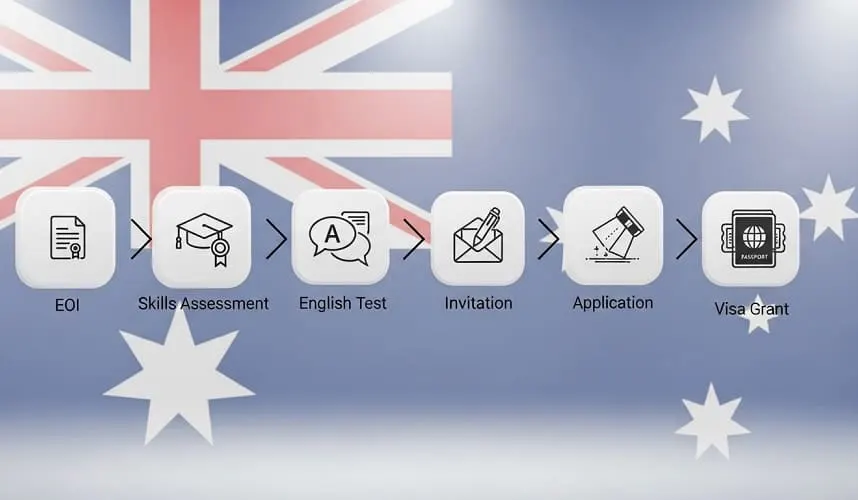
Q3: How to apply for GSM / what’s the step-by-step process?
- Check eligibility / points
- Obtain positive skills assessment
- Take an English test
- Submit EOI via SkillSelect
- If nominated / invited, you’ll receive an Invitation to Apply (ITA)
- Lodge visa application (within 60 days)
- Undergo health / character checks
- Receive grant / visa outcome
- (For 491) After required stay, apply for PR
Q4: Can I combine multiple visa strategies (GSM + employer sponsorship)?
Yes. Many clients begin with employer-sponsored or temporary visas (e.g. subclass 482) and later transition to GSM (or to 186) once they gain experience and meet points. This hybrid approach helps mitigate risks and gives more pathways.
Q5: What are the costs / visa fees for GSM visas?
As of recent data (FY 2023/24), base charges (main applicant, 18+) for GSM visas like 189/190/491 were ~AUD 4,910, plus additional applicant charges for family members.
Fees may change, so always check the current Home Affairs schedule before applying.
Q6: How long does GSM visa processing take?
Processing times vary by subclass, complexity, backlog, and policy shifts.
Q7: Can my family / spouse / children accompany me?
Yes. GSM visas generally allow family dependents (spouse / de facto partner, children) to be included or added. Dependent conditions (age, relationship, financial support) apply.
Q8: What are the major risks / pitfalls / rejections?
- Claiming inappropriate or insufficient work experience
- Incorrect skills assessment / mismatch with occupation
- Underestimating demand / cutoff points in competitive fields
- Missing deadlines (e.g. invitation to apply)
- Not meeting state nomination conditions
- Policy changes mid application
- Working with a registered migration agent (like Aussizz) helps avoid these.

Tips to Boost Your GSM Success in 2025
- Aim well above 65 points – target 75–85+ to be competitive
- Improve English score to Proficient or Superior
- Leverage Australian study / regional study to get extra points
- Use Professional Year / credentialed language / partner skills
- Select state/territory with less competition or favorable nomination lists
- Stay updated on SOL / state lists changes
- Prepare a strong EOI with correct documentation
- Start early – delays and shifts may occur
- Work with a trusted migration consultant / agent (e.g. Aussizz)
Why Choose Aussizz for Your GSM Journey?
With a strong track record of guiding 180,000+ applicants to grant a visa, we are experts migration agents with expertise in all the visa subclasses, including GSM. Contact Aussizz Group today to make your Australian dream possible.
Introduction
Australia isn’t just a study destination – it’s a dream for students who want world-class education, vibrant culture, and global career exposure.️
But every successful journey begins with one crucial step: understanding your student visa conditions.
These conditions are more than technical details; they define your work rights, study obligations, and compliance responsibilities while you’re in Australia. Knowing them helps you avoid mistakes that could affect your studies or future visa plans.
At Aussizz Group, our expert counsellors and MARA-registered migration agents simplify these rules so you can focus on what truly matters – achieving your academic and professional goals in Australia.
8104 – Work Limitation (for Family Members)
- Before the course starts: Family members cannot work until the primary student has officially commenced studies (unless they already held a visa with work rights).
- After the course starts: Dependants may work up to 48 hours per fortnight. If the primary student is studying a Master by Research or PhD, dependants can work unlimited hours.
- Tip for Employers: Always verify a dependant’s visa grant letter and Confirmation of Enrolment (CoE) before hiring.
8105 – Work Limitation (for Primary Students)
- Before the course starts: You cannot work unless you previously held a visa with work rights.
- While the course is in session: You may work up to 48 hours per fortnight; unlimited work is allowed during official breaks or if you are enrolled in a research degree.
- Aussizz Tip: Track your hours over a rolling 14-day period – exceeding 48 hours in any fortnight breaches this condition.
8201 – Maximum 3 Months of Study
- What it means: Applies mainly to non-student visa holders such as visitor or guardian visas, limiting study or training to no more than three months.
- When it applies: If you plan to study long-term or pursue a qualification, you must apply for a Student Visa (Subclass 500) from outside Australia, unless DHA policy allows an onshore application.
8202 – Maintain Enrolment and Progress
You must:
- Remain enrolled in a CRICOS-registered course.
- Maintain satisfactory attendance and academic progress.
- Stay within the same or higher AQF level as approved on your visa.
Aussizz Tip: Talk to your counsellor before deferring or switching courses — we handle CoE updates and DHA notifications properly.
8203 / 8204 – Restrictions on Study Changes
- What it means: Postgraduate students must not change their course, thesis, or research topic without Ministerial approval, which may involve a national-security assessment.
- Tip: Submit Form 1221 and an 8203/8204 Change of Study Assessment Request through ImmiAccount before making changes.
8208 – Critical Technology Approval
- When it applies: If your course started after 1 April 2024 and involves critical-technology research, you must obtain approval from the Minister for Home Affairs before starting.
- Aussizz Tip: Use ImmiAccount → Change of Course Approval (8208) and attach evidence of your topic and supervisor for review.
8303 – No Disruptive Behaviour
- What it means: You must not engage in activities that are disruptive or harmful to the Australian community or any group.
- Simply put: Maintain respectful conduct both on and off campus.
8501 – Maintain Adequate Health Insurance
- You must: Hold valid Overseas Student Health Cover (OSHC) for your entire stay in Australia.
- Aussizz Support: Renew your policy through GetMyPolicy.online to stay fully compliant with DHA requirements.
8516 – Continue to Meet Visa Grant Criteria
- What it means: You must continue meeting the criteria for which your visa was granted — correct sector, financial capacity, health, and character.
- Tip: If your sponsor withdraws support or your finances change, seek professional advice before making updates.

8517 – Schooling for Dependants
- You must: Ensure any school-aged dependants (5–18 years) staying in Australia for over 3 months are enrolled in school and fees are paid.
- Aussizz Tip: Budget for dependant tuition costs in advance to avoid compliance issues.
8518 – Maintain Arrangements for Your Education
- Requirement: You must maintain appropriate study arrangements – course load, attendance, and academic supervision must remain adequate.
8532 – Welfare Arrangements for Students Under 18
- You must: Have approved accommodation, support, and welfare – through a parent, eligible relative (21+), or education provider.
- Do not change these arrangements without written approval or travel before your welfare start date.
8533 – Inform Provider of Address Changes
- Requirement: Advise your education provider of your residential address within 7 days of arrival and update any change within 7 days.
- If you change providers, notify your current provider within 7 days of receiving a new CoE.
- Aussizz Tip: Keep your provider and VEVO/MyGov records updated to avoid missed notifications.
8534 – No Further Stay (Discretionary)
- What it means: You cannot apply for another substantive visa in Australia except for a 485 (Graduate), 590 (Guardian), or Protection visa.
- Waivers may apply only in limited circumstances.
8535 – No Further Stay (DFAT / Defence Students)
- When it applies: If you are sponsored by DFAT or Defence, you can apply only for a new student visa with official support or for a protection visa.
Important Note
These are possible visa conditions that may apply to the Student Visa (Subclass 500).
Not all conditions appear on every visa. Always check your visa grant letter or VEVO record to confirm which apply to you.
Details here are provided in a summarised format for easier understanding. For full and official descriptions of each condition, visit the official Department of Home Affairs website
If you’re unsure about your specific conditions, consult a MARA-registered migration agent for personalised advice.
How Aussizz Group Helps You Stay Compliant?
- Expert guidance for course changes, CoE management, and deferrals
- Clear advice on work rights for students and dependants
- OSHC setup and renewal through GetMyPolicy.online
- Assistance with Genuine Student (GS) statements and visa extensions
- Post-study visa (485) and PR pathway support (189/190/491)

Conclusion
Your student visa is your key to education and opportunity in Australia – but with it comes responsibility.
By understanding and following your visa conditions, you protect your future and ensure a smooth study experience.
Need help understanding your visa conditions or course options?
Contact Aussizz Group for personalised guidance from our counsellors and migration agents.
FAQs: Student Visa Subclass 500
- Can I work more than 48 hours a fortnight?
No – doing so breaches Condition 8105 and may lead to visa cancellation. - Can my dependant work full-time?
Only if you are studying a Master by Research or PhD (Condition 8104). - Can I change my course?
Yes, if it’s at the same or higher AQF level; postgraduate researchers may need approval under 8203/8204/8208. - Do I need OSHC for the whole visa period?
Yes – Condition 8501 requires continuous coverage until visa expiry. - What is the Genuine Student (GS) requirement?
It ensures you have genuine academic intent and financial capacity. - What if I’m under 18?
You must maintain approved welfare and accommodation (Condition 8532).
Australia’s Temporary Graduate Visa (Subclass 485) opens the door for international students to stay back, gain work experience, and even bring their families to live with them. But how exactly can you include your dependents, what are their rights, and how can you manage life together as a household?
This guide answers frequently asked questions (FAQs) about the 485 dependent visa, helping you plan your family’s next chapter in Australia – confidently and compliantly.
Understanding the 485 Visa and Dependent Eligibility
The 485 visa allows international graduates to live, study, and work in Australia temporarily after completing their studies. Under this visa, you can include immediate family members-commonly referred to as dependents.
Who can you bring on your 485 visa?
You can include:
- Your spouse or de facto partner
- Children (biological or adopted) under 18 years
- Dependent children over 18 (if they meet dependency criteria)
Dependents can either be included at the time of applying or added later after the primary visa holder has been granted their 485 visa.
Work and Study Rights for 485 Dependents
One of the biggest advantages of this visa is the flexibility it offers your family members.
- Partners (spouses/de facto) enjoy full work rights, meaning they can work in any occupation and for any employer in Australia.
- Children can attend school, and depending on the state, may be eligible for government schooling with standard international fees.
How to Apply for a Dependent 485 Visa?
Step 1: Check your eligibility
Make sure your family members meet relationship and documentation requirements (marriage certificate, dependency proof, etc.).
Step 2: Gather supporting documents
Commonly required documents include:
- Marriage or birth certificates
- Health and character certificates
- Proof of funds
- Passport and identity documents
Step 3: Apply via ImmiAccount
Dependents can be added online using the Department of Home Affairs portal. If they are outside Australia, apply for a subsequent entrant visa.
Health Insurance Requirements for Dependents
Every 485 visa holder – including dependents – must maintain adequate health insurance to meet visa condition 8501.
If your family is joining you later, they’ll need to show proof of health cover before visa approval.
Visit GetMyPolicy.online – a trusted comparison platform that helps you compare and buy Overseas Visitor Health Cover (OVHC) from top Australian insurers like Bupa, Medibank, NIB, AHM, Allianz Care, and AIA in minutes.
You can filter by family, couple, or single coverage and instantly receive quotes – no agent fees, no confusion.
Managing Family Life in Australia
Adjusting to life as a household in Australia can be both exciting and challenging. Here are key aspects to plan for:
Accommodation
- Opt for family-friendly suburbs close to public transport, schools, and workplaces.
- Websites like realestate.com.au or domain.com.au help you compare rent prices.
Cost of Living
- On average, a family of three may spend between AUD 3,500-5,000 per month, including rent, food, utilities, and schooling.
Schooling
- School-aged dependents can study in Australian public or private schools. Rules and fees vary by state and territory.
Employment for Partners
- Partners can work full-time – a major advantage of the 485 visa. Many find employment in healthcare, hospitality, education, and IT sectors.

Can You Add Family Members Later?
Yes. If your family didn’t accompany you initially, you can still apply for a subsequent entrant 485 visa for them.
The process includes:
- Submitting the subsequent entrant application
- Maintaining compliant health insurance
Preparing for the PR Pathway
Many 485 visa holders use this time to strengthen their Permanent Residency (PR) prospects. Having your family with you can make the journey more fulfilling but also requires better planning.
Steps to Prepare:
- Enhance your English proficiency – take or improve your PTE score. Explore PTE Tutorials for mock tests, AI scoring, and practice materials.
- Skill Assessment – Make sure your work experience and qualification are assessed by the relevant authority.
- Occupation Search – Use OccuSearch App to track which occupations lead to PR in your region.
- Stay visa-compliant – Maintain health insurance and adhere to work conditions.
Frequently Asked Questions (FAQs)
Q1. Can I bring my family on a 485 visa after it’s granted?
Yes, you can bring your spouse or children later by applying for a subsequent entrant visa under Subclass 485. They’ll need to submit documents proving your relationship, along with valid health insurance and other required evidence to join you in Australia.
Q2. What type of health insurance do dependents need?
Dependents of 485 visa holders must have Overseas Visitor Health Cover (OVHC) to meet visa condition 8501. You can easily compare and purchase family OVHC plans from top Australian insurers like Bupa, Medibank, and NIB via GetMyPolicy.online.
Q3. Can my spouse work full-time on a 485 visa?
Yes, partners of 485 visa holders have full and unrestricted work rights in Australia. This allows them to gain valuable local work experience or contribute to the household income while accompanying you.
Q4. Can children attend public school?
Yes, dependent children can attend public or private schools across Australia. However, school fees may vary by state and visa subclass, so it’s advisable to check local education department guidelines before enrollment.
Q5. What’s the best way to prepare for PR?
To strengthen your PR pathway, ensure your skills are assessed by a relevant authority and improve your English proficiency through PTE Tutorials. You can also explore potential PR-eligible occupations in your field using the OccuSearch App, designed to simplify your migration planning.
Final Thoughts
Bringing your family on your 485 visa is not just about paperwork – it’s about building a life together in Australia. From health insurance and job opportunities to schooling and permanent residency planning, every step can shape your family’s journey.
If you’re ready to reunite your loved ones or need expert guidance on the process, Aussizz Group is here to help.
With 180,000+ visas granted, Aussizz Group stands as one of Australia’s most trusted migration and education consultancies.
Book a consultation today – and let’s make your Australian dream a family reality.
If your occupation’s gone missing, your invitation might too.
The Australian Capital Territory (ACT) has just reshaped its skilled migration landscape, reducing its eligible occupation list from 152 to 105 occupations. This dramatic change directly affects international professionals planning to secure ACT nomination for Subclass 190 (Skilled Nominated) or Subclass 491 (Skilled Work Regional) visas.
If you’ve been eyeing Canberra as your PR destination, this update could redefine your chances — or even close your pathway altogether.
In this comprehensive guide, we’ll explain:
- Why ACT reduced its list from 152 to 105 occupations
- What new rules and priorities apply in 2025–26
- What to do if your occupation is no longer listed
- How Aussizz Group can help you navigate these changes with expert guidance
Why ACT Cut Its Occupation List from 152 to 105
Aligning Migration with Real Labour Demand
The ACT Government announced that the revised ACT Migration Occupation List now focuses on genuine skill shortages rather than maintaining a broad eligibility pool.
This change ensures that migration supports critical sectors driving Canberra’s economy – such as health, education, IT, and construction – instead of oversaturating the local job market with less-demanded roles.
Renaming of the List
The previous “ACT Critical Skills List” is now called the ACT Nominated Migration Program Occupation List (often referred to as the ACT Migration Occupation List).
All new Canberra Matrix applications must comply with this revised list, regardless of when you submitted your expression of interest (EOI).
New Rules and Priorities for ACT Nomination (2025–26)
1. Eligibility Risks for Removed Occupations
If your occupation is no longer part of the 105 eligible roles, you are no longer eligible for ACT nomination through the standard stream.
However, if you have already submitted your State nomination application with ACT before the new changes (for example, as per the September 2025 round), your application remains valid and will still be assessed under the previous occupation list.
2. PhD Applicants: New Invitation Timeline
PhD-qualified applicants will now be invited only during the official invitation rounds, not on a weekly basis as before.
This means that doctoral applicants from ACT universities will need to plan submissions strategically and align with invitation cycles.
3. Employer-Sponsored Applicants: Minimum Work Duration
To apply under the employer-sponsored stream, candidates must now have completed at least six months with their sponsoring ACT employer before lodging their application. This ensures employer commitment and genuine skill contribution to the local economy.
4. Priority Between 491 and 190 Invitations
The ACT government has confirmed that Subclass 491 invitations will be issued before Subclass 190.
This reordering encourages regional work participation and aligns with Australia’s broader regional migration strategy.
Ministerial Direction 105: How National Priorities Affect ACT Applicants
Australia’s skilled migration program is guided by Ministerial Direction No. 105, which determines how applications are processed nationally.
National Processing Priorities
Under Direction 105, visa applications are prioritised as follows:
- Employer-sponsored visas in designated regional areas
- Healthcare and teaching occupations
- Employer-sponsored visas from accredited sponsors
- Other skilled migration subclasses under the migration program
- Remaining applications, processed in order of lodgement
This means that even within the ACT, healthcare and teaching professionals will receive faster processing of their visa applications from Department of Home Affairs.
What To Do If Your Occupation Is No Longer on the ACT List
Losing your occupation from the ACT list can feel discouraging, but it’s not the end of your migration dream.
Here are your best next steps:
1. Check the Updated ACT Migration Occupation List
Visit the ACT Government migration page and confirm whether your occupation remains eligible.
You can access the complete, up-to-date list from official sources before planning your next move.
2. Explore Closely Related Occupations
If your exact occupation was removed, consider whether a related ANZSCO code is still eligible.
A minor adjustment in your role description or upskilling might align you with an alternate pathway.
3. Consider the PhD Stream
If you have a PhD from an ACT university, you may still qualify for nomination even if your occupation is missing — provided you meet other ACT residency and contribution requirements.
4. Look Beyond ACT
Explore other states and territories such as Victoria, New South Wales, Queensland, South Australia, or Tasmania.
Each state has its own occupation list and nomination priorities – sometimes more open than ACT’s.
5. Strengthen Your Migration Profile
Boost your English score, gain regional work experience, and improve your points score to stay competitive in future invitation rounds.
Why You Should Partner With Aussizz Group
When immigration rules evolve, you need experience that navigates change – not confusion.
With 16+ years of expertise and over 180,000 successful visa grants, Aussizz Group has helped thousands of skilled professionals secure their Australian visas through ACT and other state nomination programs.
Whether your occupation remains on the ACT list or not – Contact Aussizz Group so that our experts can help you find the best route to Australian Permanent Residency.
Introduction
Planning to study in Australia is an exciting step toward achieving your academic and career aspirations. Understanding the Australian Qualifications Framework (AQF) is essential for making informed decisions about your course selection, career pathway, and student visa applications.
The AQF ensures every qualification is nationally consistent, recognised globally, and aligned with industry standards (AQF official site). For international students, this knowledge helps simplify course selection, meet visa requirements, and unlock post-study work opportunities and PR pathways.
At Aussizz Group, our expert education counsellors and migration agents guide students in navigating the AQF, selecting the right course, and preparing a smooth Subclass 500 student visa application.
What is the Australian Qualifications Framework (AQF)?
The AQF is a national policy that regulates education qualifications across Australia. It links schools, vocational education and training (VET), and higher education, ensuring that qualifications are recognised, transferable, and nationally consistent (AQF Qualifications).
Key Points:
- Comprises 10 levels, from Certificate I (Level 1) to Doctoral Degree (Level 10).
- Defines knowledge, skills, and application requirements for each qualification.
- Supports progression pathways between Certificates, Diplomas, Bachelor Degrees, and Postgraduate programs.
Understanding the AQF is crucial for students who want to:
- Select a course aligned with career goals
- Meet prerequisites for higher-level qualifications
- Ensure eligibility for post-study work visas and PR pathways
AQF Levels Explained
| AQF Level | Typical Qualification | Description |
| Level 1–4 | Certificates I–IV | Basic foundational skills and vocational training. Ideal for entry-level jobs or progressing to Diploma. |
| Level 5–6 | Diploma / Advanced Diploma | Develop specialist knowledge and skills. Can lead to higher education or direct employment. |
| Level 7 | Bachelor Degree | Undergraduate qualification with broad theoretical and practical skills. |
| Level 8 | Bachelor Honours / Graduate Certificate / Graduate Diploma | Advanced knowledge and preparation for professional or research pathways. |
| Level 9 | Master’s Degree | Specialist knowledge for professional practice or research. |
| Level 10 | Doctoral Degree | Original research and contribution to knowledge in the field. |
Tip for Students: Understanding AQF levels helps in choosing a course that aligns with your long-term career goals, visa requirements, and post-study work options.
How AQF Qualifications Are Accredited
Not all qualifications are automatically recognised in Australia. To ensure that your study is valid for academic progression, employment, and visa compliance, it’s important to check whether your qualification is officially accredited under the AQF.
Accreditation ensures that:
- Your qualification meets national education standards
- The provider is authorised to deliver the course
- Your qualification is recognised for credit transfer, post-study work visas, and migration pathways
| Sector | Accrediting Body | Key Role | Verification |
| Higher Education | TEQSA | Registers providers, accredits non-self-accrediting qualifications, authorises self-accrediting universities | TEQSA National Register |
| VET (Vocational Education & Training) | ASQA | Accredits national providers, including international student courses | training.gov.au |
| VRQA | Accredits providers operating solely in Victoria | training.gov.au | |
| TAC | Accredits providers operating solely in Western Australia | training.gov.au | |
| Professional Qualifications | Professional Associations / Boards | Accredits courses required for professional practice | Check the relevant professional association website |
Tip for Students: Always verify your provider and course accreditation before enrolling. Look for the AQF logo or wording: “This qualification is recognised within the Australian Qualifications Framework.”
How AQF Impacts Your Study and Career Pathway
- Course Selection: AQF levels ensure that the course you choose is suitable for your academic background and future goals.
- Credit Transfer & Pathways: AQF ensures students can progress from Certificates → Diplomas → Degrees → Postgraduate programs.
- Work Opportunities: Employers often assess qualifications based on AQF levels, enhancing employability.
- Migration & PR Pathways: Certain visa streams (Subclass 500, Subclass 485 post-study work, PR pathways) require study at specific AQF levels.
Example: A Diploma (Level 5) graduate can enter second-year Bachelor Degree (Level 7) programs, saving time and aligning with visa conditions.
Tips for International Students
- Verify your current qualification against AQF levels.
- Check prerequisites before enrolling in higher AQF level courses.
- Plan post-study work and PR pathways considering AQF-aligned programs.
- Consult Aussizz Group to map your educational pathway and prepare a compliant Subclass 500 visa application.
How Aussizz Group Supports Students
At Aussizz Group, we provide end-to-end guidance to ensure international students fully leverage AQF knowledge and make informed decisions about their study and migration pathways:
- Course & University Selection: Tailored to your academic background, career aspirations, and budget.
- Scholarship & Application Support: Expert guidance from our education consultants to maximise admission and scholarship opportunities.
- Visa Assistance: Support across student, graduate, skilled, visitor, employer-sponsored, and family visa categories.
- OSHC & OVHC Arrangement: Secure compliant and affordable health cover through GetMyPolicy.online for students and post-study visa holders.
- Professional Year Programs: Assistance with admission into IT and Engineering Professional Year programs, helping graduates gain practical experience and enhance migration eligibility.
- Permanent Residency & Migration Planning: Guidance from our Registered Migration Agents to ensure long-term goals are achievable and compliant.
Conclusion: Study Smart with AQF Knowledge
Understanding the Australian Qualifications Framework ensures international students choose the right course, meet visa requirements, and plan for post-study opportunities.
At Aussizz Group, we help students make informed decisions, navigate AQF pathways, and achieve their study and migration goals with confidence.
Reach out today to take your first step toward a successful Australian study and migration journey.
FAQs: Understanding the Australian Qualifications Framework (AQF)
- What is the AQF and why is it important?
The AQF regulates qualifications in Australia, ensuring they are nationally consistent, recognised globally, and aligned with industry standards (AQF Levels). - How many levels are there in the AQF?
There are 10 levels, from Certificate I to Doctoral Degree, each defining knowledge, skills, and application requirements. - How does the AQF affect my visa application?
AQF levels guide course selection and compliance with Subclass 500 student visa and post-study work visa requirements. - Can AQF qualifications be transferred between institutions?
Yes. AQF ensures national recognition, facilitating credit transfer and progression between institutions. - What are the benefits of understanding AQF levels for my career?
- Choose courses that match career goals
- Progress through educational pathways (Certificates → Diplomas → Degrees → Postgraduate)
- Ensure employability and access to post-study work visas and PR pathways
- How can I verify if my course is AQF-recognised?
Check the AQF logo on your certificate or the provider accreditation registers:- TEQSA National Register (Higher Education)
- training.gov.au (VET)
- How can Aussizz Group help with AQF?
We guide students to choose AQF-aligned courses, plan study pathways, and prepare compliant Subclass 500 visa applications.