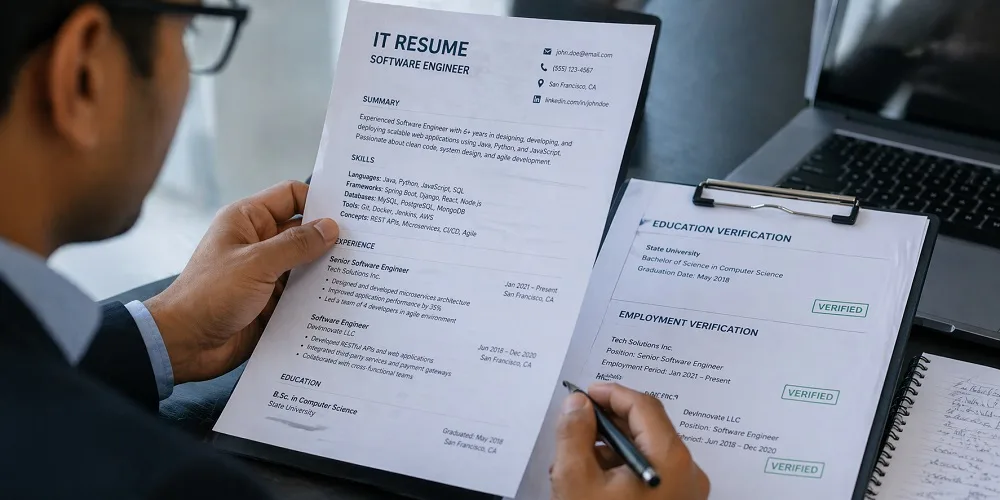
Why IT Professionals are Finding Australian PR Harder in 2026 and Which States Still Offer Real Pathways?
For years, ICT was seen as one of the safest routes into Australian PR. If you were a software engineer, developer programmer, systems analyst, ICT business analyst, or another tech professional, the general assumption was simple: get your skills assessed, lodge your EOI, and PR should eventually follow.
ICT is still part of Australia’s skilled migration system. NSW still names ICT as a key industry sector for subclass 190 and 491. ACS still assesses ICT, data science, and cyber security occupations for migration purposes. And several states still nominate technology-related profiles. But the pathway has become harder because IT applicants are now stuck in one of the most crowded, most filtered, and most competitive parts of the PR market.
That is the real issue. IT is not “gone.” It is just overcrowded and more heavily filtered than many applicants realise.
The Biggest Problem for IT Applicants is Not Eligibility. It is Overcrowding.
A lot of IT applicants are still technically eligible for skilled migration. They can get an ACS assessment, claim points, and enter SkillSelect. But eligibility is not the same as being competitive.
Home Affairs explains that SkillSelect is the system used for many skilled migration pathways, and applicants must submit an EOI and then wait to be invited. That means being in the pool is only the beginning. When too many applicants with similar occupations, similar qualifications, and similar points enter the same pool, the field becomes much harder.
This is exactly what has happened in ICT. It is one of the most common backgrounds among international graduates and offshore skilled migrants. So even when a state still wants ICT workers, it is often choosing only the strongest profiles inside an already crowded tech group. The result is that many decent ICT applicants are not weak — they are simply lost in a bigger crowd.
NSW Still Wants ICT, But Only Strong ICT Profiles are Likely to Stand Out
NSW is one of the clearest examples of this trend.
The state still says ICT is one of its key industry sectors for subclass 190 and 491. On paper, that sounds positive. But NSW also says nomination is exceptionally competitive, that subclass 190 uses a selection-based invitation process, and that the state invites the highest-ranking EOIs within ANZSCO unit groups on the NSW Skills List. It also stresses that applicants should not wait only for a NSW invitation.
So NSW has not shut the door on ICT. It has simply made the practical bar much higher.
For an IT applicant, this means NSW is not a state that rewards being “good enough.” It rewards being stronger than most of the other IT applicants in the same ranking group. If your profile is average by ICT standards — average English, average work experience, average points — NSW may still feel very hard, even though ICT is officially a priority sector.
Victoria is Not Anti-ICT, But It is Clearly Rewarding Stronger, Better-Structured Profiles
Victoria often looks appealing to tech professionals because it has traditionally attracted a large number of skilled migrants, especially in Melbourne. But the 2025–26 program signals show heavy competition.
Victoria’s program had 3,400 places in 2025–26, made up of 2,700 for subclass 190 and 700 for subclass 491. But Victoria also announced that it had received significantly more interest than available places and closed to new ROIs in late April 2026. That tells you demand pressure is intense.
That matters a lot for ICT applicants. In a state with high ROI pressure, broad sector relevance is not enough. Victoria’s system uses both a SkillSelect EOI and a Registration of Interest, which gives the state an extra filter to choose stronger or more strategically useful profiles. So even if IT remains present in the migration mix, the state is not nominating applicants simply because they are in tech. It is effectively selecting among a very crowded field.
In practice, that means Victoria tends to feel harder for ICT applicants who do not have an additional strength — such as stronger English, stronger onshore employment credibility, better work history, or a more complete and competitive profile overall.
Queensland is Clearer Than Victoria or NSW, But That Clarity Often Works Against Generic IT Profiles
Queensland is easier to read than many states because it is very explicit.
Queensland says applicants must fit one of its defined pathways, and if their nominated occupation is not on the relevant onshore or offshore occupation list, they are not eligible for nomination in 2025–26. Queensland also notes that not all occupations on its lists are eligible for subclass 190.
That makes Queensland more structured, but also more unforgiving. A lot of IT applicants prefer states like Queensland because the rules feel clearer. But clear rules also mean there is less room for vague hope. If your exact ICT occupation is not on the right list, or if your pathway position does not fit, Queensland simply does not work.
So Queensland is not harder because it is random. It is harder because it is precise. And for many generic IT profiles, precision is a problem.
South Australia is Still Inviting ICT, But It is Pushing ICT More Toward Subclass 491 Than 190
South Australia gives one of the clearest data signals for ICT in 2026.
Its official migration updates show that in the March 2026 invitation round, ICT Professionals received 0 subclass 190 invitations and 42 subclass 491 invitations for that month. The cumulative 2025–26 data on that same update shows 7 subclass 190 invitations and 164 subclass 491 invitations for ICT Professionals. South Australia also says that for 2025–26 it is prioritising sectors including building and construction, defence, education, engineering, health, and manufacturing, while high-ranking candidates in non-priority sectors may still be considered.
This is one of the most useful reality checks for IT applicants.
South Australia is not saying “no” to ICT. But the published data strongly suggests that ICT is being channelled much more toward 491 than 190. In other words, if an IT applicant is still thinking only in terms of direct state-nominated PR, South Australia may feel disappointing. But if they are open to a regional provisional route, the state may still offer opportunity.
That is a major reason IT applicants feel PR has become harder: the route is increasingly looking more regional, more indirect, and less immediate than many expected.
Western Australia is Still Open to Skilled Migration, But ICT is Not Where Its Strongest Signals are Right Now
Western Australia remains active in state nomination. WA confirms that the 2025–26 State Nominated Migration Program is running and that ordinary invitation rounds began in December 2025. It also publishes invitation-round data and ranks EOIs with strong weight on whether applicants are residing in WA, and then by priority industry sectors in relevant streams.
The important detail for ICT applicants is this: in WA’s published December 2025 invitation-round ranking explanation, the priority industry sectors highlighted include building and construction, healthcare and social assistance, hospitality and tourism, and education and training depending on the stream. ICT is not the standout sector in those visible priority notes.
That does not mean ICT is excluded from WA. It means ICT is not showing up as one of WA’s clearest current advantage sectors in the way healthcare, trades, hospitality, or education are. For IT applicants, that makes WA harder in a different way: the state is active, but the strongest visible preference signals are often pointing elsewhere.
ACS is Still a Central Bottleneck for ICT Applicants
Another reason PR feels harder for tech professionals is that the pathway begins with one of the stricter assessment systems.
ACS says its Migration Skills Assessment validates ICT qualifications and work experience to determine skilled migration eligibility. It also explains that relevant ICT work experience must be professional ICT work of at least 20 hours per week, and depending on the qualification pathway, several years of relevant experience may be required.
So IT applicants are not only competing in crowded state nomination pools. They also have to clear a fairly technical skills-assessment stage where qualification relevance, occupation match, and work evidence matter a lot.
Why ACS makes ICT migration feel harder?
ACS factor
Why it matters
Qualification relevance
An IT degree alone is not enough if it does not align well
Occupation match
The nominated code must fit the actual job profile
Professional ICT work
Not all adjacent tech work counts as qualifying ICT experience
Experience thresholds
Some pathways require significant relevant experience
Evidence quality
Weak reference letters or vague duties can hurt the case
This means some ICT applicants are already struggling before nomination even begins. A person may think they are PR-ready, but if their ACS occupation choice is weak or their work evidence is not strong enough, the state stage becomes meaningless.
Healthcare, Teaching, and Regional Needs are Getting Stronger Visible Priority Than ICT
The broader migration environment also matters.
Home Affairs’ skilled visa processing priorities place regional employer-sponsored applications first, then healthcare and teaching occupations, then accredited sponsor cases, before other applications. ICT is not singled out in that higher-priority grouping.
Processing priority is not exactly the same as state invitation priority, but it still shapes the environment. When other sectors are being pushed more strongly through state systems, employer sponsorship, and processing queues, ICT can feel slower and more crowded by comparison.
This is one of the key reasons tech applicants feel the system is harder in 2026: not because ICT vanished, but because other sectors are currently being favoured more visibly.
So What should IT Applicants do Differently Now?
The first step is to stop treating “ICT” as a migration advantage by itself.
The second is to become much more precise. Not “I work in IT,” but “Which exact ACS occupation best fits my profile, and which state or employer pathway actually wants that occupation right now?”
The third is to stop relying only on subclass 189 thinking. For many ICT applicants, the stronger practical options may now be:
Subclass 190 in a state where the profile is genuinely competitive
Subclass 491 where regional pathways are more realistic
Employer sponsorship if there is genuine job support
or a longer improvement plan before lodging anything serious.
A smarter 2026 strategy for ICT applicants
Situation
Better move
Good ICT background but average points
Compare 190, 491, and employer options — not just 189
Weak ACS alignment
Fix occupation choice and evidence first
No strong state fit
Compare NSW, Victoria, Queensland, SA, and WA by actual pathway rules
Open to regional Australia
SA 491, NSW 491, and other regional routes may be stronger
Strong employer relationship
Assess 186 or other sponsorship pathways sooner
Generic “IT = easy PR” mindset
Replace it with exact-code, exact-pathway planning
The Real Reason IT Applicants are Struggling More for PR
It comes down to one hard truth: ICT is still recognised, but it is no longer a naturally advantaged migration field just because it is ICT.
NSW still wants ICT, but only very competitive ICT. Victoria still attracts ICT, but filters heavily. Queensland is very literal about occupation-list fit. South Australia is still inviting ICT, but largely through subclass 491 rather than 190. Western Australia is active, but its strongest visible priority signals are often in other sectors. Add ACS technical assessment pressure and stronger visible priority for healthcare, teaching, and regional needs, and the result becomes obvious.
That is why PR feels harder for IT applicants in 2026.
Aussizz Group has helped 200,000+ applicants to their Australian Dreams, and this is exactly why generic ICT migration advice is no longer enough. If you are an ICT Business Analyst, Developer Programmer, Software Engineer, Systems Analyst, Data Analyst, Data Scientist, or another technology professional, book a consultation with Aussizz Group and get a state-by-state strategy built around your exact occupation, ACS position, points, and realistic nomination pathway.
FAQs
Q1. Why are IT applicants struggling more for PR in Australia right now?
Because ICT is still active in migration, but it is heavily overcrowded, and states are selecting more narrowly while other sectors like healthcare, teaching, and regional needs are getting stronger visible priority.
Q2. Is ICT still on skilled migration pathways in Australia?
Yes. ICT remains part of Australia’s skilled migration framework, ACS still assesses ICT-related occupations, and NSW still names ICT as a key sector.
Q3. Is NSW good for IT applicants in 2026?
It can be, but NSW says nomination is exceptionally competitive and invites the highest-ranking EOIs in relevant ANZSCO unit groups. That makes it strong for top ICT profiles, not average ones.
Q4. Is Victoria easier than NSW for ICT PR?
Not automatically. Victoria may be more readable for some onshore profiles, but it also had very heavy demand and closed to new ROIs in April 2026 after receiving far more interest than available places.
Q5. Is Queensland good for ICT migration?
Only when the exact ICT occupation is on the relevant onshore or offshore list and the applicant fits Queensland’s pathway rules. Queensland is clearer, but also stricter.
Q6. Is South Australia still inviting ICT applicants?
Yes, but its March 2026 data suggests ICT is being invited much more heavily through subclass 491 than subclass 190.
Q7. Is Western Australia strong for ICT applicants?
WA is active in nomination, but its visible priority-ranking signals in published invitation data are stronger for sectors like building and construction, healthcare, hospitality, and education than for ICT.
Q8. Does ACS make PR harder for IT applicants?
It can, because ACS looks closely at qualification relevance, occupation match, and professional ICT work experience, so not every tech background fits cleanly.
Q9. Are healthcare and teaching getting more priority than ICT?
In processing priority terms, yes. Home Affairs places healthcare and teaching occupations ahead of many other skilled applications.
Q10. What is the best strategy for IT applicants in 2026?
Use a profile-based plan: choose the exact ACS occupation carefully, compare states by real nomination patterns, and look beyond 189 to 190, 491, and employer-sponsored options where relevant.

 AUS
Australia
AUS
Australia
 IND
India
IND
India
 UAE
UAE
UAE
UAE
 CA
Canada
CA
Canada
 SL
Srilanka
SL
Srilanka
 HK
Hong Kong
HK
Hong Kong