
 AUS
Australia
AUS
Australia
 IND
India
IND
India
 UAE
UAE
UAE
UAE
 CA
Canada
CA
Canada
 SL
Srilanka
SL
Srilanka
Australia remains one of the most preferred study destinations for international students because of its globally recognised education system, multicultural lifestyle, strong student support and career-focused courses. At the same time, the cost of studying in Australia has become a major planning point for students and families.
Tuition fees are only one part of the total cost. International students also need to plan for accommodation, food, transport, health cover, visa fees, study materials, emergency funds and daily living expenses. A course that looks affordable on paper may become expensive if the city, accommodation or lifestyle costs are not planned properly.
The good news is that many international students are reducing their study costs in Australia through smarter course selection, scholarships, shared accommodation, part-time work, regional study options and better budgeting. The aim is not to choose the cheapest option blindly. The aim is to choose a study plan that is affordable, realistic and suitable for the student’s long-term goals.
Aussizz Group has helped 200,000+ applicants to their Australian Dreams, and one thing is clear from student counselling experience: cost planning should start before the admission process, not after the visa is granted.
Understanding the Real Cost of Studying in Australia
The cost of studying in Australia depends on the course, provider, city, accommodation type and lifestyle. A student studying a diploma in a regional city may have a very different budget from a student studying a master’s degree in Sydney or Melbourne.
Study Australia advises international students to plan their budget before moving and provides a Cost of Living Calculator to estimate expenses based on lifestyle, location and study choices. This tool is only a guide, but it helps students understand how different choices can affect total expenses.
| Major cost area | What students should consider |
| Tuition fees | Course level, provider, scholarship availability and duration |
| Accommodation | City, suburb, shared housing, on-campus housing or private rental |
| Food and groceries | Cooking habits, eating out, dietary needs and weekly planning |
| Transport | Distance from campus, public transport access and concession eligibility |
| Health cover | OSHC duration, provider rules and policy inclusions |
| Visa and documentation | Visa application fees, medicals, biometrics and document preparation |
| Course materials | Books, software, uniforms, tools, equipment or practical training costs |
| Emergency funds | Medical gaps, rent bond, job delays and unexpected expenses |
A realistic budget should include both fixed and flexible costs. Tuition fees and visa charges are usually fixed, while food, rent and transport depend heavily on student decisions. This is where cost-saving strategies can make a meaningful difference.
Choosing the Right Course Can Reduce Long-Term Costs
Course selection is one of the most important cost decisions for international students. A cheaper course may reduce upfront tuition, but it should still match the student’s academic background, career goal and visa purpose.
Australia’s Student visa subclass 500 requires students to stay enrolled, meet course requirements and comply with visa conditions. Student visa holders are also expected to choose a genuine course that fits their circumstances and future plans.
Many students reduce costs by comparing course pathways before applying. For example, a diploma-to-degree pathway may reduce initial tuition pressure and allow staged academic progression. A VET or TAFE course may be suitable for students seeking practical training. A university pathway may be better for students targeting professional careers in fields such as nursing, engineering, IT, teaching or social work.
| Study pathway | Cost benefit | Best suited for |
| Diploma to bachelor | Lower upfront cost and possible credit transfer | Students who want gradual progression into higher education |
| VET or TAFE course | Practical training and often lower tuition than university | Students interested in trades, care, hospitality, business or technical skills |
| Direct bachelor degree | More structured academic and career pathway | Students with clear professional goals |
| Regional study option | May reduce living costs compared with major metro cities | Students open to smaller cities and regional campuses |
| Packaged course | Can combine English, diploma and degree progression | Students needing staged entry into their main course |
The cheapest course is not always the most cost-effective course. A poor course choice may lead to course changes, wasted tuition, visa complications or limited career value. A well-planned course can reduce financial stress while keeping the student’s future direction clear.
Scholarships Can Lower Tuition Fees Significantly
Scholarships are one of the most effective ways to reduce study costs in Australia. Many education providers offer scholarships to eligible international students based on academic performance, nationality, course type or provider-specific criteria. Study Australia confirms that Australian education providers regularly offer scholarships to qualifying international students based on academic merit.
Scholarships do not always cover the full tuition fee. In many cases, they provide a partial tuition fee reduction. Even then, the savings can be significant across a two-year or three-year course.
| Scholarship type | How it helps | What students should check |
| Merit-based scholarship | Reduces tuition for strong academic students | Minimum marks, academic documents and renewal conditions |
| Country-specific scholarship | Supports students from selected countries | Eligibility by nationality and intake |
| Course-specific scholarship | Applies to selected programs or faculties | Course availability and scholarship percentage |
| Early acceptance discount | Rewards students who accept an offer early | Deadline, deposit rules and refund conditions |
| Regional campus scholarship | Encourages study outside major metro locations | Campus location and course suitability |
Students should check scholarship deadlines early because many scholarships close before the intake starts. It is also important to understand whether the scholarship applies to the full course, the first year only or selected semesters.
A scholarship should support a good study decision. It should not become the only reason for choosing a provider.
Studying in a More Affordable City Can Reduce Monthly Pressure
The city of study has a major impact on total expenses. Rent, transport, food and lifestyle costs vary across Australia. Sydney and Melbourne are popular because they offer large universities, wider job markets and established international student communities, but they can also be expensive for accommodation.
Students with budget concerns often compare Adelaide, Perth, Hobart, Darwin, Brisbane, Canberra and regional campuses. Study Australia notes that living and education costs vary depending on location, provider and lifestyle, and smaller Australian cities may offer financial advantages.
| Location | Possible cost advantage | Planning caution |
| Sydney | Strong job market and major institutions | Higher rent and lifestyle costs |
| Melbourne | Large student community and course options | High demand for accommodation |
| Adelaide | Often considered more affordable than larger metro cities | Course and job options should be compared |
| Perth | Good lifestyle and growing study options | Distance and industry fit should be considered |
| Hobart | Smaller city environment and student-friendly lifestyle | Fewer course options in some fields |
| Regional campuses | Potentially lower rent and quieter study environment | Employment access should be checked carefully |
Choosing a lower-cost city can help, but it should not be based on rent alone. The student must also consider course quality, campus support, part-time job access, transport and long-term career planning.
Shared Accommodation Can Reduce the Biggest Living Expense
Accommodation is usually one of the largest expenses for international students after tuition fees. Study Australia lists several accommodation options for students, including homestay, managed student accommodation, private rental and shared housing. Shared living is often used by students to reduce weekly expenses.
Shared accommodation allows students to split rent, internet, electricity, gas and sometimes grocery costs. It can also help new students adjust socially, especially during the first few months in Australia.
| Accommodation type | Cost level | Suitable for |
| Shared rental | Usually more affordable | Students comfortable living with housemates |
| On-campus accommodation | Often convenient but may cost more | First-time students wanting campus access |
| Homestay | Includes family environment and sometimes meals | Younger students or first-time international students |
| Private rental | More independence but higher cost | Students with stable income and rental history |
| Student accommodation | Structured facilities and student community | Students wanting convenience and support |
A cheap room is not always the best choice. If the accommodation is too far from campus, transport costs and travel time can increase. If the house is overcrowded, it can affect study, sleep and wellbeing.
Students should check rental agreements, bond rules, location safety and transport access before finalising accommodation.
Cooking at Home Helps Students Control Weekly Spending
Food expenses can become difficult to manage when students depend heavily on takeaway meals and food delivery. Cooking at home is one of the simplest ways to reduce weekly spending without affecting health or lifestyle.
Many international students reduce grocery costs by planning meals weekly, cooking with housemates and buying basic ingredients in bulk. This is especially useful for students from India, Nepal, Sri Lanka, Bangladesh, Vietnam and the Philippines who may prefer familiar meals and home-style cooking.
| Food habit | Cost impact | Better alternative |
| Daily takeaway meals | High weekly expense | Cook main meals at home |
| Frequent food delivery | Delivery fees and inflated costs | Meal prep for busy study days |
| Buying groceries without a plan | Food waste and overspending | Use a weekly grocery list |
| Eating out between classes | Small costs add up quickly | Carry snacks or packed lunch |
| Cooking alone every day | Can be tiring and expensive | Share cooking with housemates |
Cooking at home does not mean avoiding restaurants completely. It simply means students treat eating out as a planned expense rather than a daily habit.
Part-Time Work Can Support Living Costs, But It Should Be Managed Carefully
Part-time work helps many international students manage living expenses in Australia. Student visa holders can generally work up to 48 hours per fortnight while their course is in session. This work limit is confirmed by Study Australia and Home Affairs.
Work income can help with groceries, transport, phone bills and part of the rent. However, students should not depend completely on part-time work to pay tuition fees or major expenses. Job availability can vary by city, skills, English ability, season and industry demand.
Fair Work Ombudsman states that from 1 July 2025, the National Minimum Wage is AUD 24.95 per hour or AUD 948 per week, although actual pay may differ depending on the award, role, age, employment type and conditions.
| Common student job area | Why students choose it | Planning point |
| Hospitality | Flexible shifts and entry-level roles | Late hours may affect study |
| Retail | Customer-facing experience | Weekend work may be required |
| Supermarkets | Stable casual work options | Competition can be high |
| Warehousing | Higher shift availability in some areas | Physical work may be demanding |
| Aged care support | Strong demand in many areas | Training and checks may be required |
| Campus jobs | Convenient location | Limited availability |
The right job should fit the student’s timetable, visa conditions and health. Working too much can affect attendance, results and overall study progress.
Transport Costs Can Be Reduced with Better Location Planning
Transport is often ignored during budgeting, but it can affect both money and time. Students who live far from campus may pay more for buses, trains, trams or fuel. They may also lose several hours each week in travel.
Some students reduce transport costs by living closer to campus, choosing accommodation near public transport, walking or cycling where safe, and planning weekly travel carefully.
Transport concessions and student discounts vary between Australian states and territories. Students should check the official transport rules of their study location instead of assuming they will automatically receive discounted fares.
| Transport choice | Cost benefit | What to check |
| Living near campus | Saves travel time and fares | Rent may be higher |
| Public transport | Often cheaper than rideshare or owning a car | Route, frequency and student concession rules |
| Cycling | Low ongoing cost | Safety, distance and weather |
| Walking | No cost | Practical only for nearby accommodation |
| Car ownership | More flexibility | Fuel, insurance, registration and maintenance costs |
A cheaper room far from campus may not remain cheap after adding weekly transport costs. Location should always be calculated with rent and travel together.
Buying Second-Hand Items Can Reduce Arrival Costs
The first month in Australia can be expensive because students often need to set up their living space quickly. Bedding, cookware, clothes, study materials, appliances, transport cards and phone plans can create unexpected expenses.
Buying second-hand items can reduce setup costs, especially for students moving into shared or unfurnished accommodation. Many students buy used furniture, bicycles, textbooks, kitchen items and small appliances from student groups, local marketplaces or graduating students.
| Item category | New purchase issue | Cost-saving option |
| Furniture | Expensive for short-term use | Buy used tables, chairs or storage racks |
| Textbooks | High cost for selected courses | Check second-hand books or library access |
| Kitchen items | Many small purchases add up | Share utensils or buy pre-owned basics |
| Winter clothing | Can be costly after arrival | Buy only what is needed for the city climate |
| Bicycle | New bikes can be expensive | Buy second-hand after checking condition |
Students should still be careful with online scams, unsafe electrical items and cash payments. Trusted student communities and local groups are usually safer than random listings.
OSHC Should Be Compared Properly Before Purchase
Overseas Student Health Cover, commonly known as OSHC, is an important part of study planning in Australia. It helps international students access healthcare support during their stay and is generally required for Student visa purposes.
Students should compare OSHC options based on policy duration, provider rules, waiting periods, hospital access, claim process and family requirements. The cheapest OSHC policy may not always suit every student, especially if the student has dependants or ongoing health needs.
| OSHC factor | Why it matters |
| Policy duration | Cover should match the required visa period |
| Waiting periods | Some services may not be covered immediately |
| Hospital access | Important for unexpected medical needs |
| Claim process | A simple claim process can reduce stress |
| Family cover | Required if dependants are included |
| Provider rules | Benefits and exclusions can vary |
Students should avoid last-minute OSHC decisions because policy mistakes can delay planning or create health-related financial stress after arrival.
Budgeting Before Arrival Prevents Cost Pressure Later
Budget planning should begin before the offer letter stage. Students who only start budgeting after reaching Australia often face avoidable financial stress.
Home Affairs increased the financial capacity requirement from 10 May 2024. The primary applicant requirement changed from AUD 24,505 to AUD 29,710.
This amount is a visa financial capacity benchmark, not a complete lifestyle budget. Actual expenses can vary based on the city, course, accommodation and personal spending habits.
| Budget stage | What to include |
| Before applying | Course fee, scholarship options, city cost and visa fees |
| Before visa lodgement | Financial capacity evidence, OSHC and document costs |
| Before travel | Flight, temporary stay, airport transfer and first grocery setup |
| First month in Australia | Rent bond, first rent payment, transport card and essentials |
| Ongoing monthly budget | Rent, groceries, bills, transport, phone, health and emergency savings |
Students should keep some emergency funds separate. Job delays, rent bond payments, medical gaps or unexpected course material costs can create pressure in the first few months.
Smart Cost Reduction Should Not Damage Study or Visa Goals
Reducing study costs in Australia is a practical and necessary step for many international students. However, cost-cutting should never damage the student’s academic performance, visa compliance or future career direction.
A cheap course with weak relevance can become expensive later. A low-rent room far from campus can affect attendance. Too much work can affect results. Poor health cover planning can create medical stress. Missing scholarship deadlines can reduce available savings.
The best approach is balanced planning.
| Poor cost-cutting decision | Smarter alternative |
| Choosing the cheapest course without checking relevance | Compare course value, provider quality and future direction |
| Renting far away only to save rent | Calculate rent and transport together |
| Depending fully on part-time work | Prepare funds before arrival and treat work as support |
| Buying the cheapest OSHC without checking rules | Compare policy details and personal needs |
| Applying late and missing scholarships | Start provider and scholarship research early |
Australia can still be a strong study destination for international students who plan properly. The students who manage costs well are usually not the ones who choose the cheapest option in every area. They are the ones who understand where to save and where to invest carefully.
Aussizz Group can help students compare course options, understand Student visa requirements and plan a study pathway that fits their profile, budget and long-term goals.
Aussizz Group has helped 200,000+ applicants to their Australian Dreams.
FAQs
Q1. How can international students reduce the cost of studying in Australia?
International students can reduce study costs by applying for scholarships, comparing affordable course providers, choosing shared accommodation, cooking at home, using public transport, buying second-hand items and working part-time within visa conditions.
Q2. Which city is more affordable for international students in Australia?
Affordability depends on rent, lifestyle, transport and course choice. Many students compare cities such as Adelaide, Perth, Hobart, Darwin and regional locations because living costs may be lower than Sydney or Melbourne.
Q3. Can international students work while studying in Australia?
Yes. Student visa holders can generally work up to 48 hours per fortnight while their course is in session. Students should always follow their visa conditions and avoid overworking during study periods.
Q4. What is the minimum wage for international students in Australia?
International students have the same workplace rights as other workers in Australia. From 1 July 2025, the National Minimum Wage is AUD 24.95 per hour or AUD 948 per week. Actual pay can vary depending on the job, award and employment conditions.
Q5. Are scholarships available for international students in Australia?
Yes. Many Australian education providers offer scholarships for international students based on academic merit, course choice, nationality or provider-specific criteria. Students should check deadlines early because scholarships may close before the intake starts.
Q6. Is shared accommodation cheaper for international students?
Shared accommodation is often cheaper than renting alone because rent, electricity, internet and other household costs can be split among housemates. Students should also check location, safety, transport access and rental conditions before choosing a room.
Q7. Is TAFE cheaper than university in Australia?
TAFE and VET courses can be more affordable than many university degrees, but the right choice depends on the student’s academic background, career goal and long-term plan. A cheaper course should still have clear value.
Q8. How much money is required for an Australian Student visa?
From 10 May 2024, the financial capacity requirement for a primary Student visa applicant is AUD 29,710. Students may need to show additional funds for tuition, travel and family members where applicable.
Q9. What is the biggest expense for international students in Australia?
Accommodation is often one of the biggest regular expenses after tuition fees. Rent can vary depending on city, suburb, room type and whether the student lives alone or shares accommodation.
Q10. Can students reduce costs without affecting their study?
Yes. Students can reduce costs through smart planning, scholarships, shared living, home cooking and careful transport choices. However, they should avoid cost-cutting decisions that affect attendance, health, academic results or visa compliance.
From 18 May 2026, an important change starts affecting how some migration review matters can be handled at the Administrative Review Tribunal (ART). The law behind this is the Administrative Review Tribunal and Other Legislation Amendment Act 2026, which Parliament passed in February 2026 and which received Royal Assent on 9 February 2026.
Parliament’s bill record says the Act amends the Administrative Review Tribunal Act 2024 and the Migration Act 1958 to expand the Tribunal’s ability to decide some matters without holding an oral hearing.
From 18 May 2026, some ART visa review cases may be decided without an oral hearing, depending on the kind of case and the Tribunal’s view of what is appropriate. That does not mean every migration review loses a hearing. It means the system now gives the Tribunal broader power to decide some matters on the papers, which makes decision-ready review applications far more important than before.
The Biggest Change for Migrants is That Some Reviews may Move More on Documents Than on Spoken Explanation
Before this change, many migrants assumed that if they reached the Tribunal, they would definitely get a chance to explain the case in person or at least in a live hearing setting. The amendment means that assumption is no longer safe for every type of review. Parliament’s own summary says the law expands the ART’s ability to determine matters without an oral hearing.
This does not mean every migration case will now be decided without a hearing. But it does mean that some visa applicants may no longer be able to rely on a later hearing to fix a weak review application, missing evidence, poor explanation, or badly organised documents.
What this means in practical terms
| Old expectation | New reality from 18 May 2026 |
| “I can explain it properly at the hearing later.” | Some matters may be decided without an oral hearing. |
| “My written application only needs the basics.” | Your written review case and evidence may carry much more weight. |
| “I will upload extra documents slowly over time.” | Delays or weak preparation can become riskier. |
Student Visa, Graduate Visa, Partner Visa and Refusal Review Applicants should All Take This Seriously
The Act is especially important for migrants because ART review is often the next step after a visa refusal or cancellation review pathway opens. If the Tribunal now has broader power to decide some matters without oral hearing, then the people most affected are the ones who were depending on that live stage to explain:
- course progression problems
- Genuine Student issues
- financial concerns
- relationship evidence gaps
- sponsor issues
- character or compliance explanations
- document inconsistencies
Why “Decision-ready” Review Applications Matter much more After 18 May 2026?
If a case may be decided without oral hearing, then the Tribunal file itself has to do more of the work. That means the application, the written explanation, the supporting documents, the chronology, and the evidence all need to make sense from the start.
The review file now needs to answer questions earlier
| Case issue | Why stronger written preparation matters now |
| Missing facts | You may not get a later live chance to fix them |
| Weak explanation | The papers may carry more weight than before |
| Unclear evidence | A decision-maker may rely more heavily on what is already filed |
| Inconsistencies | They become harder to recover from if no oral hearing is held |
This is not about scaring applicants. It is about changing their strategy. From 18 May 2026, the safer mindset is: prepare your ART review like it may need to stand strongly on its own documents.
This Change does not Mean Migrants Lose All Review Rights
It is important not to overstate the law.
The amendment expands the Tribunal’s ability to decide certain matters without oral hearing. It does not mean every applicant automatically loses review rights. It also does not mean every matter will become paper-only. The correct and accurate way to explain it is that the Tribunal now has broader ability to handle some matters in that way.
That distinction matters because a lot of online commentary becomes too dramatic. The better message is:
- review rights still matter
- ART still matters
- but applicants should no longer assume a live hearing will always be the stage that saves the case
The Real Migration Impact is on Preparation Quality, not Just Procedure
For many migrants, the 2026 ART amendment will matter less because of legal wording and more because of how it changes behaviour.
Applicants who submit weakly prepared review applications may now be taking a bigger risk than before. Those who organise their evidence properly, explain the case clearly, and address the real problem early are likely to be in a stronger position.
What visa applicants should do differently after 18 May 2026?
| Better approach | Why it matters now? |
| Prepare a full written case early | The written material may be more decisive |
| Organise documents clearly | Strong structure helps the Tribunal read the case faster |
| Explain inconsistencies directly | Weak gaps may not be rescued later in a hearing |
| Do not rely on “I’ll explain later” | That assumption is riskier after the amendment starts |
| Get proper review strategy before lodging | Timing and structure matter more |
Why This Matters for Migration Agents, Sponsors and Applicants alike?
This change is not only about the Tribunal. It also affects how migration advisers, sponsoring employers, education providers and visa applicants should think about refusal and review risk in the first place.
If review becomes more document-driven in some cases, then the best protection is often not a better hearing strategy later. It is a stronger original visa application now and a stronger review file if things go wrong.
That is especially relevant in 2026 because many migration pathways are already becoming more selective, more evidence-based and more integrity-focused. This ART change fits that wider direction.
The Easiest Way to Explain the 2026 ART Amendment
If you want one simple line for readers, it is this:
From 18 May 2026, some ART migration review cases may be decided without an oral hearing, so visa applicants need stronger written explanations and better-organised evidence from the start.
That is the cleanest and most useful way to explain what the law means in real life.
Aussizz Group has helped 200,000+ applicants to their Australian Dreams, and this is exactly why updated migration strategy matters. If you are lodging an ART review, responding after a refusal, or trying to understand how the Administrative Review Tribunal and Other Legislation Amendment Act 2026 affects your visa position from 18 May 2026, book a consultation with Aussizz Group and get guidance based on the current rules, not older assumptions.
FAQs
Q1. What is the Administrative Review Tribunal and Other Legislation Amendment Act 2026?
It is an Australian law that amends the Administrative Review Tribunal Act 2024 and the Migration Act 1958 to expand the ART’s ability to decide some matters without holding an oral hearing.
Q2. When does the Administrative Review Tribunal and Other Legislation Amendment Act 2026 start?
The practical date applicants should plan around is 18 May 2026. Parliament’s official record shows Royal Assent on 9 February 2026, and the latest relevant law compilations run only until 17 May 2026.
Q3. What changes from 18 May 2026 for visa applicants?
Some ART matters may be decided without an oral hearing, which means the written review case and supporting documents become even more important.
Q4. Does this mean every ART migration case will be decided on the papers?
No. The law expands the Tribunal’s ability to decide some matters without oral hearing, but it does not mean every case will automatically be handled that way.
Q5. Why is this important for student visa refusal reviews?
Because applicants should no longer assume a later oral hearing will always be available to fix weak explanations, missing documents, or confusing facts. The written case may matter more than before.
Q6. Why is this important for partner visa and other migration reviews?
For the same reason: if a matter can be decided without oral hearing, then relationship evidence, sponsor details, timelines and supporting documents need to be stronger from the beginning.
Q7. Did Parliament pass this law already?
Yes. Parliament’s official bills record says the Act passed both Houses and received Royal Assent on 9 February 2026.
Q8. Is this law about creating the ART?
No. The ART was already established under the Administrative Review Tribunal Act 2024. This 2026 Act changes how some matters can be determined.
Q9. What is the safest strategy after 18 May 2026?
Prepare review applications as if the written evidence and explanation may need to stand strongly on their own. Do not rely on a future oral hearing to rescue a weak case.
Q10. Where can applicants get help understanding how this affects their review?
Applicants should get advice quickly if they are facing a refusal or ART review, because timing, structure and evidence now matter even more from 18 May 2026 onward.
Tasmania’s latest migration figures are useful because they do not just tell you that invitations happened. They show how competitive the state nomination pipeline still is, how many places remain, how many ROIs are still sitting on hand, and what kind of priority score was needed in the latest invitation batch.
According to Migration Tasmania’s 14 May 2026 update, Tasmania invited 32 ROIs for subclass 190 and 24 ROIs for subclass 491 in that round. The lowest score invited was 356 points (Green pass) for subclass 190 and 56 points (Orange-plus pass) for subclass 491.
At the same time, Tasmania reported 513 ROIs on hand for 190 and 454 ROIs on hand for 491, while only 142 subclass 190 nomination places and 243 subclass 491 nomination places remained available at that point. Tasmania also reported 192 subclass 190 applications and 203 subclass 491 applications already lodged but not yet decided, plus 45 subclass 190 invitations and 51 subclass 491 invitations issued but not yet lodged as applications.
That is why this update matters. It shows that Tasmania is still moving, but it is moving carefully. It also confirms something many applicants miss: Tasmania is not just looking at visa points. It is using its own ROI pass-ranking system and invitation priorities.
If you only focus on your Department of Home Affairs points score, you can completely misread your real chances in Tasmania. Tasmania’s official pathway pages explain that candidates are ranked using Gold, Green, Orange-plus and Orange priority attributes, and that applicants with Orange-plus are prioritised ahead of other Orange-pass candidates.
The May 2026 Tasmania Update Shows That Subclass 190 is Tighter Than Subclass 491 Right Now
The clearest message from the latest figures is that subclass 190 looks more compressed than subclass 491 at this stage of the program.
Tasmania’s 14 May 2026 update shows only 142 subclass 190 places still available, compared with 243 subclass 491 places. At the same time, the number of ROIs on hand is actually higher for 190 than for 491, with 513 ROIs waiting on the 190 side versus 454 ROIs for 491. Tasmania also has a large number of already lodged but undecided cases and issued-but-not-yet-lodged invitations sitting in the system.
Tasmania May 2026 invitation and allocation snapshot
| Category | Subclass 190 | Subclass 491 |
| ROIs invited on 14/05/2026 | 32 | 24 |
| Lowest score invited | 356 points (Green pass) | 56 points (Orange-plus pass) |
| ROIs on hand | 513 | 454 |
| Nomination places available | 142 | 243 |
| Applications lodged but not yet decided | 192 | 203 |
| Invitations issued but application not yet lodged | 45 | 51 |
That table helps explain the practical reality: Tasmania still has room in both subclasses, but 190 is carrying stronger pressure relative to remaining places. In plain language, the state looks more selective for permanent nomination than for the regional route at this point in the year.
Tasmania’s Priority Pass System Matters More Than Headline Visa Points
A lot of people see “356 points” or “56 points” in the update and get confused. They assume those are normal Department of Home Affairs visa points. They are not.
Tasmania uses its own ROI ranking system for many nomination pathways. Migration Tasmania’s pathway pages explain that candidates are scored using priority attributes that produce a Gold, Green, Orange-plus or Orange pass, and invitation order depends on those rankings rather than only on Home Affairs visa points. Tasmania also explains that candidates with one or more Orange-plus priority attributes are treated as high priority and invited ahead of other Orange-pass candidates.
This is why the latest update is so important for PR strategy. The 356 points (Green pass) for subclass 190 tells you that Tasmania is still drawing from stronger-priority candidates in the 190 pool. The 56 points (Orange-plus pass) for subclass 491 suggests Tasmania is still inviting from a lower pass band on the 491 side, but still giving preference to candidates with Orange-plus strength.
What Tasmania’s pass system is signalling right now?
| Pass band signal | What it suggests in practice |
| Green pass invited for 190 | Tasmania is still leaning toward stronger-priority candidates for permanent nomination |
| Orange-plus invited for 491 | Tasmania is still open to regional candidates beyond Green, but not broadly open to every Orange-pass profile |
| Large ROIs on hand | Competition remains high even when invitations are still being issued |
| Remaining places still available | Tasmania is active, but not loose |
That is the first big takeaway from May 2026: you cannot judge Tasmania by visa points alone. You need to understand where your profile sits in Tasmania’s own pass-ranking structure.
Subclass 491 Currently Looks More Realistic Than Subclass 190 for Many Applicants
Tasmania’s numbers are pushing applicants toward an important conclusion: 491 may currently be the more realistic pathway for a wider group of candidates.
Migration Tasmania explains that subclass 190 is a permanent visa and gives 5 extra points, while subclass 491 is a provisional regional visa and gives 15 extra points. Tasmania also states that applicants nominated for subclass 491 undertake to live in Tasmania for at least two years after nomination, and that they may later be eligible for subclass 191 permanent residence after three years.
When you place that official pathway structure next to the current May 2026 numbers, the practical message becomes clearer. Subclass 190 has fewer places left and a bigger ROI backlog pressure. Subclass 491 has more places left, a slightly smaller ROI pool, and still gives a structured pathway to later PR.
Why 491 may currently be the stronger Tasmanian option?
| Factor | Why it helps 491 right now |
| More places available | 243 remaining vs 142 for 190 |
| Lower visible pass threshold in the latest round | Orange-plus for 491 vs Green for 190 |
| More extra points from nomination | 15 points for 491 |
| Built-in pathway to subclass 191 | Regional PR route remains available after eligibility is met |
That does not mean 190 is impossible. It means many applicants should stop treating 491 like a consolation prize. In Tasmania right now, it may be the more practical route for a larger share of profiles.
Tasmania’s Nomination System still Rewards Employment, Study and Established Local Connection
Another reason the latest update matters is that it needs to be read alongside Tasmania’s pathway structure.
Migration Tasmania currently runs multiple pathways for people already living in Tasmania, including the Tasmanian Skilled Employment Pathways (TSE), Tasmanian Skilled Graduate Pathways (TSG), and Tasmanian Established Resident Pathways (TER). It also runs selected overseas pathways, including a subclass 190 Overseas Applicant (Health or Education Sector Job Offer) Pathway and a subclass 491 Overseas Skilled Occupation Profiles – Invitation Only Pathway.
That matters because the May 2026 invitation data is not happening in a vacuum. Tasmania is not inviting randomly from a flat pool. It is inviting inside a system that clearly gives weight to employment, graduate pathways, established Tasmania-based residence, and some strategic offshore channels. The pass system itself also reflects that structure. Tasmania’s TSE, TSG and TER pages all show higher rankings for people working in directly related occupations in Tasmania and, in some cases, stronger priority for health, allied health and teaching occupations.
The Latest Update Also Shows Tasmania is still Carrying a Heavy Workload
One of the most useful parts of the May update is not the invited number. It is the processing pipeline.
Migration Tasmania says that as of 14 May 2026, it still had:
- 192 subclass 190 applications lodged but not yet decided
- 203 subclass 491 applications lodged but not yet decided
- 45 subclass 190 invitations issued but not yet lodged
- 51 subclass 491 invitations issued but not yet lodged.
This is important because it shows that the headline number of “places left” is not the same as “easy opportunities left.” A large part of the remaining capacity is already under pressure from applications and invitations still moving through the system. Tasmania also says on that same page that the figures are updated weekly, and that the oldest nomination application lodged and not yet allocated to a case officer was from 24/02/2026 at the time of the update.
What the current workload suggests?
| Pipeline signal | Practical meaning |
| Large number of undecided applications | Tasmania is still actively working through a heavy nomination pipeline |
| Many invitations already issued but not yet lodged | Remaining places may tighten further as invitees complete lodgement |
| Weekly updates | Conditions can shift quickly, so applicants should avoid stale assumptions |
| Oldest unallocated case from 24/02/2026 | Processing is moving, but not instantly |
So while the May update is good because Tasmania is still issuing invitations, it is also a warning that the window is becoming narrower, not wider.
The “Lowest Score Invited” is Useful, but It is not a Promise
One of the biggest mistakes applicants make with Tasmania is treating the lowest invited score like a guaranteed future cut-off.
It is not.
A lowest invited number tells you what happened in that round, not what will happen next week or next month. Tasmania’s own FAQ and pathway pages make it clear that Orange-pass invitations depend on available nomination places, the number of ROIs received, and how many priority attributes a candidate has.
So, if a candidate sees 56 points (Orange-plus pass) for 491 and assumes, “I’m at 56 too, so I’m safe,” that would be the wrong conclusion. The right conclusion is Tasmania is currently willing to invite down to that pass level in that pathway, but only within its changing supply-and-demand conditions. The same applies to the 356 Green-pass figure for subclass 190.
Tasmania still Remains One of the More Transparent States, and That is a Major Advantage
Compared with several other states, Tasmania continues to provide unusually clear public information.
Migration Tasmania does not just say “invitation rounds happen.” It publishes:
- The number of ROIs invited,
- The lowest scores invited,
- The number of ROIs on hand,
- Available nomination places,
- Applications on hand,
- Invitations issued but not yet lodged,
- And even the date of the oldest lodged but unallocated case.
That level of transparency helps applicants make better decisions. It does not remove competition, but it does reduce guesswork. In migration planning, that is a real advantage.
What Migrants should do After Tasmania’s May 2026 Update?
The latest Tasmania figures suggest a few practical moves.
Best response to the latest Tasmania update
| Applicant situation | Better next step |
| Strong 190-focused applicant | Check whether your Tasmania pass profile is strong enough for tighter 190 competition |
| Flexible applicant open to regional PR pathway | Compare 491 much more seriously now |
| Orange-pass applicant | Review whether you can improve into Orange-plus or stronger priority attributes |
| Tasmania-based worker or graduate | Check whether your pathway category is giving you the ranking strength you think it is |
| Offshore applicant | Focus on whether your pathway is actually open and invitation-driven, not just theoretically eligible |
This is why the latest update should not only be read as news. It should be read as a strategy signal.
Tasmania is still moving, but it is not moving casually. Subclass 190 looks tighter. Subclass 491 still looks active. Priority ranking still matters. And backlog pressure is still real.
Aussizz Group has helped 200,000+ applicants to their Australian Dreams, and this is exactly why reading invitation updates properly matters. A lot of people only look at the headline number of invitations. The smarter move is to read the full picture: remaining places, ROI pressure, score level, and where your profile actually sits in Tasmania’s ranking system.
If you want to know whether your Tasmania 190 or 491 profile is still competitive after the May 2026 invitation update, book a consultation with Aussizz Group and get your Tasmania pathway, pass ranking and nomination strategy assessed properly.
FAQs
Q1. Is Tasmania still inviting for subclass 190 and 491 in May 2026?
Yes. Migration Tasmania’s update dated 14 May 2026 says it invited 32 ROIs for subclass 190 and 24 ROIs for subclass 491 in that round.
Q2. What was the lowest score invited in Tasmania’s May 2026 round?
The lowest invited score was 356 points (Green pass) for subclass 190 and 56 points (Orange-plus pass) for subclass 491.
Q3. Does Tasmania use normal visa points only?
No. Tasmania uses its own ROI pass-ranking system, including Gold, Green, Orange-plus and Orange priority levels, in addition to normal visa eligibility rules.
Q4. Is subclass 190 tighter than subclass 491 in Tasmania right now?
The latest figures suggest yes. Tasmania reported only 142 subclass 190 places available compared with 243 subclass 491 places available, while also showing a larger ROI backlog for 190.
Q5. Is 491 a good option in Tasmania in 2026?
For many applicants, yes. Tasmania currently shows more remaining places in 491 than 190, and nomination for 491 gives 15 extra points plus a later pathway to subclass 191 permanent residence.
Q6. What does Orange-plus mean in Tasmania?
Migration Tasmania says candidates with at least one Orange-plus priority attribute are considered high priority and are invited ahead of other Orange-pass candidates.
Q7. How many Tasmania ROIs were on hand in May 2026?
As of 14 May 2026, Tasmania had 513 subclass 190 ROIs and 454 subclass 491 ROIs on hand after the invitation round.
Q8. How many Tasmania nomination applications were still undecided?
Tasmania reported 192 subclass 190 applications and 203 subclass 491 applications lodged but not yet decided.
Q9. Are Tasmania invitation updates useful for predicting future invites?
They are useful for reading current pressure and direction, but they are not guarantees. Tasmania’s own guidance shows that invitations depend on available places, ROI volume and priority attributes.
Q10. What is the best way to read Tasmania migration updates?
Read them as a combination of invited numbers, lowest pass level, ROI backlog, remaining places, and pathway type, not just as a single score figure.
Australia Budget 2026 for Migrants: What the New Budget Means for PR, Students, Graduate Visas and Skilled Migration
If you are a migrant, international student, temporary graduate, skilled worker, or PR hopeful in Australia, the 2026–27 Federal Budget matters because it shows where the government is putting money, where it is tightening rules, and which parts of the migration system it wants to push harder.
In this Budget, the government kept the Permanent Migration Program at 185,000 places, allocated 132,240 places to the Skill stream, and said it will prioritise onshore migrants, with 129,590 places across the Skill and Family streams going to people already living in Australia. It also said the remaining 55,110 offshore places will be used mainly for high-skilled migrants who help meet long-term skill needs.
That means the Budget does not create one single “migrant visa announcement” that changes everything overnight. Instead, it sends a much clearer signal about direction: more skilled selection, more onshore preference, more system integrity checks, more pressure on student and graduate pathways, and more transparency around skills recognition and migration compliance.
The government also says these migration policy changes will place downward pressure on net overseas migration, which shows that the Budget is not only about filling jobs. It is also about controlling migration growth more tightly than before.
The Biggest Budget 2026 Message for Migrants is That Australia still wants Skilled Migration, But Wants It More Tightly Managed
A lot of migrants only look at whether the total program went up or down. That matters, but it is not the full story. The more important budget signal is that Australia is keeping a large permanent program, but using it more strategically.
The Budget says the Skill stream remains over 70 per cent of the permanent Migration Program, which confirms that Australia still wants skilled migrants. At the same time, the Budget says selection will be more focused on high-skilled migrants, onshore applicants, and reforms that better identify migrants who drive productivity and long-term prosperity.
That is why migrants should not read the 2026 Budget as anti-migration. It is better understood as pro-skilled migration, but stricter in how migrants are selected and processed. So for PR applicants, this is not a year to rely on guesswork. It is a year to make sure your occupation, pathway, and timing fit the direction the government is clearly signalling.
The Permanent Migration Program is still Large, But the Onshore Advantage is Becoming More Obvious
One of the most important lines in the Budget is the onshore split. The government says that across both the Skill and Family streams, it will allocate 129,590 places to migrants already living in Australia, compared with 55,110 offshore places, plus 300 Special Eligibility places. That is a strong numerical signal. It suggests that applicants already in Australia may continue to hold a practical advantage in many parts of the migration system.
For migrants, this matters in very practical ways. It can shape how applicants think about student-to-PR pathways, employer sponsorship, graduate visas, state nomination, and timing of permanent visa applications. It does not mean offshore applicants have no chance. But it does mean the Budget is clearly supporting a system where people already contributing from inside Australia are receiving a larger share of the permanent program.
Permanent migration picture in Budget 2026–27
| Budget setting | What it means for migrants? |
| 185,000 total permanent places | Permanent migration remains large |
| 132,240 Skill stream places | Skilled migration stays central |
| 129,590 onshore Skill + Family places | Onshore applicants are being strongly prioritised |
| 55,110 offshore places | Offshore migration remains important, but more limited |
The Budget Confirms Skilled Migration is Being Redesigned Around Productivity, Not Just Volume
One of the clearest migration measures in the Budget is called “Boosting Productivity – better selecting migrants and recognising their skills.” The Budget says the government will reform the permanent migration points test to better identify migrants who drive productivity and long-term prosperity.
It also provides $4.5 million over four years from 2026–27 to strengthen oversight of Assessing Authorities, with greater transparency, clearer accountability, and annual Assessing Authority Performance Reports from 2027. The Department of Employment and Workplace Relations will also consult on requirements for a skills migration commissioner.
For migrants, this is a major structural signal. It means the government is not only thinking about how many skilled migrants it wants. It is also trying to improve how the system decides who is a strong skilled migrant and how skills assessments are run. That could matter to engineers, IT professionals, accountants, nurses, teachers and many other occupations where assessing authorities already play a major role in PR planning.

Temporary Graduate Visa Holders are One of the Clearest Groups Facing Tougher Cost Settings
The Budget also confirms a major financial hit for Temporary Graduate visa applicants. It says the government increased the visa application charge for Temporary Graduate visa applicants by 100 per cent, excluding eligible Pacific Island and Timor-Leste applicants, with effect from 1 March 2026. The measure is expected to increase receipts by $1.2 billion over the five years from 2025–26.
That matters because graduate visas are one of the most important transition points for international students who want to stay in Australia, gain work experience, and later move toward PR. A doubled visa application charge does not close the pathway, but it does raise the financial barrier. For migrants, this is one of the clearest Budget 2026 messages: Australia is still allowing graduate pathways, but it is making them more expensive and more selective.
Student Visa Applicants should Expect even more Integrity Scrutiny
The Budget also includes funding to strengthen the integrity of the migration system, and one of the clearest student-related items is $19.8 million over four years from 2026–27 for enhanced scrutiny of onshore and offshore student visa applications, aimed at protecting the integrity of the international student visa system. It also includes $74.2 million over four years to improve how protection visa misuse is dealt with in courts and review processes, plus $46.4 million over four years to strengthen systems capability across the migration system.
For migrants and students, that means processing in 2026 is not only about backlog or speed. It is also about more scrutiny, especially where the government sees system misuse or integrity risk. So applicants should expect strong attention on decision-ready applications, document quality, and compliance with the real purpose of the visa pathway they are using.
Migrant Workers are Explicitly Recognised in the Budget through Education and Compliance Funding
Another major Budget 2026 measure is $27.0 million over two years from 2026–27 to continue information and education activities that improve migrant workers’ awareness of workplace safeguards, protections and compliance measures related to migration law. This is one of the clearest migrant-specific support measures in the Budget.
This is important because it shows the Budget is not only focused on selecting migrants. It is also acknowledging that migrants already in Australia need better awareness of their rights and obligations. For students, temporary workers, employer-sponsored migrants and graduates, this is a practical sign that workplace compliance and migrant protection remain active policy priorities.
Net Overseas Migration is Expected to Keep Falling, And That Shapes the Whole Environment
Budget Paper No. 1 says net overseas migration (NOM) has already declined by about 45 per cent from its peak in 2022–23 and is forecast to continue declining through to 2027–28. It also says NOM is expected to be somewhat higher than previously expected in 2025–26 and 2026–27 because temporary visa holders are leaving Australia more slowly than in the past, and because arrivals of New Zealand citizens remain strong. At the same time, it says migration policy changes in this Budget will place downward pressure on NOM.
For migrants, this matters because it explains the logic behind many of the tighter measures. The government is trying to manage migration numbers more tightly while still keeping a large skilled program. So even where a pathway remains open, the overall environment is still one of managed restraint, not free expansion.
What the Budget Means for PR Applicants in Practical Terms?
If you are planning PR, the most useful way to read the Budget is not “good news or bad news.” It is “what does this change about my likely pathway?”
For many migrants, the practical effects look like this:
Budget 2026 impact by migrant type
| Migrant group | What the Budget most likely means |
| Skilled PR applicants | Strong permanent program remains, but selection is becoming more targeted |
| Onshore applicants | Clear advantage in permanent place allocation |
| Offshore skilled applicants | Still important, but competing for a smaller share of places |
| International students | More integrity scrutiny on applications |
| Temporary graduates | Much higher visa application cost from 1 March 2026 |
| Migrant workers | More education and compliance support around protections and rights |
This is why the 2026 Budget does not create a single migration headline. It changes the context around almost every migration pathway.

The Budget is Also a Warning Against Weak Migration Planning
There is another message hidden inside these measures. The government is not only funding migration. It is funding migration control, skills validation, scrutiny, and system integrity. That means migrants relying on weak documentation, poor-quality applications, vague career logic, or unrealistic assumptions may find 2026 harder than people with stronger, cleaner and better-timed applications.
For PR hopefuls, this makes profile-based strategy even more important. For students, it means getting the right course, provider and visa story right from the start. For graduate visa applicants, it means planning around the higher application charge. For worker migrants, it means understanding both your rights and your compliance responsibilities more clearly than before.
The Bigger Budget Takeaway for Migrants in 2026
The Budget is telling migrants three clear things at once.
- First, Australia still wants migrants, especially skilled migrants.
- Second, it wants to select them more carefully.
- Third, it wants stronger control over integrity, compliance and migration-system performance.
So the best migrant response to Budget 2026 is not panic. It is better strategy. That means checking whether you are stronger as an onshore applicant, whether your occupation still fits the direction of skilled migration, whether your student or graduate pathway is still financially practical, and whether your long-term PR planning still makes sense under tighter selection settings.
Aussizz Group has helped 200,000+ applicants to their Australian Dreams, and this is exactly why updated migration strategy matters. If you want to understand how the Australia Budget 2026–27 affects your student visa, Temporary Graduate visa, employer sponsorship, state nomination, or PR chances, book a consultation with Aussizz Group and get guidance based on the current Budget settings, not outdated assumptions.
FAQs
Q1. What is the Australian permanent Migration Program in Budget 2026–27?
The government set the 2026–27 permanent Migration Program at 185,000 places, with 132,240 places allocated to the Skill stream.
Q2. Does Budget 2026 prioritise onshore migrants?
Yes. The Budget says 129,590 places across the Skill and Family streams will go to migrants already living in Australia, compared with 55,110 offshore places and 300 Special Eligibility places.
Q3. Is skilled migration still important in Budget 2026?
Yes. The Skill stream remains more than 70 per cent of the permanent Migration Program, which shows skilled migration is still central.
Q4. What did Budget 2026 change for Temporary Graduate visas?
The Budget confirms the Temporary Graduate visa application charge increased by 100 per cent from 1 March 2026, excluding eligible Pacific Island and Timor-Leste applicants.
Q5. What does Budget 2026 mean for international students?
It means more integrity scrutiny. The Budget includes $19.8 million over four years to enhance scrutiny of onshore and offshore student visa applications.
Q6. Is the government changing the migration points test?
Yes. The Budget says the government will reform the permanent migration points test to better identify migrants who drive productivity and long-term prosperity.
Q7. What did Budget 2026 say about skills assessments?
It includes $4.5 million over four years to strengthen oversight of Assessing Authorities, including more transparency and annual performance reporting from 2027.
Q8. Does Budget 2026 include anything for migrant worker protection?
Yes. It includes $27.0 million over two years for information and education activities to improve migrant workers’ awareness of workplace safeguards, protections and compliance measures.
Q9. Is net overseas migration expected to fall?
Yes. Budget Paper No. 1 says net overseas migration has already declined by about 45 per cent from its peak in 2022–23 and is expected to continue declining through to 2027–28.
Q10. What is the main migration message from Budget 2026 for migrants?
Australia still wants skilled migrants, but it is selecting them more carefully, prioritising more onshore applicants, tightening integrity settings, and making some temporary pathways more expensive.
WASMOL stands for the WA Skilled Migration Occupation List, and it directly affects whether your occupation is usable for WA state nomination under the State Nominated Migration Program (SNMP). WA’s official migration pathway page makes it clear that applicants can only use the General stream WASMOL Schedule 1, General stream WASMOL Schedule 2, or the Graduate stream if they have an occupation available on the relevant WA list and meet the extra requirements for that stream.
That means WASMOL is not just a list you glance at once. It is the starting point for understanding whether WA can realistically help your PR pathway through subclass 190 or subclass 491. WA also confirms that state nomination gives you extra points on the Home Affairs points test for these visas, which is why being on the right list can make such a big difference.
What WASMOL actually does in 2026?
WASMOL works like a filter. If your occupation is not on the right WA list for the stream you want to use, WA nomination is usually not available through that stream.
- General Stream – WASMOL Schedule 1 is for skilled workers whose occupation is on Western Australia’s high-priority occupation list (Schedule 1 List). These occupations are currently in stronger demand in WA, which generally means better chances of receiving a state nomination invitation.
- General Stream – WASMOL Schedule 2 is for skilled workers whose occupation is still eligible for WA state nomination, but is considered lower priority compared to Schedule 1 occupations. Invitations under this stream can be more competitive and may favour applicants already living or working in WA.
- Graduate Stream is for international students who completed an eligible full-time, face-to-face qualification in Western Australia and have an occupation listed on WA’s Graduate Occupation List. This pathway is designed to help WA retain graduates who studied locally and may contribute to the state’s workforce needs.
WA does not treat all occupations the same, even inside WASMOL
One reason WASMOL matters so much is that WA does not simply nominate every listed occupation in the same way.
WA’s published invitation-round data shows that it ranks EOIs using a sequence of priorities. In the General stream rounds, WA first prioritises people currently residing in Western Australia, then people offshore or in another Australian state or territory, then occupations in WA’s priority industry sectors, and only after that occupations in all other sectors.
In the Graduate stream, WA applies a similar order but also gives extra ranking preference based on the level of qualification completed in WA, such as PhD or master’s first, then honours or other higher qualification, then bachelor, and in the VET stream advanced diploma before diploma before Certificate III or IV.
That means two applicants with the same occupation can have very different PR chances in WA depending on where they live, which stream they use, whether their occupation sits in a priority sector, and whether they studied in WA. So WASMOL is only the first filter. Your position inside the ranking system matters too.
The difference between Schedule 1 and Schedule 2 matters more than many applicants realise
A lot of applicants talk about WASMOL as if it is one single list. But WA’s official pathway page separates Schedule 1 and Schedule 2, and that matters because each schedule can affect which visa subclass and pathway options are open. Applicants must have an occupation on the relevant schedule that is eligible for the intended visa subclass.
One needs to understand if their occupation is in Schedule 1 or Schedule 2, for which subclass it is usable for (190/491), if they need to apply through General or Graduate Stream or if they meet the extra requirements for the same.
How WA’s occupation-list structure affects your options
| WA list or stream | How it affects your options |
| General stream – WASMOL Schedule 1 | Occupation must be on Schedule 1 and eligible for the intended visa subclass |
| General stream – WASMOL Schedule 2 | Occupation must be on Schedule 2 and eligible for the intended visa subclass |
| Graduate stream | Requires WA study plus an occupation on the Graduate occupation list |
This is why two people in the same broad sector can end up with different migration chances. The occupation-list position and stream fit matter more than the general job title alone.
WA is still active in 2025–26, and that makes WASMOL highly relevant right now
WA’s official news updates confirm that the 2025–26 SNMP is active. After an interim allocation in September 2025 was used to clear remaining 2024–25 applications, WA later confirmed that ordinary invitation rounds for the 2025–26 State Nominated Migration Program began in December 2025. Invitation data is published through the invitation-round section of the SNMP page.
This matters because WASMOL is not just a theoretical list. It is actively shaping who is being invited in real WA rounds. If you are trying to compare WA against other states for subclass 190 or 491, WASMOL is the first practical checkpoint.
WA’s priority sectors are quietly shaping PR chances
WA’s invitation-round documents show four repeated priority industry sectors across the ranking rules:
- building and construction
- healthcare and social assistance
- hospitality and tourism
- education and training.
That does not mean only those sectors are invited. WA’s data clearly shows invitations also exist outside those groups. But it does mean applicants in those sectors may sit in a stronger ranking position when WA orders EOIs. So if your occupation is on WASMOL and also belongs to one of those sectors, your practical PR chances may be better than someone whose occupation is on the list but outside WA’s visible priority areas.
WA’s visible priority-sector effect
| Sector | Why it matters in WA |
| Building and construction | Explicitly listed in WA ranking priorities |
| Healthcare and social assistance | Explicitly listed in WA ranking priorities |
| Hospitality and tourism | Explicitly listed in WA ranking priorities |
| Education and training | Explicitly listed in WA ranking priorities |
| Other sectors | Still possible, but ranked after priority sectors |
This is one of the biggest reasons WASMOL affects PR chances differently from person to person. The list entry is only one piece. Sector priority changes the practical strength of that occupation inside WA’s selection system.
Invitation data shows that WA is still moving across multiple occupations
WA’s published invitation-round PDFs give a useful real-world view of how the list works in practice.
For example, the March 2026 invitation-round data shows occupations such as Cook, Construction Project Manager, Structural Engineer, Urban and Regional Planner, Early Childhood Teacher, and Hotel or Motel Manager invited in the General stream, while Graduate stream data shows occupations such as Secondary School Teacher, Social Worker, Speech Pathologist, and Structural Engineer still moving.
The December 2025 round also shows a broad spread of occupations such as Architect, Architectural Draftsperson, Baker, Bricklayer, Airconditioning and Refrigeration Mechanic, and other trade and professional roles. The January 2026 trades round then highlighted occupations such as Plumber, Roof Plumber, Roof Tiler, Solid Plasterer, Stonemason, and Wall and Floor Tiler.
This is useful for two reasons. First, it shows WA is still inviting across professional, trade, health, teaching and hospitality pathways. Second, it shows that WASMOL should be read dynamically: an occupation on the list is much more useful when you can see that WA is actually inviting similar roles in current rounds.
Living in WA still gives a practical advantage
One of the strongest signals in WA’s ranking system is location. In multiple invitation-round documents, WA places currently residing in Western Australia ahead of applicants offshore or in another Australian state or territory.
That does not mean offshore candidates cannot be invited. They clearly can. But it does mean your PR chances may improve if you already live in WA, especially when competing in an occupation that is otherwise crowded. This is one of the biggest practical differences between simply being on WASMOL and being strongly placed for WA nomination.

The Graduate stream can make a major difference for WA-based students
If you studied in WA, WASMOL may affect you differently from a general skilled applicant.
Graduate stream applicants must have gained at least a Certificate III or higher qualification in WA, completed two years of face-to-face full-time study in WA from an accredited WA provider, and have an available occupation on the Graduate occupation list. The ranking rules then favour higher WA qualifications first in the higher-education stream and more advanced WA qualifications first in the VET stream.
That means WA study can improve PR chances in two ways: it may make you eligible for the Graduate stream, and it can also improve your ranking inside that stream. For applicants already in WA, that can be a serious strategic advantage over trying to compete only through general interstate or offshore pathways.
Why the Graduate stream can improve WA PR chances
| Graduate stream factor | Why it helps |
| Two years of eligible WA study | Creates access to the Graduate stream |
| Qualification level completed in WA | Affects ranking priority |
| Occupation on WA Graduate occupation list | Determines whether the pathway opens at all |
| Current WA residence | Also helps in the ranking order |
This is why many students in WA should not assess PR chances only through the same lens as offshore skilled workers. WASMOL and the Graduate list interact differently for them.
WASMOL improves your PR chances only when the rest of the profile is also strong
A common mistake is thinking that if an occupation appears on WASMOL, PR is almost guaranteed. WA’s own process shows that is not true.
Applicants still need to:
- submit an EOI through SkillSelect
- indicate they are seeking nomination from Western Australia or any state or territory
- meet the stream-specific requirements
- be strong enough to rank well in their occupation group.
So WASMOL does not guarantee an invitation. It creates the possibility of nomination. Your actual PR chances still depend on your location, occupation group, sector priority, qualification route, and how you compare against other EOIs.
Final takeaway
WASMOL affects your PR chances because it decides whether WA can nominate you at all, and then WA’s ranking rules decide how competitive you are inside that pathway.
If your occupation is not on the right WA list, your WA state nomination strategy may stop there. If it is on the list, that is only the beginning. Your chances then depend on whether you are in WA, whether your occupation sits in a priority sector, whether you fit the General or Graduate stream, and whether WA is actively inviting similar profiles in current rounds.
Aussizz Group has helped 200,000+ applicants to their Australian Dreams, and WA is one of the states where careful list-based strategy can make a real difference. If you want to know whether your occupation on WASMOL 2026 actually improves your subclass 190 or 491 chances, book a consultation with Aussizz Group and get your WA pathway assessed properly.
FAQs
Q1. What is WASMOL in Western Australia?
WASMOL is the WA Skilled Migration Occupation List, which WA uses to determine whether an occupation is available for certain nomination streams under the State Nominated Migration Program.
Q2. How does WASMOL affect PR chances in WA?
It affects PR chances because your occupation must appear on the relevant WA list for the stream you want to use. Even then, ranking rules such as WA residence, sector priority, and qualification route still affect your practical chance of invitation.
Q3. What is the difference between WASMOL Schedule 1 and Schedule 2?
WA separates the General stream into WASMOL Schedule 1 and WASMOL Schedule 2, and applicants must have an occupation on the relevant schedule that is eligible for their intended visa subclass.
Q4. What is the WA Graduate stream?
The Graduate stream is for applicants who completed eligible study in WA, including at least two years of face-to-face full-time study in WA, and who have an occupation on the Graduate occupation list.
Q5. Does living in WA improve my chances?
Yes. WA’s invitation-round ranking rules place people currently residing in Western Australia ahead of applicants offshore or in another Australian state or territory.
Q6. Which sectors seem stronger in WA right now?
WA’s published ranking rules highlight building and construction, healthcare and social assistance, hospitality and tourism, and education and training as priority sectors.
Q7. Does being on WASMOL guarantee a subclass 190 or 491 invite?
No. It only means the occupation may be usable for a WA nomination stream. Your actual invitation chance still depends on ranking, stream fit, and competition.
Q8. Is WA still inviting in 2025–26?
Yes. WA confirmed that ordinary 2025–26 invitation rounds began in December 2025, and it continues to publish invitation-round data.
Q9. How can I tell whether my WA pathway is realistic?
The best way is to check whether your occupation is on the correct WA list, whether it is eligible for the intended visa subclass, whether you fit the General or Graduate stream, and whether similar occupations are appearing in recent WA invitation rounds.
If you are planning Western Australia state nomination in 2026, one of the most important decisions is this: do you fit the General Stream or the Graduate Stream?
A lot of applicants search for the WA skilled occupation list, see their occupation somewhere in the system, and assume they are ready. But WA nomination does not work that simply. Western Australia’s State Nominated Migration Program (SNMP) is split into two main pathways: the General Stream and the Graduate Stream.
WA officially says the General Stream is for a range of occupations listed on WASMOL Schedule 1 or 2, while the Graduate Stream is for eligible international students who completed qualifying VET or higher education study in WA and whose occupation appears on the Graduate Occupation List (GOL).
That matters because your PR chances in WA do not depend only on your occupation. They also depend on which stream you fit, whether you are already living in WA, whether your occupation is in a priority industry sector, and whether your qualification route gives you a ranking advantage. WA has also confirmed that ordinary invitation rounds for the 2025–26 SNMP began in December 2025, so these rules are not theoretical. They are actively shaping real invitations right now.
The General Stream and Graduate Stream Lead to the Same WA Nomination System, But Not the Same Strategy
Both streams sit under the WA State Nominated Migration Program, and both can support a pathway toward subclass 190 or subclass 491 where the occupation and stream rules allow. WA also confirms that state nomination adds extra points to the Home Affairs points test for these visas. But the eligibility structure is very different depending on which stream you use.
The General Stream is occupation-list based and is open to a wider skilled migration group. The Graduate Stream is specifically designed for applicants who studied in WA and now want to use that WA qualification as part of their nomination strategy. So even if two applicants have the same occupation, their best route can be different depending on whether one studied in WA and the other did not.
WA state nomination streams at a glance
| Stream | Who it is for | Main list used | Main advantage |
| General Stream | Skilled applicants with occupations on WA lists | WASMOL Schedule 1 or Schedule 2 | Wider access for skilled applicants |
| Graduate Stream | Eligible international students who completed study in WA | Graduate Occupation List (GOL) | WA study can improve eligibility and ranking |
The General Stream is for Broader Skilled Applicants, But It is still Tightly Structured
WA says the General Stream is a skilled migration pathway for a range of occupations and industry categories, and eligible occupations must be listed on WASMOL Schedule 1 or 2. That means being “generally skilled” is not enough. Your occupation must appear on the correct WA list, and it must be eligible for the visa subclass you want to pursue.
The 2025–26 WA criteria document also shows that General Stream applicants need a valid EOI in SkillSelect, must indicate they are seeking nomination from Western Australia or any state or territory, and must meet the specific stream rules attached to their occupation schedule. For Schedule 1 occupations, current employment or an employment contract can be relevant from 1 July 2025, which shows how practical and employment-linked the pathway can be.
What the General Stream usually means in practice?
| General Stream feature | Why it matters |
| Occupation must be on WASMOL Schedule 1 or 2 | No listed occupation, no General Stream pathway |
| Must match the intended visa subclass | Some occupations are not usable for both 190 and 491 |
| Wider applicant pool | Stronger competition across onshore and offshore applicants |
| WA ranking rules still apply | Residence, sector and EOI ranking shape actual invite chances |
So while the General Stream is broader than the Graduate Stream, it is not loose or easy. It is still highly list-based and ranking-based.
The Graduate Stream is for Applicants Who Studied in WA, and That can Create a Real Advantage
The Graduate Stream is where WA becomes especially interesting for international students.
WA says the Graduate Stream is a skilled migration pathway for eligible international students who have completed vocational education and training (VET) or higher education qualifications in WA. To use this stream, the applicant needs an occupation on the Graduate Occupation List, and they must have completed an eligible WA qualification, including two years of face-to-face full-time study in WA from an accredited WA provider.
That means the Graduate Stream is not just “for anyone who studied in Australia.” It is specifically about WA study and the correct kind of WA study.
This matters because many students think their Australian degree automatically opens every state pathway. WA’s system is narrower and more strategic. It rewards people who have studied in WA and can now convert that WA study into a nomination advantage.
Graduate Stream basics
| Graduate Stream feature | Why it matters |
| Must have a WA qualification | Interstate study does not create Graduate Stream eligibility |
| Must complete two years of face-to-face full-time study in WA | Distance or weak study links do not fit |
| Occupation must be on the Graduate Occupation List | Study alone is not enough |
| VET and Higher Education streams are ranked differently | Qualification level can improve invite chances |
So for students already in WA, the Graduate Stream can be one of the strongest practical reasons to stay strategic instead of looking only at national or interstate routes.
The Difference Between Schedule 1, Schedule 2 and the Graduate Occupation List Matters a Lot
A lot of applicants speak about WA nomination as if there is only one list. There is not.
WA’s pathway structure separates:
- WASMOL Schedule 1
- WASMOL Schedule 2
- Graduate Occupation List (GOL)
That matters because being “on the WA list” is not a complete answer. You still need to know which list your occupation is on, whether that list supports your intended subclass 190 or 491 route, and whether your personal profile fits the stream that uses that list.
WA occupation list logic
| List type | Used by | Why it matters |
| WASMOL Schedule 1 | General Stream | Can open nomination if occupation and visa subclass align |
| WASMOL Schedule 2 | General Stream | Also usable, but still subject to subclass and stream rules |
| Graduate Occupation List | Graduate Stream | Only helps if you completed eligible WA study |
This is why two people with similar jobs may have very different WA chances. One may fit the General Stream, one may fit the Graduate Stream, and one may not fit WA at all.
WA Residence Gives a Real Practical Advantage in Both Streams
One of the strongest signals in WA’s invitation-round documents is the ranking order. In the General Stream, WA ranks EOIs with current WA residents first, then people offshore or in another Australian state or territory. In the Graduate Stream, the same WA-residence preference appears before sector and qualification ranking.
That means your location matters. Even if two people have the same occupation and same points, the person already living in WA may still be positioned better in the WA system.
This is one of the biggest practical reasons WA can feel different from other states. The list matters, but residence in WA keeps appearing as an early ranking advantage in actual invitation rounds.
WA’s Priority Sectors can Improve Your Practical Chances, Especially in the General Stream
WA’s invitation-round PDFs also show priority industry sectors being used in ranking. In the published rounds, WA highlights sectors such as:
- building and construction
- healthcare and social assistance
- hospitality and tourism
- education and training
This does not mean other sectors are excluded. But it does mean that if your occupation falls inside one of those sectors, your practical invite chances can improve inside WA’s ranking order.
So if your occupation is on the right list and it belongs to one of WA’s visible priority sectors, your position may be stronger than someone whose occupation is listed but outside those priority groups.
WA priority-sector effect
| Sector | Practical impact in WA |
| Building and construction | Strong visible priority in ranking rules |
| Healthcare and social assistance | Strong visible priority in ranking rules |
| Hospitality and tourism | Priority support in ranking rules |
| Education and training | Priority support in ranking rules |
| Other sectors | Still viable, but generally ranked later |
This is one reason applicants should stop treating the WA list as a simple yes-or-no check. The list is only the first step. Sector position changes the real-world value of that listing.
The Graduate Stream can Create a Stronger Ranking Advantage for WA-qualified Students
The Graduate Stream does not just create eligibility. It also creates ranking opportunities.
WA’s published ranking rules show that within the Graduate Stream:
- in Higher Education, applicants are ranked by completed qualification level in WA, with PhD or Master’s ahead of Honours or other higher qualification, then Bachelor
- in VET, applicants are ranked by qualification level, with Advanced Diploma ahead of Diploma, then Certificate III or IV
That means WA study can improve your practical nomination position in a way that many offshore or interstate skilled applicants cannot easily match.
Graduate Stream ranking logic
| Qualification type completed in WA | Relative ranking effect |
| PhD or Master’s in WA | Highest ranking position in Graduate Higher Education |
| Honours or other higher qualification in WA | Next ranking position |
| Bachelor degree in WA | Still strong, but ranked after higher qualifications |
| Advanced Diploma in WA | Strongest VET ranking position |
| Diploma in WA | Middle VET ranking position |
| Certificate III or IV in WA | Lower VET ranking position |
So for WA-based students, the Graduate Stream is not just a backup. It can be the most logical primary strategy.
Invitation-round Data Shows Both Streams are Active, But not in the Same Way
WA’s published rounds help explain how the two streams behave in practice.
The December 2025 invitation round showed activity across the General Stream, including occupations like Architect, Architectural Draftsperson, Baker, Bricklayer, and Airconditioning and Refrigeration Mechanic.
The March 2026 priority occupations round showed General Stream movement in occupations such as Cook, Construction Project Manager, Structural Engineer, Urban and Regional Planner, and Hotel or Motel Manager, while Graduate Stream movement included occupations like Secondary School Teacher, Social Worker, Speech Pathologist, and Structural Engineer.
That helps applicants understand the big difference:
- the General Stream is broader and more occupation-spread
- the Graduate Stream is narrower but often stronger for WA-qualified applicants in eligible occupations
Which Stream is Better for PR Chances Right Now?
There is no universal answer.
The General Stream is better if:
- you did not study in WA
- your occupation is on WASMOL Schedule 1 or 2
- you fit WA’s skilled ranking logic well
- you may already be working or living in WA, or you sit well inside a priority sector.
The Graduate Stream is better if:
- you completed eligible WA study
- your occupation is on the Graduate Occupation List
- your qualification level gives you ranking strength
- you want to use your WA study as a direct nomination advantage.
General Stream vs Graduate Stream
| Comparison point | General Stream | Graduate Stream |
| Best for | Broader skilled applicants | WA-qualified international students |
| Main list | WASMOL Schedule 1 or 2 | Graduate Occupation List |
| WA study required | No | Yes |
| WA residence advantage | Yes | Yes |
| Sector priority matters | Yes | Yes |
| Qualification ranking effect | Less central | Very important |
Final Takeaway
The difference between WA’s General Stream and Graduate Stream is not small. It can completely change your nomination strategy.
The General Stream is the broader skilled pathway for people whose occupations sit on WASMOL Schedule 1 or 2. The Graduate Stream is the WA-study-based route for people whose occupations sit on the Graduate Occupation List and who completed the right kind of study in WA. Both streams can support subclass 190 or 491 depending on the occupation and rules, but your actual invite chances depend on much more than list presence. Residence in WA, sector priority, qualification level, and current invitation patterns all matter.
Aussizz Group has helped 200,000+ applicants to their Australian Dreams, and WA is one of the places where the right stream choice can change the whole outcome. If you want to know whether your stronger 2026 route in WA is the General Stream or the Graduate Stream, book a consultation with Aussizz Group and get your occupation, WA study position, points, and pathway fit assessed properly.
FAQs
Q1. What is the difference between WA General Stream and Graduate Stream?
The General Stream is for a broader skilled applicant pool using WASMOL Schedule 1 or 2, while the Graduate Stream is for eligible international students who completed qualifying study in WA and whose occupation is on the Graduate Occupation List.
Q2. Is WA General Stream open to offshore applicants?
Yes, but WA’s ranking rules place applicants currently residing in Western Australia ahead of people offshore or in another Australian state or territory.
Q3. Do I need to study in WA for the Graduate Stream?
Yes. WA says the Graduate Stream is for eligible international students who completed qualifying VET or higher-education study in WA, including two years of face-to-face full-time study in WA.
Q4. Is the Graduate Stream easier than the General Stream?
Not automatically. It can be stronger for people who completed eligible WA study, but you still need an occupation on the Graduate Occupation List and must compete under WA’s ranking rules.
Q5. What list is used for the WA General Stream?
The General Stream uses WASMOL Schedule 1 or Schedule 2.
Q6. What list is used for the WA Graduate Stream?
The Graduate Stream uses the Graduate Occupation List (GOL).
Q7. Does living in WA improve nomination chances?
Yes. WA’s invitation data shows that currently residing in Western Australia is ranked ahead of being offshore or in another Australian state or territory in both streams.
Q8. Which sectors look stronger in WA right now?
WA’s visible priority sectors include building and construction, healthcare and social assistance, hospitality and tourism, and education and training.
Q9. Does being on WASMOL guarantee state nomination?
No. Being on the right WA list only opens the pathway. Actual nomination still depends on ranking, stream fit, and competition.
Q10. How do I know which WA stream suits me?
Check whether your occupation is on WASMOL Schedule 1 or 2 or on the Graduate Occupation List, whether you studied in WA, whether you live in WA, and whether your sector and qualification position support your ranking.
Introduction
If you are an international student looking to study in one of Australia’s most vibrant cities, the Sydney campus of La Trobe University offers a strong combination of quality education, industry-focused programs, and attractive scholarship opportunities.
Located in the heart of Sydney’s CBD, the campus provides undergraduate, postgraduate, and pathway programs in high-demand fields such as Business, Information Technology, Cybersecurity, and Public Health.
With the July 2026 intake approaching, there are important updates on scholarships, bursaries, key deadlines, and program offerings that students should be aware of before applying.
This guide covers everything you need to know—from courses and scholarships to visa requirements for 2026.
Table of Contents
Why Study at La Trobe University Sydney Campus?
La Trobe University is a globally recognised institution known for its strong academic reputation and focus on graduate employability. The Sydney campus brings this excellence into a modern, city-based learning environment designed to support international students.
Key Highlights at a Glance:
- Top 240 globally (QS World University Rankings 2026)
- 88.1% of undergraduates found employment within four months of graduation (QILT, 2023)
- 5-star ratings for teaching, employability, internationalisation, research, and inclusiveness (ComparED: Overall undergraduate results for La Trobe University)
- 200,000+ graduates since 1967
- Students from 30+ countries, creating a diverse and multicultural environment
- Prime Sydney CBD location, close to transport, part-time jobs, and internship opportunities
Career & Student Experience Advantage
La Trobe University focuses on preparing students for real-world careers through its Career Ready Advantage™ program and Work Integrated Learning (WIL) opportunities. Students gain practical experience, industry exposure, and job-ready skills while studying.
The Sydney campus also offers a supportive student experience with access to academic guidance, career services, and student engagement activities, helping international students adapt quickly and succeed.
This combination of academic quality, practical learning, and strong support ensures students graduate with the skills and confidence needed to succeed in their future careers.
Courses at La Trobe University Sydney for International Students (2026)
La Trobe University Sydney Campus offers a range of undergraduate, postgraduate, and pathway programs aligned with current industry demands. These courses focus on practical learning, career outcomes, and progression opportunities for international students.
Bachelor’s Degrees
| Degree | Duration | CRICOS | Intakes 2026 | Annual Fee | Majors |
|---|---|---|---|---|---|
| Bachelor of Business | 3 years | 083528C | Mar, Jul & Nov | A$43,000 | Management, Marketing |
| Bachelor of Information Technology | 3 years | 049940G | Mar, Jul & Nov | A$42,000 | Software Engineering, Cloud Analytics |
| Bachelor of Cybersecurity | 3 years | 096351E | Mar, Jul & Nov | A$42,000 | — |
Master’s Degrees
| Degree | Duration | CRICOS | Intakes 2026 | Annual Fee | Specialisations |
|---|---|---|---|---|---|
| Global MBA | 2 years | 112624C | Mar, Jul & Nov | A$49,200 | Project Management |
| Master of Information Technology | 2 years | 037928B | Mar, Jul & Nov | A$43,800 | Software Engineering, AI |
| Master of Cybersecurity | 2 years | 104801B | Mar, Jul & Nov | A$43,800 | — |
| Master of Education | 2 years | 011412M | Mar, Jul & Nov | A$38,000 | — |
| Master of Public Health | 2 years | 119012H | Jul 2026; Mar & Jul from 2027 | A$44,200 | — |
Diploma Pathway Programs
For students who do not meet direct entry requirements, La Trobe offers pathway programs through La Trobe College Australia, allowing progression into bachelor’s degrees upon meeting academic requirements.
| Program | Duration | CRICOS | Intakes 2026 | Course Fee | Notes |
|---|---|---|---|---|---|
| Diploma of Business | 8 or 12 months | 076108D | Feb, Jun & Oct | A$37,800 | – |
| Diploma of Information Technology | 8 or 12 months | 076109C | Feb, Jun & Oct | A$38,000 | – |
| Diploma of Cybersecurity | 8 or 12 months | 114033K | Feb, Jun & Oct | A$38,000 | – |
| Foundation Studies – Business & IT | 8 months | 085026J | Feb, Jun & Oct | A$29,800 | Not available for India & Nepal students |
Important Note
- Foundation Studies programs are not available for students from India and Nepal. Students from these countries can consider Diploma pathway programs for progression
- Tuition fees are indicative and may vary depending on subjects and study load.
Scholarships & Bursaries at La Trobe University Sydney (2026)
La Trobe University Sydney Campus offers a range of scholarships and bursaries for international students in 2026. These financial benefits are designed to reward academic performance and reduce the overall cost of studying.
La Trobe High Achiever Scholarship
This is the primary merit-based scholarship and is automatically assessed at the time of application.
Undergraduate Students
| Grade 12 Academic Performance | Scholarship Value |
|---|---|
| 65% to 77.49% | 20% off tuition (full course duration) |
| 77.5% and above | 25% off tuition (full course duration) |
Postgraduate Students
| Bachelor’s Degree Result / CGPA | Scholarship Value |
|---|---|
| 55%-69.99% | 20% off tuition (full course duration) |
| 70% or higher | 25% off tuition (full course duration) |
New 30% Specialisation Scholarships
A special 30% scholarship is now available for students enrolling in:
- Master of IT — Artificial Intelligence (AI) Specialisation
- Master of Public Health
Sydney Campus Bursary (S2 2026)
New international students commencing in Semester 2, 2026 at the Sydney Campus may be eligible for additional bursaries:
| Bursary | Value | Eligible Courses |
|---|---|---|
| AUD $5,000 Bursary | Applied in equal instalments across full-time degree | Bachelor of Cybersecurity, Master of Cybersecurity, Master of Education, Master of IT, Master of Public Health |
| Early Acceptance Grant | AUD $2,000 | All eligible courses |
Combine for Maximum Benefit
One of the biggest advantages is that multiple benefits can be combined.
Here’s how this translates into real savings:
Example (Combined Saving):
👉 A student enrolling in Master of IT (AI) may receive:
- 30% Scholarship = AUD 13,140/year
- Sydney Bursary = AUD 5,000 total
- Early Grant = AUD 2,000
👉 Total possible savings:
- Up to AUD 30,000+ over the course duration
Important Notes
- Scholarships are subject to eligibility and academic performance
- Bursaries are limited and offered on a first-come, first-served basis
- Terms and conditions may change based on university updates
Key Dates for July Intake (T2 2026)
Managing timelines is critical for a smooth admission. Below are the key dates for the upcoming June/July 2026 intake:
| Institution | Program | Commencement | App Deadline | GS Doc Deadline |
|---|---|---|---|---|
| LTCA | Diploma of Health Sciences | 8 Jun 26 | 24 Apr 26 | 1 May 26 |
| LTCA | Diploma Programs | 29 Jun 26 | 1 May 26 | 15 May 26 |
| LTUSC | Diploma Programs | 29 Jun 26 | 1 May 26 | 15 May 26 |
| LTUSC | UG & PG Degrees | 13 Jul 26 | 15 May 26 | 29 May 26 |
Applying early is strongly recommended as popular courses and scholarships may fill before official deadlines.
Entry Requirements for La Trobe University Sydney (2026)
To apply for courses at La Trobe University Sydney Campus, international students must meet both academic and English language requirements. These vary depending on the level of study and chosen program.
Academic Entry Requirements
- Foundation Studies: Successful completion of Year 11 or equivalent
- Diplomas: Year 12 with satisfactory ATAR score or completion of La Trobe College Australia Foundation Studies or equivalent.
- Bachelor’s Degrees: Year 12 with satisfactory ATAR score or completion of La Trobe College Australia Foundation Studies with WAM 60 or above or equivalent.
- Master’s Degrees: Successful completion of a bachelor’s degree or equivalent
Higher academic scores can also improve scholarship eligibility.
Entry requirements are subject to change. Always refer to latrobe.edu.au/sydney for the most up-to-date requirements.
English Language Requirements
| Test | Foundation Studies | Diplomas | Bachelor’s | Master’s |
|---|---|---|---|---|
| IELTS Academic | 5.5 (no band < 5.0) | 5.5 (no band < 5.5) | 6.0 (no band < 6.0) | 6.5 (no band < 6.0) |
| PTE Academic | 42 (no skill < 36) | 42 (no skill < 42) | 50 (no skill < 50) | 58 (no skill < 50) |
Other evidence of adequate English language proficiency will be considered upon application.
Student Support Services at La Trobe University Sydney
From arrival to graduation, La Trobe University Sydney Campus ensures that international students are supported at every stage of their journey. With a strong focus on academic success, wellbeing, and career readiness, the campus provides a structured support system to help students adapt and thrive in a new environment.
Comprehensive Student Support
Students have access to a range of services designed to make their transition to university life smooth and successful:
- Orientation Buddies – Peer mentors assist new students during orientation, helping them settle into campus life, understand university systems, and feel comfortable from day one.
- Academic and Personal Counselling – Professional counselling services are available for academic guidance, personal wellbeing, and managing study-life balance.
- Career Support – Career Ready Advantage™ – Dedicated career services help students build strong resumes, prepare for interviews, and plan their long-term career pathways.
Practical Learning & Career Exposure
Beyond classroom learning, students benefit from real-world experience opportunities:
- Work Integrated Learning (WIL) – Industry placements and practical exposure allow students to apply their knowledge in real work environments and develop job-ready skills.
- Industry Engagement & Networking – Workshops, employer interactions, and career-focused sessions help students build valuable professional connections.
Campus Life & Student Experience
The Sydney campus offers a welcoming and multicultural environment where students can:
- Join student clubs and societies based on your interests and preferences
- Participate in cultural and social events
- Build friendships and expand their global network
Accommodation & Living Support
Students are also supported beyond academics, with assistance in finding suitable accommodation options across Sydney based on their budget and lifestyle preferences.
Cost of Living in Sydney & Student Visa Requirements – 2026 Guide
Planning your finances is an essential step when preparing to study in Australia. Along with tuition fees, students must understand the cost of living and meet the financial and visa requirements for studying in Sydney.
Estimated Cost of Living in Sydney
International students should budget for the following:
- Living expenses: Approx. AUD 29,710 per year
- Overseas Student Health Cover (OSHC)
- Travel and personal expenses
Living costs vary depending on accommodation, location, and lifestyle.
Monthly Cost Example
A typical student budget:
- Accommodation: AUD 800 – 1,500
- Food & groceries: AUD 300 – 600
- Transport: AUD 150 – 250
- Personal expenses: AUD 200 – 400
Estimated Total: AUD 1,500 – 2,700 per month
Note: These are indicative estimates and may vary based on lifestyle.
Student Visa Financial Requirements
To apply for an Australian Student Visa (Subclass 500), students must demonstrate sufficient funds to cover:
- Tuition fees (as per chosen course)
- Living expenses
- OSHC and travel costs
Minimum Financial Requirement (General Guide)
Students are generally expected to show funds covering:
At least 1 year of:
- Tuition fees
- Living expenses (approx. AUD 29,710)
- Travel costs
This serves as a benchmark for assessing financial capacity during the visa process.
Acceptable Financial Evidence
Applicants must provide genuine and verifiable financial documents, such as:
- Sponsor income (parents or immediate family)
- Bank statements (typically last 3–6 months)
- Income Tax Returns (ITRs)
- Salary slips or employment proof
- Business income documents (if applicable)
Strong and consistent documentation plays a key role in visa approval.

Genuine Student (GS) Requirement
As part of the visa process, applicants must meet the Genuine Student (GS) requirement.
This assessment focuses on:
- Course relevance to academic or professional background
- Clear future career plans
- Genuine intention to study in Australia
- A well-prepared GS profile strengthens the overall visa application.
Important Visa Consideration
Students should not rely on part-time work as their primary source of funding, as the student visa is granted for study purposes.
Start Your Study Journey with Aussizz Group
Choosing the right course and applying at the right time can significantly impact your admission and visa success—making expert guidance more important than ever.
At Aussizz Group, we support international students at every stage—from course selection to visa approval—ensuring a smooth and successful journey to studying in Australia.
How Aussizz Can Help You
Our team of experienced education consultants provides:
- Course & University Selection based on your academic profile and career goals
- Scholarship Guidance to maximise your financial benefits
- Genuine Student (GS) Profile Preparation aligned with current visa requirements
- Financial Documentation Support to strengthen your visa application
- Complete Student Visa Assistance from application to approval
Why Choose Aussizz Group?
- Years of experience in Australian education and migration services
- Strong understanding of visa trends and university requirements
- End-to-end support for international students
- Trusted by thousands of students globally
Take the Next Step
If you’re planning to study at La Trobe University Sydney Campus or exploring your options in Australia, now is the right time to start.
👉 Book a free consultation with our experts today and get personalised guidance for your study and visa journey.
Final Note
Studying in Australia is a life-changing decision. With the right planning and expert support, you can turn your academic goals into a successful international career.
Need personalised guidance? Connect with Aussizz Group today and take the first step towards your study in Australia journey.
Frequently Asked Questions (FAQs)
Q1. What courses are available at La Trobe University Sydney Campus?
La Trobe University Sydney Campus offers a range of programs in Business, Information Technology, Cybersecurity, Education, and Public Health at undergraduate and postgraduate levels. Diploma pathway programs are also available for students who do not meet direct entry requirements.
Q2. What are the tuition fees for studying at La Trobe University Sydney?
Tuition fees vary depending on the course. On average:
- Bachelor’s degrees: AUD 42,000 – 43,000 per year
- Master’s degrees: AUD 38,000 – 49,200 per year
- Diploma programs: Around AUD 37,800 – 38,000 (total course fee)
Q3. Are scholarships available for international students in 2026?
Yes, La Trobe University offers several scholarships, including:
- 20%–25% High Achiever Scholarship
- Up to 30% scholarship for selected programs
- Sydney Campus bursary (AUD 5,000)
- Early acceptance grant (AUD 2,000)
Students may be eligible to combine multiple benefits, depending on their profile and course.
Q4. What are the English language requirements?
English requirements depend on the course level:
- Diploma: IELTS 5.5 / PTE 42
- Bachelor’s: IELTS 6.0 / PTE 50
- Master’s: IELTS 6.5 / PTE 58
Equivalent English tests may also be accepted.
Q5. What is the cost of living in Sydney for international students?
Students should budget approximately:
- AUD 29,710 per year for living expenses
- Around AUD 1,500 – 2,700 per month, depending on lifestyle
This includes accommodation, food, transport, and personal expenses.
Q6. What are the financial requirements for an Australian student visa?
Students must demonstrate sufficient funds to cover:
- Tuition fees
- Living expenses
- OSHC and travel costs
Generally, students are expected to show funds for at least one year of study and living expenses.
Q7. What is the Genuine Student (GS) requirement?
The Genuine Student (GS) requirement is part of the student visa process. It assesses whether:
- The chosen course aligns with your background
- You have clear career goals
- Your intention to study in Australia is genuine
A strong GS profile improves visa approval chances.
Q8. Can international students work while studying in Australia?
Yes, international students can work part-time during their studies. However, part-time work should not be considered a primary source of funding for tuition or living expenses.
Q9. Are pathway programs available if I don’t meet entry requirements?
Yes, students can apply for Diploma pathway programs through La Trobe College Australia and progress into bachelor’s degrees after successful completion.
Q10. How can Aussizz Group help with my application?
Aussizz Group provides:
- Course and university selection guidance
- Scholarship assistance
- GS statement preparation
- Financial documentation support
- Complete student visa application services
Victoria’s latest invitation pattern points to something applicants need to understand clearly: strong, practical, onshore profiles are still leading the way.
Based on the invitation outcomes received by Aussizz Group clients in the Victoria state nomination invitation round dated 2 May 2026, the visible trend is still heavily weighted toward subclass 190, mostly onshore applicants, and profiles that look employment-ready through a mix of salary, relevant-field work, English, partner points, or experience.
This sits within Victoria’s 2025–26 nomination framework, where applicants need both a SkillSelect EOI and a Registration of Interest (ROI), and where Victoria has 3,400 total places made up of 2,700 for subclass 190 and 700 for subclass 491. Victoria has also confirmed that demand has been much higher than available places, which helps explain why the rounds look selective rather than broad.
Important disclaimer: the trend observations below are based on invitation outcomes received by Aussizz Group applicants and on the visible pattern those invitations suggest. They do not represent the full official Victorian invitation dataset for all applicants. They should be read as a practical market trend indicator, not as a complete official invitation report. Previous trends visible through earlier Victoria invitation analysis also suggest a similar pattern of selective invitation behaviour.
What makes the 2 May 2026 round especially useful is that it continues the same broader pattern seen across earlier Victorian rounds: Victoria does not seem to be rewarding only the highest raw points. It appears to be rewarding balanced profiles.
Previous trends suggest that occupations may vary round to round, but profiles with stronger employment credibility, better English, partner points, relevant work alignment, and onshore presence continue to perform better.
The 2 May 2026 Invitation Round was Dominated by Subclass 190 and Strong Onshore Candidates
Most invitations were for subclass 190, and the visible cases were overwhelmingly onshore. The occupations invited include Civil Engineer, Engineering Technologist, Engineering Professionals nec, Computer Network and Systems Engineer, ICT Business Analyst, Interior Designer, Management Consultant, and Welder under subclass 491.
That mix suggests Victoria is still inviting across engineering, ICT, business-related and selected trade occupations, but in a targeted way rather than through a broad open-door approach. This is also consistent with Victoria’s official nomination process, which gives the state room to assess more than just total points because it uses both EOI and ROI filtering.
Aussizz Group invitation results received for Victoria on 2 May 2026
| Occupation | Visa | Points including state | Onshore / Offshore | Salary | Partner points | English points | Experience points | Working in relevant field |
| Civil Engineer (233211) | 190 | 75 | Onshore | 125,000 | 10 (Skilled) | 10 | 0 | No |
| Engineering Technologist | 190 | 95 | Onshore | 140,300 | 10 | 20 | 5 | No |
| Engineering Professionals nec (233999) | 190 | 85 | Onshore | 101,571 | 10 single | 20 | 5 | Yes |
| Computer Network and Systems Engineer (263111) | 190 | 90 | Onshore | 100,530 | 10 | 20 | 5 | Yes |
| ICT Business Analyst | 190 | 90 | Onshore | 110,000 | 10 single | 20 | 5 | Yes |
| ICT Business Analyst | 190 | 75 | Onshore | 145,000 | 10 | 10 | 5 | Yes |
| Interior Designer (232511) | 190 | 95 | Onshore | 75,000 | 10 | 20 | 5 | Yes |
| Computer Network and Systems Engineer (263111) | 190 | 100 | Onshore | 66,768 | 10 | 20 | 5 | Yes |
| Management Consultant | 190 | 100 | Onshore | 86,000 | single | 20 | 10 | Yes |
| Welder | 491 | 70 | Onshore | 50,000 | single | 10 | 5 | Yes |
Victoria is not behaving like a simple “highest points only” system. A 75-point Civil Engineer and a 75-point ICT Business Analyst both appear in the results, but they also show compensating strengths such as strong salary, onshore status, partner points, or relevant employment. That is exactly the kind of pattern previous trends suggest: Victoria appears to assess the whole profile, not just the headline score.
Engineering and ICT are still Moving in Victoria, But Only for Stronger Profile Types
The round includes Civil Engineer, Engineering Technologist, Engineering Professionals nec, Computer Network and Systems Engineer, and ICT Business Analyst. Previous trends suggest this is not random.
Earlier December, January and March Victoria invitation patterns also showed repeated movement in engineering, ICT, health, education, and some business-linked occupations, although the exact point ranges and salary signals shifted between rounds.
What stayed more consistent was the profile style: candidates who looked employable, already active in the workforce, and well-structured across partner points, English and experience were more visible in the invitation pattern.
What the latest round suggests about engineering and ICT?
| Occupation cluster | What the 2 May pattern suggests |
| Engineering | Still active in Victoria, especially where salary and profile balance are strong |
| ICT | Still viable, but likely needing stronger overall profiles rather than only minimum eligibility |
| Business / consulting | More selective, but still moving when supported by strong English and experience |
| Trade / regional | 491 remains a live route, even if 190 dominates most visible outcomes |
This matters for applicants because many people still assume ICT and engineering are either “easy” or “blocked.” The 2 May results suggest neither is true. These occupations are still moving, but they seem to be moving for applicants with stronger practical positioning, not just occupation-list eligibility.
Salary is still not a Points Factor, But It Continues to Act Like a Credibility Signal
Victoria does not give migration points for salary. But salary keeps appearing as a practical signal in the invitation pattern.
Previous trends suggest that salary often behaves like a credibility indicator. In earlier January and March observations, higher salary bands were repeatedly seen in ICT, engineering and business profiles, even though salary itself was not formally scored. The likely reason is simple: salary can support the broader story of skilled employment, employer confidence, and labour-market value. The 2 May round follows that same logic, with several invited applicants earning above AUD 100,000, including in engineering and ICT.
Salary pattern comparison across recent Victoria trends
| Round | ICT and engineering salary signals seen in trend data | What it suggested |
| December 2025 | Salary was less visibly central in the reported pattern | Occupation and workforce need were more visible themes |
| January 2026 | ICT roughly 95k–155k, engineering roughly 90k–145k | Salary looked like a practical strength indicator |
| March 2026 | ICT roughly 80k–230k, engineering roughly 90k–120k | Salary still looked like part of profile strength |
| 2 May 2026 | Several cases above 100k, but some lower-salary cases still invited | Salary helps, but balanced profile still matters more |
This is why applicants should not read salary as a strict threshold. The better reading is that salary can strengthen the profile, but it does not replace English, partner points, experience or relevant employment.

Onshore Applicants still Appear to Hold the Practical Edge
Another strong pattern in the 2 May results is that the visible cases are onshore. That also matches what previous trends suggest. December, January and March observations all pointed toward a strong onshore weighting in the invitation pattern, especially among people already working in Victoria or already settled in Australia with a strong work story. Victoria’s official rules also support this structure because onshore applicants must be living in Victoria to be considered, except for limited border-area situations.
That does not mean offshore applicants have no chance. It does mean that the visible practical trend continues to favour candidates who are already on the ground and can present immediate workforce value.
Partner Points, English and Experience Continue to Matter More Than a Simple Headline Score
One of the strongest signals from earlier rounds was that points composition matters more than many people think. Previous trends suggest that Victoria appears to reward applicants who build points from multiple strengths rather than relying on only one big category.
January in particular showed repeated visibility of applicants with 10 partner points, 20 English points, and 5–10 experience points. The 2 May sample looks very similar. Several invitees have 10 partner points, several have 20 English points, and multiple profiles show 5 or 10 experience points.
The profile-building pattern in the 2 May results
| Profile factor | How it appears in the 2 May results | What it likely means |
| Partner points | Seen repeatedly across invited cases | Still an important differentiator |
| English points | Many invitees show 20 English points | High English remains a strong advantage |
| Experience points | Seen at 5 or 10 in several cases | Work history still adds real weight |
| Relevant field work | Many profiles marked “Yes” | Practical employment alignment matters |
| Onshore status | Visible across the sample | Still a strong practical advantage |
That is why a 75-point profile can still be invited while another applicant with more points may miss out. Victoria does not appear to be choosing only by total score. It appears to be choosing by score plus structure.
Comparing December, January, March and 2 May Shows Victoria’s Selection Style is Staying Consistent
The most useful way to read the 2 May round is not in isolation, but against the earlier Victoria patterns.
Victoria invitation trend comparison
| Invitation round | Dominant visa pattern | Occupation pattern | Typical observed points trend | Main practical message |
| December 2025 | 190 dominant, selective 491 | Health, teaching, aged care, carpentry, some engineering | Mostly around 80–85, with some lower trade outcomes and higher nursing profiles | Workforce shortage roles and onshore strength were visible |
| January 2026 | 190 dominant | ICT, engineering, health, business and finance, education | Commonly around 90–100 in more competitive groups | Balanced profiles with strong English, partner points and salary stood out |
| March 2026 | 190 dominant, selective 491 | ICT, engineering, health, education, academia, planning and design | Broadly 85–105 in many visible outcomes | Strong profile quality mattered more than just raw points |
| 2 May 2026 | 190 dominant, one visible 491 | Engineering, ICT, interior design, consulting, trade | Visible spread from 70–100, including some 75-point outcomes | Victoria is still rewarding practical, onshore, balanced profiles |
This comparison shows that Victoria’s selection style is more stable than its occupation mix. The exact occupations vary each round, but the broader rule stays similar: stronger, more complete, economically credible profiles are the ones most likely to move.
What the 2 May 2026 Results Mean for Applicants Now?
The latest invitation results suggest five clear takeaways.
Practical reading of the 2 May round
| Trend seen | What applicants should understand |
| 190 is still dominating | Victoria remains far more active in 190 than 491 |
| Engineering and ICT are still moving | These sectors are viable, but only for stronger profile types |
| Onshore still matters | Being in Victoria or already settled in Australia still helps practically |
| Profile balance matters | Partner points, English and experience remain important |
| Salary helps but is not everything | It supports credibility, but does not replace the rest of the profile |
Victoria has also officially closed to new ROIs for 2025–26 and is considering only the ROIs already submitted for the remaining nomination places. That means the competition is now even tighter for the rest of the year. Applicants should read the 2 May outcomes as a strong signal that Victoria is still selecting, but only very selectively.

Aussizz Group has helped 200,000+ applicants to their Australian Dreams, and the 2 May 2026 Victoria invitation outcomes show again that successful nomination is not just about having enough points. It is about building the kind of profile Victoria appears to want right now: onshore where possible, well-employed where possible, strong in English, supported by partner points if available, and clearly aligned to the nominated occupation.
If you want to know whether your Victoria 190 or 491 profile is still competitive after the 2 May 2026 invitation round, book a consultation with Aussizz Group and get your occupation, points mix, salary position and ROI strategy assessed properly.
FAQs
Q1. What do the 2 May 2026 Victoria invitation results suggest?
They suggest Victoria is still heavily favouring subclass 190, mostly onshore applicants, and profiles that are balanced across English, partner points, work experience and practical employment signals.
Q2. Are engineering and ICT still moving in Victoria?
Yes. The 2 May results include multiple engineering and ICT occupations, and earlier trend patterns also showed these sectors continuing to receive invitations.
Q3. Is Victoria still more focused on subclass 190 than subclass 491?
Yes. Victoria’s official allocation is 2,700 places for subclass 190 and 700 places for subclass 491, and the visible trend data continues to be strongly 190-dominant.
Q4. Can 75-point applicants still get invited in Victoria?
Yes, the 2 May results show visible 75-point invites. But those profiles also appear to have compensating strengths such as salary, partner points, relevant work or onshore position.
Q5. Does salary matter for Victorian state nomination?
Salary is not a formal migration points factor, but previous trends suggest it continues to behave like a practical credibility signal, especially in ICT, engineering and business-linked profiles.
Q6. Does Victoria still prefer onshore applicants?
The visible invitation pattern strongly suggests yes, and Victoria’s official rules also require onshore applicants to be living in Victoria to be considered.
Q7. Are partner points still helping in Victoria rounds?
Yes. Previous trends suggest partner points remain one of the clearest supporting strengths, and the 2 May sample shows several invited profiles with 10 partner points.
Q8. What occupations looked stronger in December 2025 than in May 2026?
December trends appeared more strongly weighted toward health, teaching, aged care and some trade-linked roles, while the 2 May sample is more visibly weighted toward engineering, ICT, design and consulting.
Q9. Is Victoria still open for new ROIs in 2025–26?
No. Victoria has officially closed to new ROIs for the 2025–26 program and is now considering only those already submitted.
Q10. What is the best way to read Victoria invitation trends?
Look at the full profile, not just points: occupation, onshore status, partner points, English, experience, salary credibility and the visa subclass actually being invited all matter.
A Serious Permanent Residency Pathway for Founders, Innovative Investors and Globally Recognised Talent
Australia has materially changed the way it approaches high-value migration.
The old assumption that a wealthy applicant could simply place capital into Australia and expect a straightforward investment-based migration outcome is no longer the real story. The current Queensland pathway is tied to the National Innovation visa (subclass 858), which is a permanent, invitation-only visa for exceptionally talented people who can make a meaningful contribution to Australia’s future prosperity. It is not a passive investor visa. It is a selective, evidence-heavy pathway designed for people with real influence, proven outcomes and strong national-interest value.
For Queensland, this pathway is particularly relevant to global researchers, entrepreneurs, innovative investors, athletes and creatives. For investors, the focus is not on passive wealth. It is on active, innovation-led capital deployment backed by a credible track record.
This pathway is linked to the National Innovation visa (subclass 858). That visa is a permanent visa, not a provisional one. It replaced the former Global Talent visa framework, and the Australian Government separately closed the Business Innovation and Investment Program to new applicants on 31 July 2024. In other words, applicants should stop thinking about this as a modern version of the old business-investor model. It is not.
A subclass 858 visa holder can live in Australia permanently and, according to Home Affairs, can travel to and from Australia for 5 years from the date of visa grant and may apply for Australian citizenship if eligible. The visa is also an invitation-only program, so no one can simply lodge it on demand without first being invited.
What is the National Innovation Visa Really for?
The National Innovation visa is aimed at exceptionally talented migrants from around the world who can help create jobs and drive productivity growth in sectors that matter to Australia’s future. Home Affairs describes it as a visa for established and emerging leaders with high-calibre talent and skills who can make significant contributions to Australia’s future prosperity.
That is the federal framework.
Queensland’s role is different. Queensland can support certain candidates through a state nomination process, and if Queensland nominates a candidate, that candidate is treated by Home Affairs as Priority 2 in the National Innovation visa system. That matters strategically because this visa is invitation-based and priority settings materially affect competitiveness.
Why Queensland?
Queensland is not selling lifestyle alone. It is selling scale, economic depth and long-term growth potential.
Queensland is Australia’s second-largest state by land area, covering more than 22% of the continent. It has the third-largest economy in Australia, after New South Wales and Victoria. Queensland also holds credit ratings of AA+/Negative/A-1+ by S&P Global and Aa1/Stable/P-1 by Moody’s. Its population reached 5.6 million at 31 December 2024, and the state has been supported by strong interstate migration.
Queensland is also globally recognisable. The Great Barrier Reef extends over roughly 2,000 km and covers more than a quarter of the state’s 7,400 km coastline. Trade and Investment Queensland positions the state as globally connected, research-capable and increasingly attractive for innovation, investment and commercial growth.
On top of that, Queensland is heavily leaning into the future. TIQ specifically highlights internationally ranked universities, research hubs, a strong innovation ecosystem, Asia-Pacific connectivity, supportive government initiatives and the momentum created by the Brisbane 2032 Olympic and Paralympic Games and associated infrastructure and partnership activity.
The Brutal Reality: This is not a Passive Investment Visa
This point needs to be said clearly because too many people still misunderstand it.
The Queensland innovative investor pathway under subclass 858 is not for passive rich applicants, not for property buyers, and not for people whose only strength is holding capital. Queensland’s published guidance for innovative investors is directed at applicants who are actively involved, have an established track record of supporting successful innovative ventures, and are read
y to deploy at least AUD 5 million into Queensland’s innovation ecosystem for two or more years.
If the applicant’s profile is basically:
- money with no innovation background,
- property investment only,
- a traditional business with no real innovation exposure,
- or vague claims without documented outcomes,
then the profile is weak. The policy settings are telling you that directly, even if they do not use that language.
Who does Queensland Say It wants Under the Investor Pathway?
For the innovative investor pathway, Queensland says it is looking for actively involved innovative investors with an established track record of leading groundbreaking ventures and who are ready to invest a minimum of $5 million for two or more years in Queensland’s innovation ecosystem. Queensland specifically points to investment structures such as private equity, venture capital, research and development, asset managers and co-investments, including examples such as Queensland Investment Corporation-linked ventures.
That means the state is looking for people who understand:
- venture investing,
- innovation ecosystems,
- growth-stage capital,
- commercialisation,
- institutional co-investment,
- and strategic deployment into sectors that have national-interest value.

Which Sectors are Relevant?
Queensland’s investor messaging aligns with the federal National Innovation visa sector priorities. For investment profiles, the strongest candidates are typically those operating in sectors that Home Affairs and Queensland both regard as future-focused and nationally important. Queensland’s public materials and Home Affairs invitation data point to sectors including:
- Critical technologies
- Renewables and low-emission technologies
- Health industries
- Agri-food and AgTech
- Education
- Defence capabilities and space
- Financial services and FinTech
- Infrastructure and transport
- Resources
- Sports and the arts in other talent categories.
Queensland also states that candidates in a Tier One or Tier Two sector will be highly regarded in the investor stream. Recent Home Affairs invitation-round data for January to March 2026 shows invitations issued across Tier One sectors such as critical technologies, renewables and low-emission technologies, and health industries, with additional invitations across Tier Two sectors including Agri-food and AgTech, Education, Defence Capabilities and Space, Financial Services and FinTech, Infrastructure and Transport, and Resources.
The Minimum Investment Threshold
For Queensland’s innovative investor pathway, the published requirement is severe and non-trivial:
A minimum of AUD $5 million, to be deployed upon visa grant, and maintained for two or more years in Queensland’s innovation ecosystem. Queensland also requires a well-developed investment deployment plan that is focused on both optimising returns and driving growth in Queensland’s innovation ecosystem.
What Investment Structures Look Credible?
Queensland expressly refers to investment avenues such as:
- private equity
- venture capital
- research and development
- asset managers
- co-investments.
The examples of evidence it gives also refer to innovative investments linked to groundbreaking ventures in high-growth sectors, successful exits, IPOs, acquisitions, funding rounds, and active involvement in listed companies where that activity supports start-ups, scale-ups or other high-growth innovative ventures.
- Property purchase is not the profile this pathway is trying to reward.
- Passive listed shares alone are usually not persuasive.
- Buying a conventional business with no innovation angle is weak.
- A serious VC, PE, R&D or co-investment profile is far more aligned.
What Makes a Strong Investor Candidate?
Queensland’s evidence expectations make this fairly obvious.
A strong candidate should be able to show:
- an established track record of actively supporting innovative ventures,
- documented capital deployment into innovation-led businesses,
- outcomes such as exits, IPOs, acquisitions, returns or funding rounds,
- active involvement through board positions, leadership roles, strategic guidance or direct support to scale-ups,
- and third-party endorsements from innovative investment firms, venture capitalists, government-backed funds or well-regarded co-investors.
In plain language, Queensland is not looking for someone who just wrote cheques. It is looking for someone who can prove they helped build value.
What does a Weak Profile Look Like?
A weak profile usually looks like one or more of the following:
- cash-rich but no serious innovation investment history,
- traditional business wealth without innovation-led ventures,
- heavy real estate exposure but no venture or commercialisation profile,
- no board roles, no strategic involvement, no recognised exits,
- no institutional endorsements,
- no clear Queensland deployment strategy.
That does not mean refusal is automatic in every case, but it does mean the case is not naturally aligned to the published framework.
What do Home Affairs Priorities Look Like?
Home Affairs runs the National Innovation visa through an invitation-priority system.
Recent federal guidance and invitation data show:
- Priority 1: exceptional candidates from any sector who are global experts and recipients of international “top of field” awards
- Priority 2: candidates from any sector nominated on the approved Form 1000 by an expert Australian Commonwealth, state or territory government agency
- Priority 3: candidates with exceptional and outstanding achievements in a Tier One sector
- Priority 4: candidates with exceptional and outstanding achievements in a Tier Two sector.
For January to March 2026, Home Affairs reported 1,815 EOIs received and 146 invitations issued. Only 15 of those invitations were issued in Priority 2 during that period. That does not mean Priority 2 is weak. It means the program is tight and selective.
Is There an Age Limit?
There is a real age issue here and people ignore it at their own risk.
Home Affairs’ Form 1000 specifically asks whether the applicant is below 18 or aged 55 years or above, and if so, requires the nominator to indicate how the applicant would be of exceptional benefit to the Australian community. That means age is not automatically fatal, but older applicants need a much stronger exceptional-benefit case.
What about English?
Home Affairs’ National Innovation visa listing indicates that there may be an extra fee for applicants aged 18 or older who have less than functional English. That is not the same as saying every applicant must hold a particular English test score before all else, but English still matters operationally and cost-wise.
Is This still an “Investment Visa” in the Traditional Sense?
No. Not in the way most people use that term.
If someone is asking for a classic investor migration route where money itself is the centrepiece, they are probably thinking in old BIIP logic. But the BIIP was closed to new applicants on 31 July 2024, and the current National Innovation visa is framed around exceptional talent and national interest, not passive investment migration.
For innovative investors, capital still matters, but it must be tied to:
- innovation,
- track record,
- active involvement,
- recognised outcomes,
- and a convincing Queensland contribution case.
Who is the Ideal Client for This Pathway?
The strongest profiles are usually:
- serial entrepreneurs with exits,
- venture capital or angel investors with documented results,
- family-office operators with an innovation portfolio,
- founders who have built and scaled high-growth ventures,
- investors with strong institutional networks and third-party validation,
- and applicants who can put forward a credible Queensland deployment strategy at serious scale.
Who should Probably not be Pitched This Pathway?
Bluntly:
- passive property investors,
- applicants whose wealth sits mostly in conventional assets,
- traditional business owners with no innovation ecosystem exposure,
- investors without documented deals,
- and applicants hoping money alone will carry the case.
Those profiles are not impossible in every scenario, but they are badly aligned to the published framework.
Why Strategic Preparation Matters
This visa is not paperwork-first. It is profile-first and evidence-first.
A strong case needs:
- a properly framed narrative,
- evidence of achievements and influence,
- a defensible investment deployment plan,
- third-party endorsements,
- sector alignment,
- and a nomination strategy that makes sense within Queensland’s priorities and Home Affairs’ invitation framework.
Weak preparation usually fails in one of two ways: either the applicant never becomes nomination-worthy, or the EOI is simply not competitive enough to attract an invitation.

How Aussizz Group Can Assist?
At Aussizz Group, we assist clients with strategic assessment and positioning for complex migration pathways, including innovative investor and high-calibre talent pathways. For clients considering the Queensland National Innovation visa route, the work is not just about forms. It is about:
- assessing whether the profile is genuinely competitive,
- identifying the strongest pathway angle,
- structuring a commercially credible Queensland investment narrative,
- preparing evidence for track record, achievements and endorsements,
- and managing the nomination and visa strategy with realism rather than empty promises.
If the profile is weak, it needs to be said early. If the profile is strong, it needs to be structured properly.
Contact Aussizz Group
The Queensland pathway under the National Innovation visa (subclass 858) is one of the most selective migration routes currently available in Australia. It is a permanent visa, not a provisional stepping-stone. It is built for people with exceptional achievement, serious credibility and national-interest value. For innovative investors, the benchmark is even harsher: active involvement, a proven innovation investment track record, and at least $5 million ready to be deployed into Queensland’s innovation ecosystem for two or more years.
Anyone treating it like an easy investment visa is reading the market badly.
Anyone who can genuinely meet the standard may have a very strong pathway.
Article written and authorised by – Tejas Patel MARN 1688211
Disclaimer: The insights shared are based on expert analysis by Aussizz Group. Actual invitation round outcomes may vary from these projections.
A lot of skilled migration applicants are asking the same question right now: if my occupation still has no realistic chance in subclass 189 this financial year, what should I do next?
That question matters because the Skilled Independent visa (subclass 189) is still one of the most attractive PR pathways. It is permanent, it does not tie you to a state, and it does not require an employer sponsor. But it is also one of the most competitive.
Home Affairs says the 2025–26 Migration Program has a Skilled Independent planning level of 16,900 places, and its latest SkillSelect page shows that 10,000 subclass 189 invitations were issued in the 13 November 2025 round. Home Affairs also explains that an occupation ceiling means there may be an upper limit on how many EOIs with a specific occupation can be invited from an occupation group.
That is why this topic creates so much anxiety. If an occupation ceiling is effectively exhausted, having more points does not suddenly reopen subclass 189 for that occupation in the same program year. The practical takeaway is not that these occupations are “finished” for migration. It is that subclass 189 may be the wrong pathway for them right now, even if subclass 190, subclass 491, or employer sponsorship still remain open.
Subclass 189 is Not Only About Points. It is Also About Occupation Ceilings
This is the part many applicants miss.
A lot of people still think subclass 189 is a simple points race. They assume that if they keep improving English, partner points, or work experience, they will eventually be invited. But Home Affairs’ invitation-round guidance makes it clear that there is another layer in the system: occupation ceilings. In simple terms, that means there can be an upper limit on how many EOIs from a particular occupation group are invited. So a high score may help only if your occupation is still moving. If it is not moving, even very strong points may not rescue the 189 pathway in that program year.
That is why 189 planning in 2026 has become more occupation-sensitive than many applicants expected. The question is no longer only “How many points do I have?” The better question is “Is my occupation still realistically alive in 189 this year?”
The Occupations People are Most Worried About Right Now
The occupations having no realistic 189 chance for the rest of the financial year are:
- Chef
- Motor Vehicle Mechanic / Motor Mechanic
- Accountant occupations
- External Auditor
- IT professionals
- Civil Engineer
- Mechanical Engineer
It is important to say this carefully: Home Affairs does not publish a simple live webpage saying “these occupations will not get another invite this year.” So the safest way to frame this is that these are the occupations currently framed as highest-risk or effectively closed for further 189 invitations.
The official part we can say with confidence is that occupation ceilings exist and that another 189 round is still possible because not all 16,900 program places were used in the November 2025 round. But whether that next round includes a specific occupation depends on whether there is still room under that occupation’s effective ceiling and how the Department chooses to run the round.
Occupations currently seen as high-risk for more subclass 189 invitations
| Occupation group | Why applicants are worried | Practical 2026 takeaway |
| Chef | No realistic 189 chance for the rest of the year | Look harder at WA, 190, 491 or employer sponsorship |
| Motor mechanics | Similar concern around exhausted 189 opportunity | State nomination and employer routes matter more |
| Accountants | Heavy competition and ceiling pressure | 190, 491 and state-targeted strategy become more important |
| External Auditors | Same issue as other accounting profiles | 189 may be weak; state and employer pathways matter |
| IT professionals | Crowded field and weak 189 momentum | Compare 190, 491 and sponsorship instead |
| Civil Engineers | Unexpectedly weak for 189 | Employer or state strategies may be more realistic |
| Mechanical Engineers | Unexpectedly weak for 189 | Sponsorship and state nomination deserve more attention |
The important thing is not panic. The important thing is pivoting early.
If Your Occupation has No Realistic 189 Shot, That Does Not Mean PR is Over
This is the biggest mindset shift applicants need.
A lot of people treat subclass 189 as the “real” PR pathway and everything else as backup. That is outdated thinking. Home Affairs’ 2025–26 planning levels show much bigger space in other parts of the Skill stream.
The program includes 44,000 places for Employer Sponsored, 33,000 for State/Territory Nominated, and 33,000 for Skilled Regional, compared with 16,900 for Skilled Independent. That tells you something very important: Australia’s migration system is now giving far more room to sponsored, nominated, and regional pathways than to 189 alone.
So if your occupation is flat for 189, the smarter question is not “Why is this unfair?” It is “Which of the bigger pathways still wants my profile?”
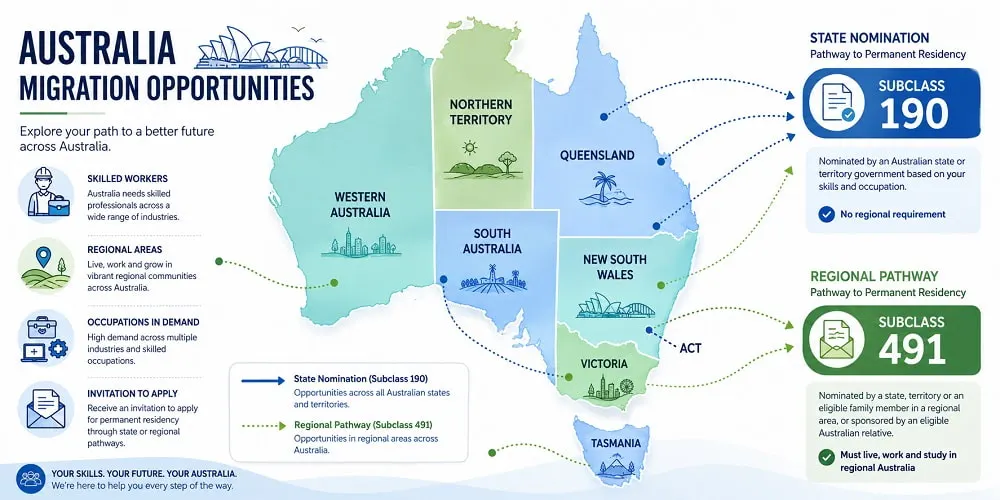
State Nomination is Where Many “Blocked” 189 Occupations Still Stay Alive
Some occupations may look weak for 189 but still have movement in 190 or 491, especially through state systems with their own occupation lists and invitation logic. That is particularly relevant for occupations like chefs, accountants, IT profiles and some engineering roles, which often struggle in 189 due to competition or ceiling pressure but still remain visible in state-nominated systems.
What to do if 189 is weak but your occupation still appears in state pathways
| Pathway | Why it matters now |
| Subclass 190 | Direct PR through state nomination if your profile fits the state |
| Subclass 491 | Regional provisional route that can later lead to PR |
| State occupation lists | Different states want different occupations and different profile types |
| Employer sponsorship | Often becomes stronger when 189 is not moving |
This is where profile-based migration strategy becomes much more valuable than just chasing invitation rumours.
Western Australia is a Good Example of Why “No 189” Does Not Mean “No Migration”
Occupations like accounting, IT, and chef can still receive invites in WA, and that part is directionally supported by Western Australia’s invitation data.
WA’s State Nominated Migration Program is active in 2025–26, and Migration WA says invitation rounds began in December 2025. It also publishes detailed “last invited by occupation” data. In the March 2026 priority occupations round, WA’s published data shows Chef (351311) invited at 85 points, and Civil Engineer (233211) invited at 80 points.
In earlier published WA rounds, occupations like Accountant (General), Analyst Programmer, ICT Business Analyst, Developer Programmer, Software Engineer, Mechanical Engineer, Motor Mechanic, and related roles also appear in the state invitation data.
That is one of the clearest reasons not to overreact to a weak 189 position. A ceiling problem in one pathway does not automatically erase the occupation from all migration options.
WA examples showing movement outside subclass 189
| Occupation | WA invitation evidence | What it means |
| Chef | Invited in WA March 2026 at 85 points | Chef may be weak for 189 but still alive in WA nomination |
| Civil Engineer | Invited in WA March 2026 at 80 points | Engineering can still move through state pathways |
| Accountant (General) | Appears in WA invitation data | Accounting is not dead, but may need a state route |
| ICT Business Analyst / Developer Programmer / Software Engineer | Appears in WA invitation data | IT may still have a path outside 189 |
| Motor Mechanic | Appears in WA invitation data | Trade and technical occupations can still move through states |
This is why applicants need to separate “no 189” from “no pathway.” They are not the same thing.
Why Employer Sponsorship May Now be the Strongest Option for Some Occupations?
Employer Sponsored has a much larger planning allocation than Skilled Independent in 2025–26. If your occupation is no longer realistically moving in 189, but employers still want the role, employer sponsorship can become more practical than waiting for another invitation round that may never include your occupation. This is especially relevant for engineering, trades, hospitality, and other occupations where real labour demand can matter more than SkillSelect competition.
That does not mean sponsorship is easy. It means that for many applicants, it is now more strategic than hoping a blocked 189 occupation suddenly reopens.
Another 189 Round May Still Happen but Not for Everyone
Because Home Affairs shows a 16,900 planning level for Skilled Independent and the November 2025 round issued 10,000 invitations, applicants are right to expect that another 189 round is still possible this financial year. But “possible” is not the same as “good for my occupation.” A later round may still happen while some occupations remain effectively shut out by ceiling pressure.
That is the key message your blog should communicate clearly:
A future 189 round can still happen, but if your occupation is already effectively capped out, more rounds may not help you.
The Smarter Strategy in 2026 is to Stop Treating 189 as the Only Real Goal
If your occupation still has room in 189, great. But if it does not, the answer is not waiting passively.
The smarter move is:
- check your state nomination options,
- compare 190 and 491,
- see whether your occupation still has movement in places like WA,
- and assess whether employer sponsorship is the stronger route now.

Aussizz Group has helped 200,000+ applicants to their Australian Dreams, and this is exactly where practical migration strategy matters. A lot of people waste months staring at subclass 189 when their occupation has already become a weak bet for the rest of the year.
If you want to know whether your occupation still has a realistic 189 chance or whether your stronger route is 190, 491 or employer sponsorship — book a consultation with Aussizz Group and build the plan around the real data, not just the visa number.
FAQs
Q1. What does an occupation ceiling mean for subclass 189?
Home Affairs says an occupation ceiling means there may be an upper limit on how many EOIs with a specific occupation can be invited from an occupation group.
Q2. Can there still be another subclass 189 round this financial year?
Possibly yes. Home Affairs shows a Skilled Independent planning level of 16,900 for 2025–26, and 10,000 invitations were issued in the 13 November 2025 round. That suggests another round is still possible, but not necessarily for every occupation.
Q3. If my occupation has no realistic 189 chance this year, is PR over?
No. You may still have realistic options through subclass 190, subclass 491, or employer sponsorship, depending on your occupation and profile.
Q4. Which occupations are people most worried about for no further 189 invites?
The occupations flagged as highest-risk are chef, motor mechanics, accountants, external auditors, IT professionals, civil engineers, and mechanical engineers.
Q5. Can chefs still get invited through state nomination?
Yes. WA’s March 2026 state invitation data shows Chef (351311) invited at 85 points, which means chef may still move through state nomination even if 189 is weak.
Q6. Can IT and accounting still move through Western Australia?
Yes. Published WA invitation data includes occupations such as Accountant (General), Analyst Programmer, ICT Business Analyst, Developer Programmer, and Software Engineer.
Q7. Can engineers still get invited outside 189?
Yes. WA’s published invitation data includes Civil Engineer and Mechanical Engineer, showing that engineering can still move through state pathways even if 189 looks weak.
Q8. Is employer sponsorship stronger than subclass 189 now?
For some occupations, yes. The 2025–26 Migration Program includes 44,000 Employer Sponsored places compared with 16,900 Skilled Independent places, which shows much more room in employer-backed migration than in 189 alone.
Q9. Do more points help if an occupation ceiling is already exhausted?
Not in a practical sense for that pathway. If the ceiling is effectively used up, higher points do not reopen 189 for that occupation in the same program year. That conclusion follows from Home Affairs’ occupation-ceiling definition.
Q10. What should applicants do if their 189 pathway looks blocked?
The smartest next step is to compare 190, 491, and employer-sponsored options based on your exact occupation, state fit, and work situation, instead of waiting only for another 189 round.